
White Tie, Waltzes and 70 Years of Elegance: The Viennese Opera Ball Celebrates an Extraordinary Social Milestone

Landmark gala honors Mozart’s 270th birthday and celebrates Austrian-American cultural ties with opera, ballet, debutantes, and philanthropy.
দ্য Viennese Opera Ball returns to Cipriani 42nd Street for its 70th annual gala, marking a major milestone for one of New York City’s most enduring and distinguished international social and cultural events on Friday, May 8th, 2026. This year’s Ball carries added resonance as it honors 270 years of Wolfgang Amadeus Mozart and the 250th anniversary of the United States, underscoring the evening’s long-standing role as a bridge between Austria and America.
Seven Decades of Vienna in Manhattan
Founded in 1955, the Viennese Opera Ball has for seven decades brought the elegance, ritual, and romance of Vienna’s grand ball tradition to Manhattan. Held under the auspices of the U.S.-Austrian Chamber of Commerce, the Ball has become a cherished symbol of Austrian cultural heritage in New York, uniting diplomats, dignitaries, philanthropists, corporate leaders, and members of the শিল্পকলা in an evening celebrating music, dance, cultural exchange, and charitable giving.
“A Magical Night, A Fairy Masquerade Ball”
This year’s theme, “A Magical Night, a Fairy Masquerade Ball,” will set the tone for an evening of old-world splendor beneath the landmark ceilings of Cipriani 42nd Street. Guests of honor and opera stars scheduled to appear include Angel Blue, Lawrence Brownlee, Hera Hyesang Park, Adam Smith, and Golda Zahra. The evening will also feature a ballet performance by Liudmila Konovalova, principal dancer of the Vienna State Opera, as well as music by the Viennese Opera Ball Orchestra conducted by Maestro Rainer Sulzgruber.
Tradition of Debutantes and Quadrille
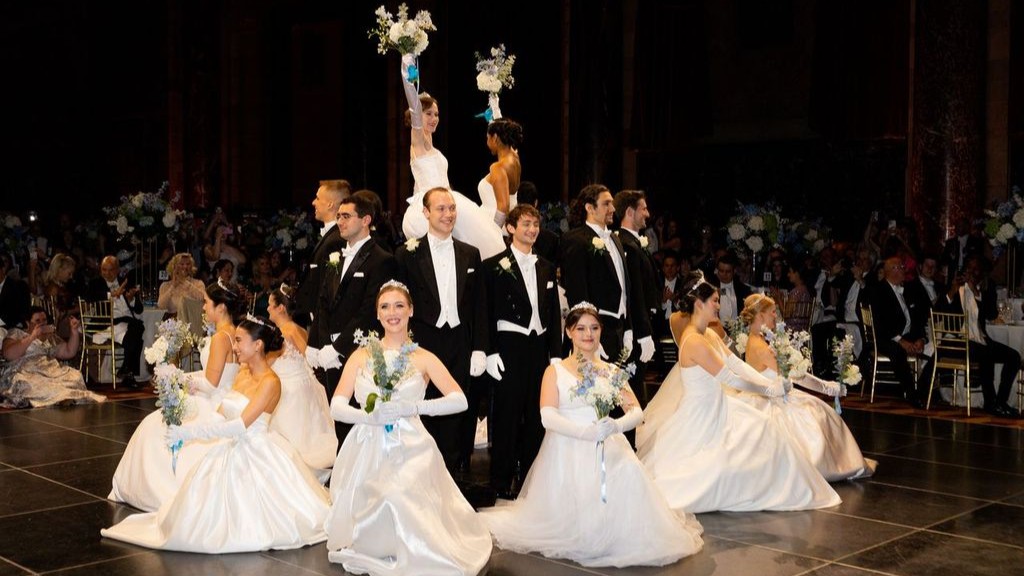
Among the Ball’s most beloved traditions is the opening ceremony with the presentation of the debutantes and their escorts, choreographed by Sandra Stockmayer of Dancing School Svabek. The formal procession remains a centerpiece of the celebration, evoking the grace and ceremony that have long defined Viennese ball culture.
The evening will continue with dinner, dancing, a live and silent auction, the traditional midnight Quadrille, and a late-night Tanzbar with DJ Olivier. The dress code remains white tie and tails for gentlemen and long ball gowns for ladies, with masks encouraged in keeping with the masquerade theme.
A Continuing Philanthropic Mission
The 70th anniversary Ball also continues its philanthropic mission. Over the years, the Viennese Opera Ball has supported a wide range of charitable, cultural, and humanitarian organizations, while preserving and promoting Austrian cultural heritage in the United States and fostering Austrian-American cultural and economic relations. That enduring purpose remains at the heart of the event as it enters its eighth decade.
With its blend of music, pageantry, diplomacy, and elegance, the 2026 Viennese Opera Ball promises to be both a tribute to history and a living expression of cultural continuity. As New York celebrates this landmark 70th annual edition, the Ball once again affirms its place as a rare and meaningful tradition where heritage, artistry, philanthropy, and human connection meet.
আরও তথ্যের জন্য, দেখুন vienneseoperaball.com/70th-viennese-opera-ball.
Photo credit: BFA / Jiraurd Key
About the Viennese Opera Ball
Since 1955, the Viennese Opera Ball in New York has been a representative of Vienna’s cultural legacy, elegance, and glamour in the Big Apple. The Ball operates as a cultural platform, building bridges to connect present-day New York City with 19th-century Vienna and people of varying heritages, continents, and generations, bringing traditional glamour to the city that never sleeps.
আরও তথ্যের জন্য, অনুগ্রহ করে দেখুন vienneseoperaball.com.
The Grand Viennese Ball Tradition: A Cultural Legacy Worth Understanding
To fully appreciate the significance of the Viennese Opera Ball in New York, one must understand the centuries-deep tradition from which it draws. The Viennese ball — der Wiener Ball — is not merely a formal dance event. It is a living institution rooted in the Habsburg imperial court of the early 19th century, when balls served as the foremost arena of social, diplomatic, and artistic life in Central Europe. Vienna’s famous Ballsaison, or ball season, traditionally runs from November through the culminating grandeur of Fasching, with hundreds of themed balls held across the city each year, from the Philharmoniker Ball to the Coffeehouse Owners’ Ball.
At the center of this tradition is the waltz — specifically the Viennese waltz, a faster, more precise form of the dance than its modern descendant, governed by strict technique and breathtaking rotational momentum. Waltzes and the Viennese Opera Ball are inseparable: the waltz is not background music but the very architecture of the evening, structuring how guests move, connect, and experience time itself. When the orchestra opens the Quadrille at midnight, the dance floor does not merely fill — it transforms into a ceremonial space where generations of shared cultural memory become briefly, beautifully visible. For New York audiences encountering this tradition, the experience is genuinely transporting.
What to Wear: Dressing for a White Tie Viennese Ball in New York
The Viennese Opera Ball’s white tie dress code is among the strictest and most storied in New York’s social calendar, and for first-time guests it warrants careful consideration. White tie — distinct from black tie — demands a tailcoat, white waistcoat, white bow tie, and white shirt with a wing collar for gentlemen. It is a standard rarely invoked outside of state dinners and the most formal international galas, and the Ball’s insistence on it speaks directly to its commitment to authenticity.
For women, long ball gowns remain the defining requirement, with this year’s masquerade theme warmly encouraging the addition of a decorative mask. Viennese ball culture has historically favored full skirts and structured silhouettes suited to the physical demands of waltz dancing — a consideration as practical as it is aesthetic. New York’s premier fashion houses and bridal ateliers frequently report a seasonal uptick in ball gown inquiries tied directly to the event. Accessories tend toward the formal and the statement-making: long gloves, fine jewelry, and evening bags of modest proportion. Whether guests choose a classically European silhouette or a contemporary couture interpretation, the shared expectation is unambiguous: this is an evening that asks you to arrive as your most considered, most deliberate self.
The Performers: Opera Stars and Ballet at the Heart of the Evening
The artistic program of the 70th Viennese Opera Ball reflects a curatorial ambition that sets it apart from comparable formal galas in New York. The roster of performers assembled for the May 8th celebration represents some of the most compelling voices and bodies working in classical performance today. Soprano Angel Blue, a Grammy Award winner celebrated for her luminous command of the Verdi and Puccini repertoire, brings rare emotional authority to any stage she occupies. Tenor Lawrence Brownlee, recognized internationally as one of the preeminent bel canto voices of his generation, has earned standing ovations from the Metropolitan Opera to the Vienna State Opera itself. Hera Hyesang Park, the Korean-American soprano and 2018 Cardiff Singer of the World Competition finalist, brings a crystalline precision and interpretive depth that has won global acclaim.
The evening’s ballet component is equally distinguished. Liudmila Konovalova, a principal dancer of the Vienna State Opera Ballet, brings an institutional directness of connection to the Austrian cultural source the Ball honors. Her presence underscores a consistent artistic principle: the Viennese Opera Ball does not approximate Vienna’s cultural life — it imports it, live and intact, to the heart of Manhattan. Under the baton of Maestro Rainer Sulzgruber, the Viennese Opera Ball Orchestra will ensure that the evening’s musical backbone is as authoritative as its vocal and choreographic elements.