
to A-Line, Ball Gown, Mermaid, Sheath and More
Somewhere between saying yes and booking your first dress appointment, you’ll hit a wall of vocabulary nobody warned you about. Sweetheart neckline. Illusion sleeve. Silhouette. It’s a lot to absorb while you’re also juggling venues, caterers, and a guest list that keeps growing.
Silhouette is the term worth getting your head around first, because it does more work than almost any other decision you’ll make. It’s simply the shape of the dress from shoulder to hem, and it determines how a gown moves, how formal it reads, and how comfortable you actually are standing through a long reception in heels. Get the silhouette right and everything else the fabric, the neckline, the sleeve – tends to fall into place around it. It’s usually the first thing stylists at a bridal boutique talk through with a bride, often before she’s tried on a single gown.
This guide covers the six silhouettes you’re most likely to encounter: A-line, ball gown, fit and flare, mermaid, princess, and sheath. None of them is objectively better than the others. Each flatters a different shape, suits a different kind of venue, and feels different to actually wear for eight hours straight.
Why Silhouette Should Come Before Style
It’s tempting to fall for a dress on Pinterest and chase that exact look, but a silhouette that photographed beautifully on someone else won’t necessarily move the same way on you. Bodies differ, and so does what feels comfortable. A good starting question isn’t “what do I want to look like” but “how do I want to feel”: polished and contained, soft and romantic, or dramatic and unapologetic. That answer usually points you toward a silhouette before you’ve even looked at lace or beading.
A-Line: The Reliable Classic
The A-line fits close through the bodice and waist, then flares gradually to the hem in a clean triangle. That gradual flare is why it flatters nearly everyone, particularly pear and hourglass shapes, since it skims rather than clings through the hip and thigh. You’ll see it made up in crepe, satin, or layered chiffon, and it works equally well in a converted barn or a grand cathedral. If you’re not sure where to start, this is the safest place, and there’s no shame in that.
Ball Gown: The Fairytale Option
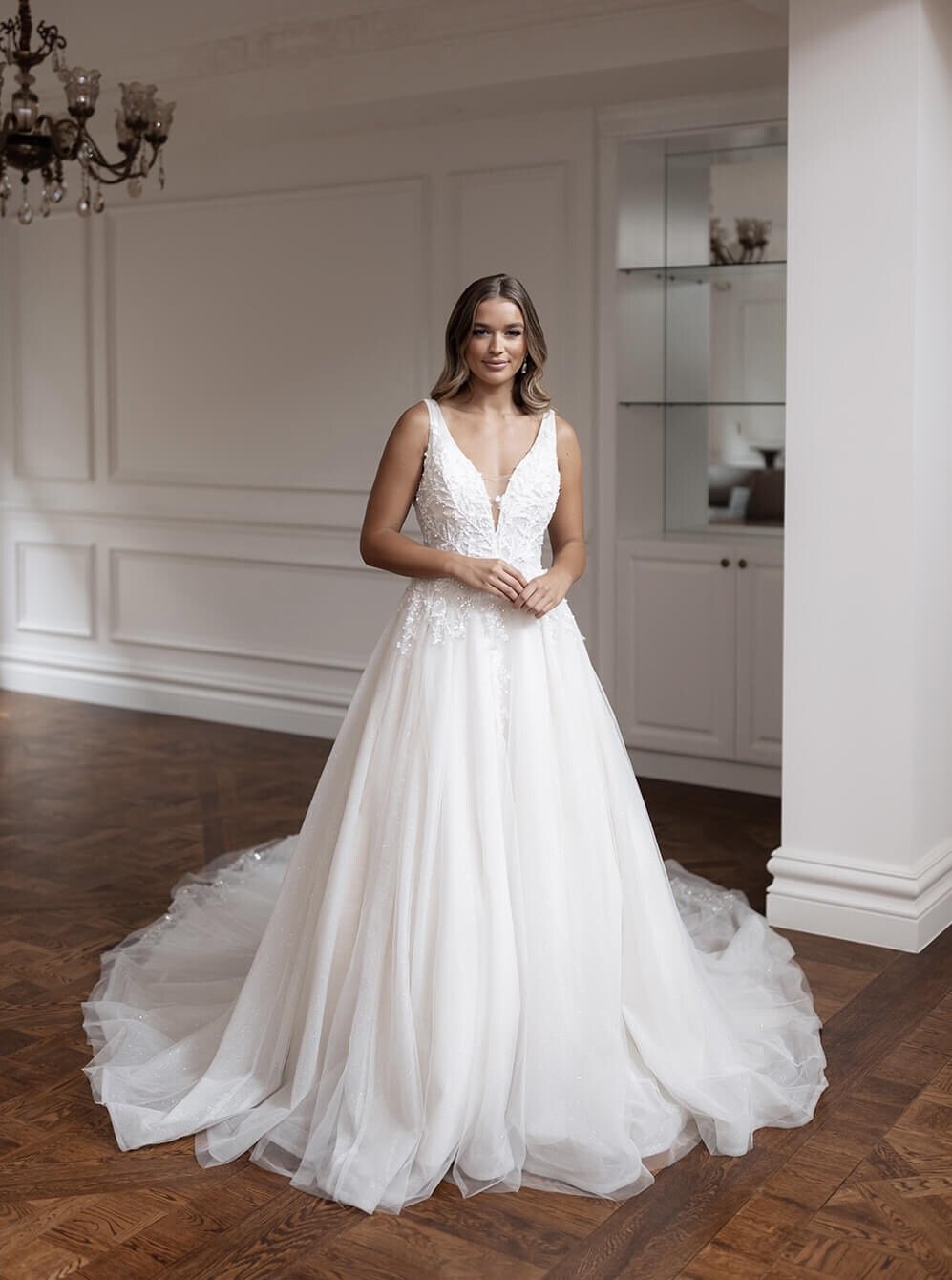
A ball gown pairs a fitted bodice with a dramatically full skirt, usually built from layers of tulle or organza, sometimes over a structured petticoat for extra volume. That fullness visually narrows the waist, which flatters hourglass and pear figures, and adds height and drama for petite brides in particular. It does need room, though. A ball gown wants a grand staircase or a spacious reception floor, not a tight cocktail bar.
Fit and Flare: Shape Without the Drama
Sometimes called a trumpet silhouette, fit and flare hugs the body through the bodice, waist, and hips before flaring out at or just below the knee. It’s less voluminous than a ball gown but shows off your waist more than a straightforward A-line does. Crepe with a lace overlay is a common pairing here. Athletic and hourglass figures tend to love this one because it highlights a defined waistline without going full fairytale.
Mermaid: The Most Figure-Hugging Shape
Mermaid gowns fit closely through the bodice, waist, hips, and thigh, only flaring out around the knee, like a fish tail. It’s the most sculpted of all six silhouettes, which is exactly why it suits hourglass figures so well and why it usually needs internal boning to hold its shape. It’s also the least forgiving if you want to move freely on the dance floor later, so be honest with yourself about how much dancing is actually on the agenda.
Princess: Ball Gown’s Softer Cousin
Princess and ball gown get confused constantly, but they’re not the same thing. A princess silhouette uses vertical seams, called princess seams, running from the shoulder or bust down through the bodice and into the skirt, creating shape without a hard seam at the natural waist. The result is a fuller skirt that builds more gradually and usually with less sheer volume than a true ball gown. It suits a wide range of body types because the seaming does the flattering work rather than a tightly fitted waistband, and it tends to feel a little more relaxed to wear all day.
Sheath: Sleek and Unfussy
A sheath, sometimes called a column dress, follows the body’s natural line from shoulder to hem with barely any flare. It rewards fabrics with real drape, silk charmeuse or a soft crepe, and it tends to suit taller, slimmer frames best, though the right fabric can flatter more shapes than people assume. Because there’s minimal structure underneath, it’s light to wear and easy to move in, which is part of why it’s such a popular choice for beach ceremonies and warm-weather weddings.
How Silhouettes Actually Reveal Themselves in a Fitting Room
Photos only tell you so much. A silhouette that looks stiff on a hanger can feel completely different once it’s on and moving, and one you’d never have picked from a rack can end up being the one that stops you mid-turn in the mirror. That’s really the whole argument for trying on more than you think you need to, including at least one shape you were sure wasn’t “you”. Wear the right underwear, bring someone whose opinion you actually trust rather than a crowd, and try not to make a final call in the first ten minutes. A private, unhurried appointment makes a genuine difference here, because silhouette is something you feel in the fabric and the fit, not something you can judge from a photo on your phone.
Finding Yours
None of these silhouettes is more “bridal” than another, no matter what wedding boards might suggest. The right one is whichever makes you stand a little taller and stop fussing with the mirror. That’s really the whole idea behind ready-to-wear, tailored to you: a well-chosen silhouette, styled properly for your body and your day, in a gown you can actually afford and take home in weeks rather than months. If you’re at the point of turning silhouette names into an actual shortlist, that’s exactly the conversation worth having with a stylist, in the room, gowns in hand.