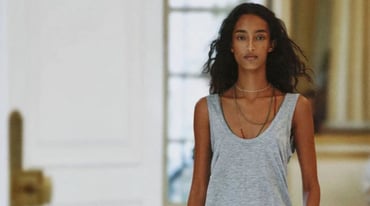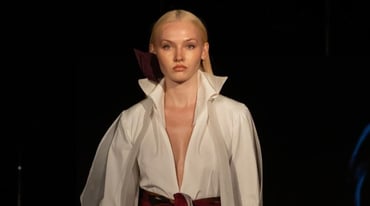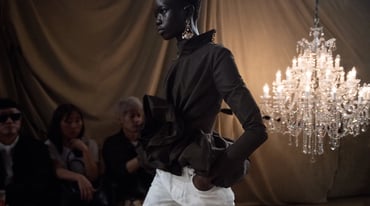


Fall Winter 2021 Presentation for Paris Fashion Week, revisited as a defining archival moment in Situationist’s evolving aesthetic legacy
Situationist continues to build on its underground couture identity, with the brand gaining renewed attention in 2026 as archival fashion presentation formats influence a new generation of independent European designers.
The Conceptual Framework Behind Forbidden Family
Situationist’s Fall Winter 2021 collection, presented during Paris Fashion Week under the title Forbidden Family, operates as far more than a seasonal offering. The collection draws directly from the philosophical legacy of the Situationist International, the mid-twentieth century avant-garde movement that challenged capitalism, spectacle, and the commodification of everyday life. Creative director Irakli Nasidze channeled this intellectual inheritance into a visual language that is simultaneously confrontational and deeply intimate.
The title itself is a provocation. The idea of a forbidden family suggests kinship structures that exist outside sanctioned social order, communities formed through shared rejection rather than blood or institution. This theme runs through every garment in the presentation, from heavily structured outerwear that functions almost as armor to softly draped pieces that evoke vulnerability and closeness. The tension between protection and exposure is never resolved, and that irresolution is entirely intentional.
Nasidze has consistently positioned Situationist as a brand that refuses to separate politics from aesthetics. Forbidden Family represents one of the clearest articulations of that position, presenting fashion not as decoration but as a site of resistance and community-building. For audiences returning to this archival presentation in 2026, the collection reads with even greater urgency given the ongoing global conversations around belonging, identity, and the boundaries of acceptable social formation.
Situationist's Place in Independent European Fashion
Among the wave of independent designers reshaping European fashion’s critical landscape, Situationist occupies a distinctive and largely self-defined position. The brand does not court the commercial center of the industry. It does not seek validation through the traditional hierarchy of luxury fashion weeks, though it participates in Paris Fashion Week with deliberate strategic intent. Rather, Situationist uses those established platforms as stages for work that fundamentally questions the platforms themselves, a gesture entirely consistent with its namesake philosophy.
This approach has earned the brand a loyal and intellectually engaged following across global markets. The audience for Situationist is not simply purchasing garments; it is aligning with a particular mode of critical thinking expressed through dress. This dynamic has become increasingly relevant as a new generation of independent European designers, many of them based outside the traditional fashion capitals, look to Situationist as a model for sustaining creative integrity without compromising to mainstream commercial pressures.
The archival presentation format that Situationist favors, a carefully produced video document that can be revisited and recontextualized over time, has also influenced how younger labels approach documentation and distribution. Rather than treating a runway presentation as a moment that expires with the news cycle, Situationist treats each collection as a permanent contribution to an ongoing body of work. Forbidden Family exemplifies this philosophy, continuing to gain new viewers and critical reassessment years after its initial release.
Revisiting Forbidden Family as Archival Fashion
The renewed attention that Forbidden Family has received in 2026 reflects a broader cultural shift in how fashion audiences engage with archival material. Presentations that were initially received within the compressed attention cycle of a fashion week season are now being reexamined as primary documents of a particular cultural and aesthetic moment. For Situationist, this retrospective lens reveals layers of meaning that may not have been immediately apparent to audiences encountering the collection in real time during 2021.
Several elements of the presentation reward close revisitation. The casting choices reflect a commitment to representing bodies and identities that are rarely centered in luxury fashion contexts. The sound design and visual pacing of the video presentation draw from experimental film traditions rather than conventional fashion film conventions. Even the color palette, which moves through deep blacks, muted earth tones, and occasional flashes of harsh white, communicates a worldview rather than simply a seasonal color story.
For stylists, editors, and designers engaging with this collection as archive, Forbidden Family offers a sophisticated case study in how to build a coherent aesthetic argument across an entire collection. Each look functions both independently and as part of a larger visual syntax. This level of intentionality is what separates archival fashion presentations with genuine longevity from seasonal spectacle, and it is precisely why Situationist continues to matter to serious fashion discourse well beyond the moment of first release.