
There are rare runway moments — few enough to count over an entire career — when fashion stops performing and starts telling the truth. The Fall/Winter 2026 collection from Oude Waag, presented during Shanghai Fashion Week’s FW26 season under the theme “Ascending Through Design,” was precisely that kind of moment. Titled Radical Tenderness, the show did not announce itself loudly. It arrived, instead, like grief itself: low, inevitable, and deeply felt.
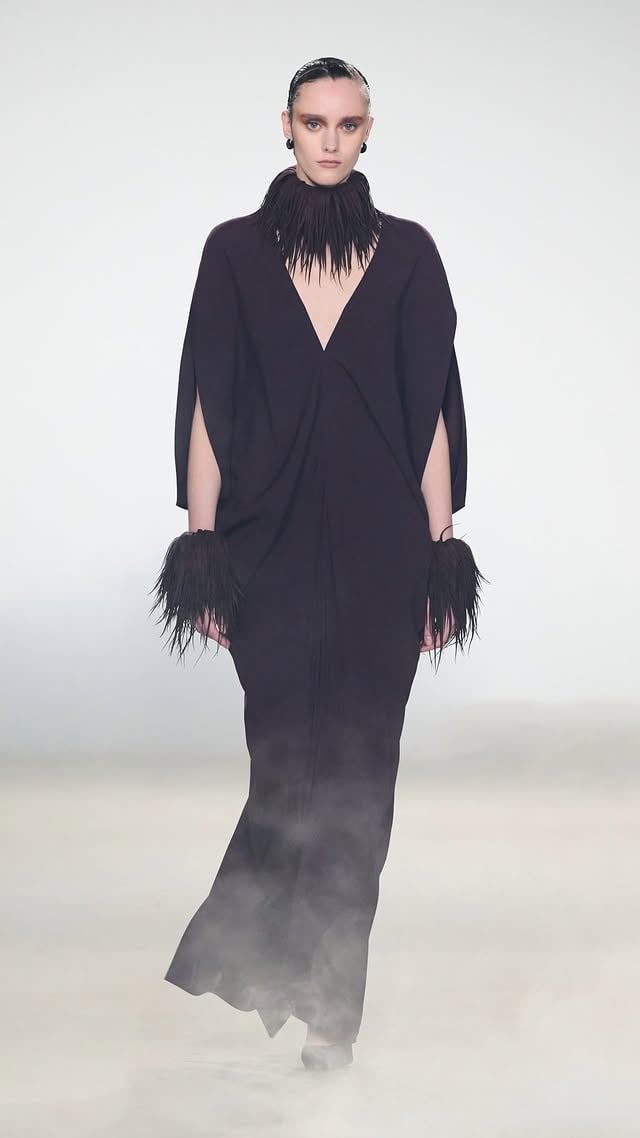
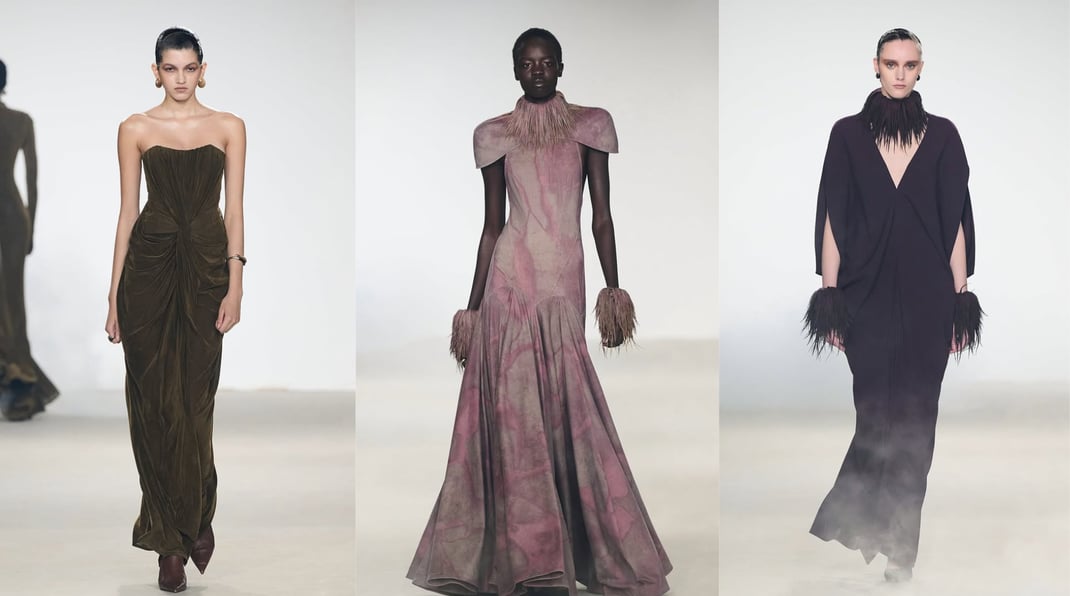
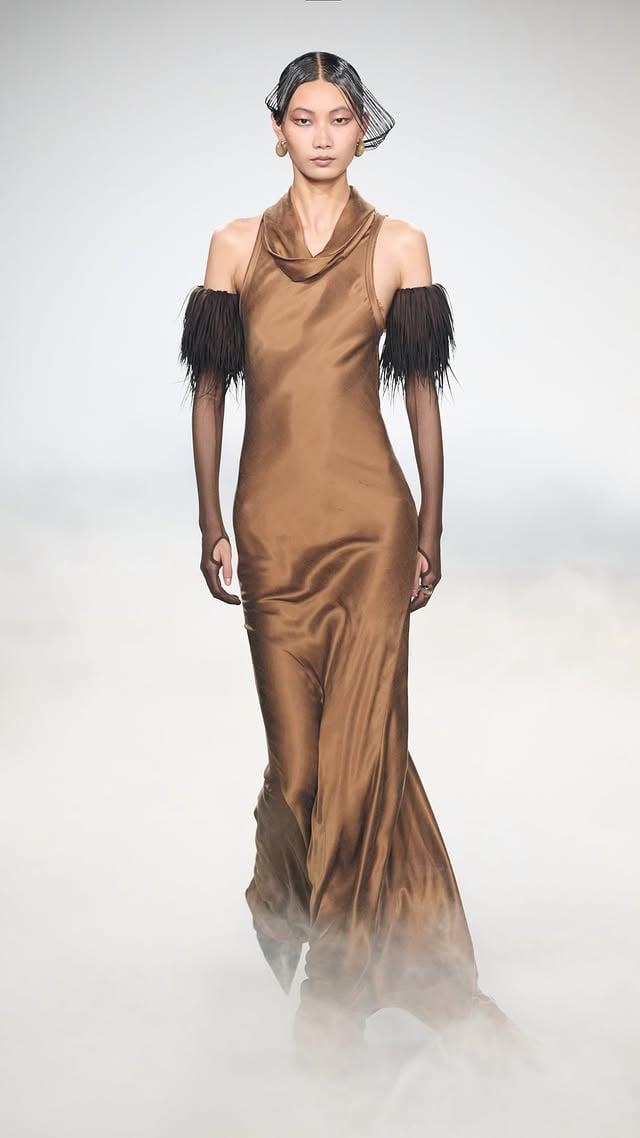
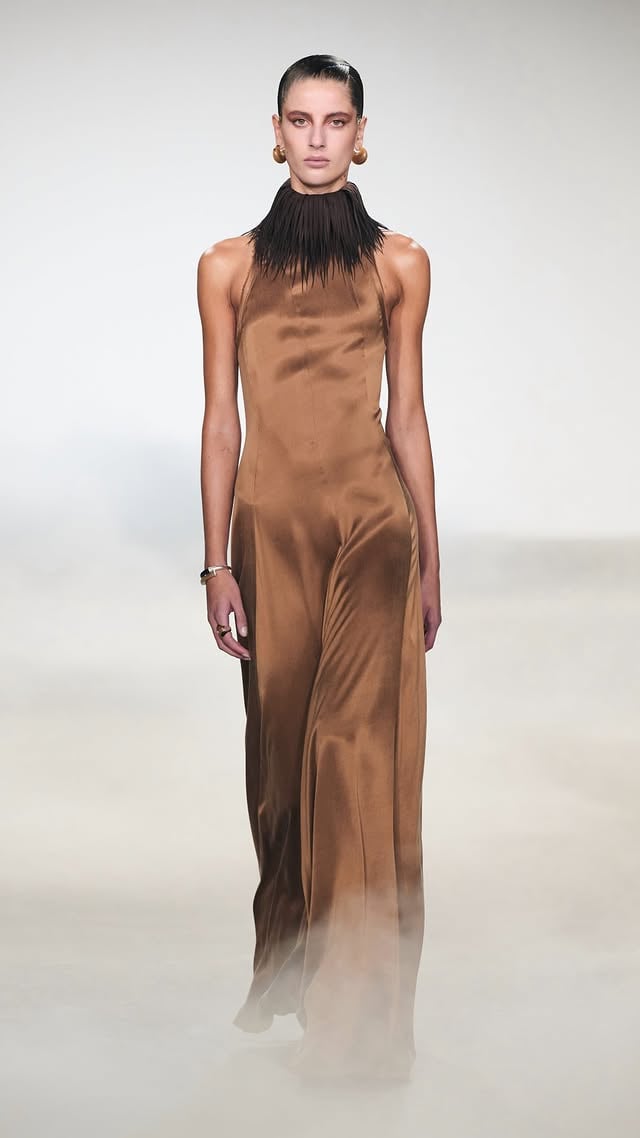
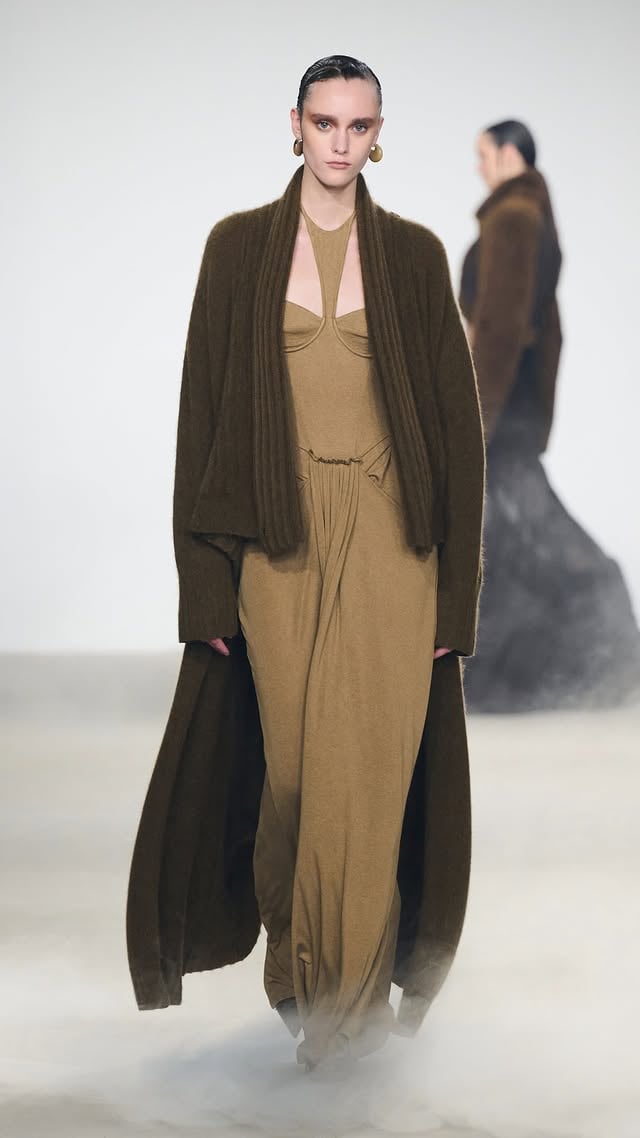
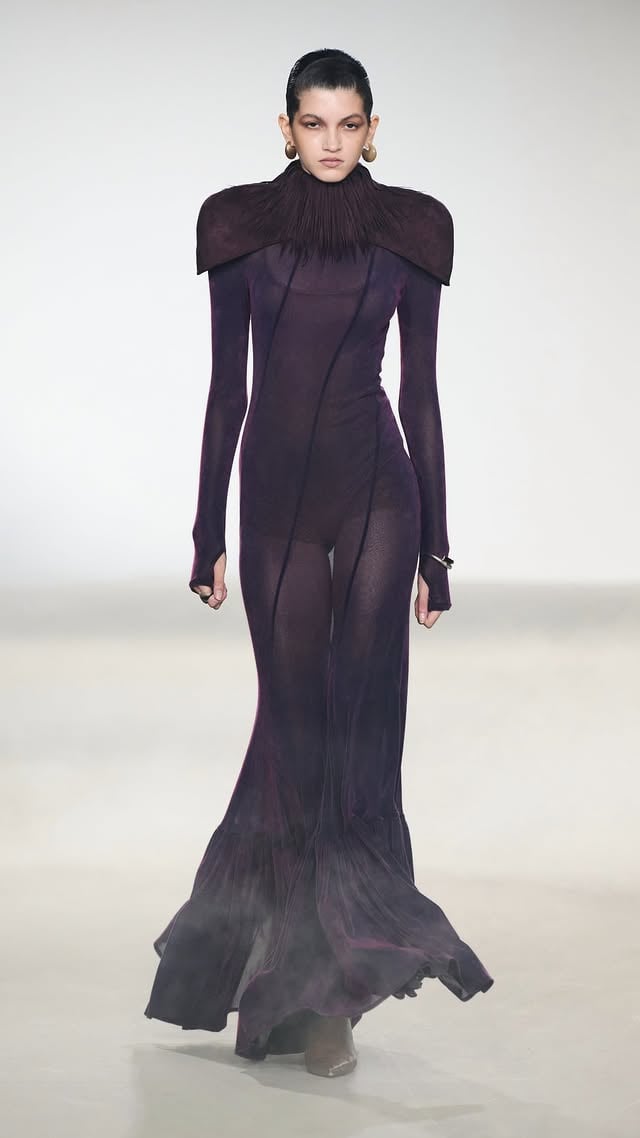
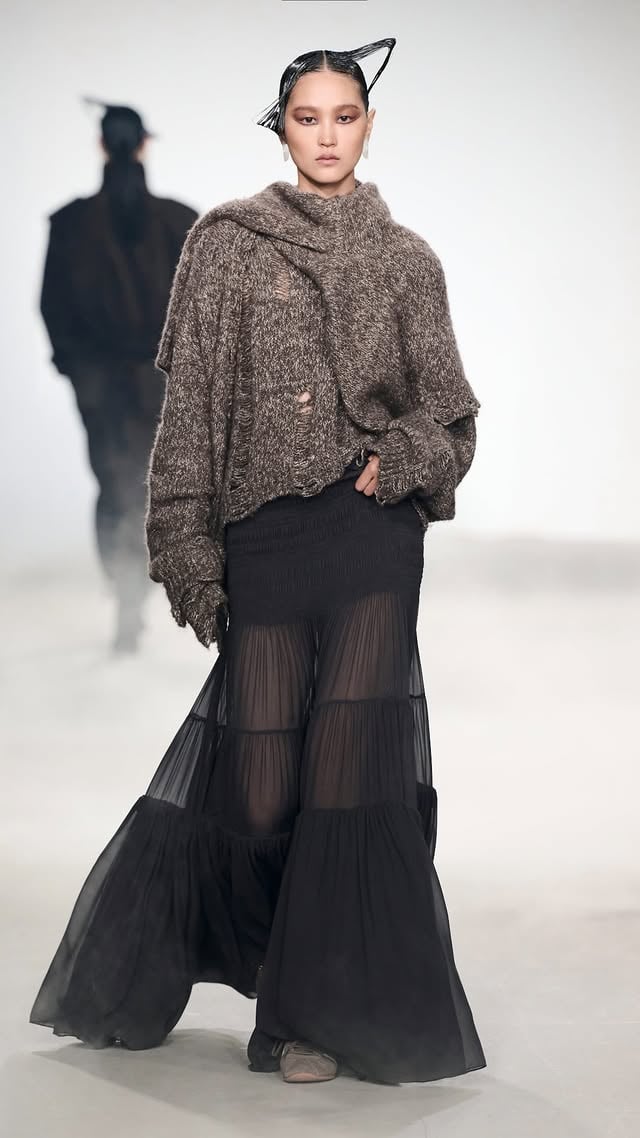
The lights dimmed. A haunting, single-note melody unspooled across the room. Smoke crept along the floor as if the earth itself were exhaling. Then came the clothes — rising from that mist in a palette defined by earthy, maternal browns: the hue of turned soil, of old suede, of afternoon light filtering through amber glass. What followed was nine minutes of absolute conviction.
To understand Radical Tenderness, one must first understand the label that produced it. Oude Waag — named for a storied street in Antwerp whose Dutch name translates, fittingly, as “Old Weigh House” — was founded in Shanghai in 2017 by designer Jingwei Yin. Born in Chengdu, Yin pursued his studies in London at both Central Saint Martins and the Royal College of Art before returning to China with a European sensibility grafted onto an entirely Chinese understanding of form. He interned for Haider Ackermann — an education in itself — before establishing a label built on the premise of fashion that earns its weight. The brand name, then, was never merely poetic. It was a manifesto.
Oude Waag has shown consistently at Labelhood — Shanghai’s premier incubator for independent Chinese design talent — alongside SHUSHU/TONG and Mark Gong, a cohort now drawing international buyers and press with each season.
From its earliest collections, Oude Waag developed a visual language pitched somewhere between the sculptural and the sensual — sharp tailoring softened by hypnotic draping, architecture yielding to the body rather than constraining it. The Spring/Summer 2026 collection, Mirror, Mirror, explored contemporary femininity as something resilient and self-assured, deploying silk and velvet gowns with architectural cut-outs alongside jersey satin and washed cargo trousers. It was a collection that understood womanhood as fluid rather than fixed. By Fall/Winter 2026, the lens had shifted inward entirely.
The Collection
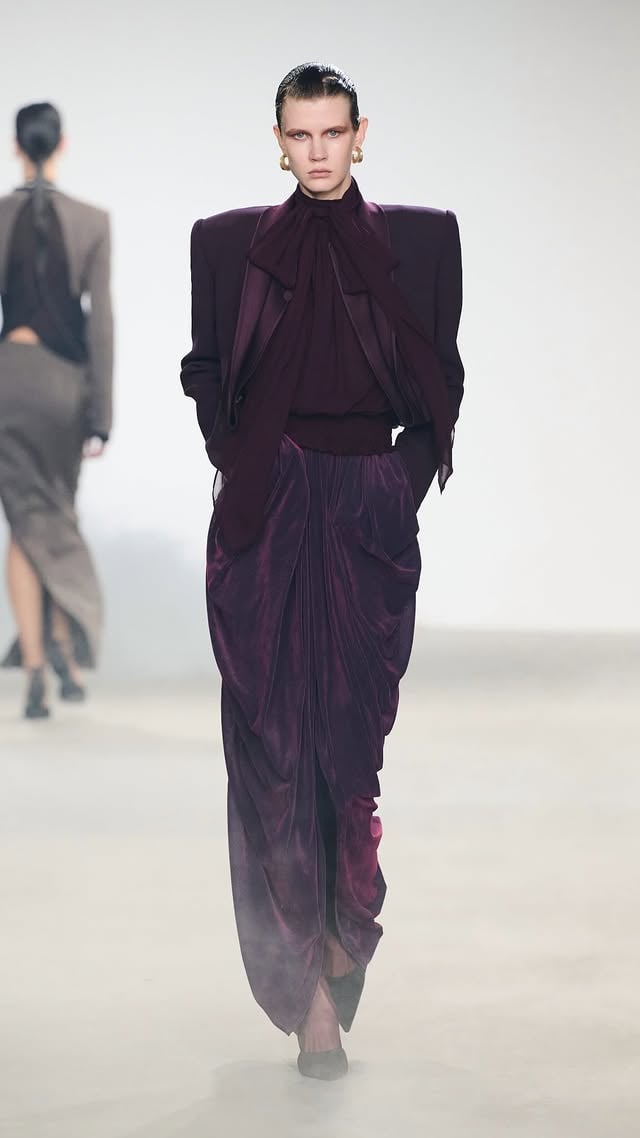
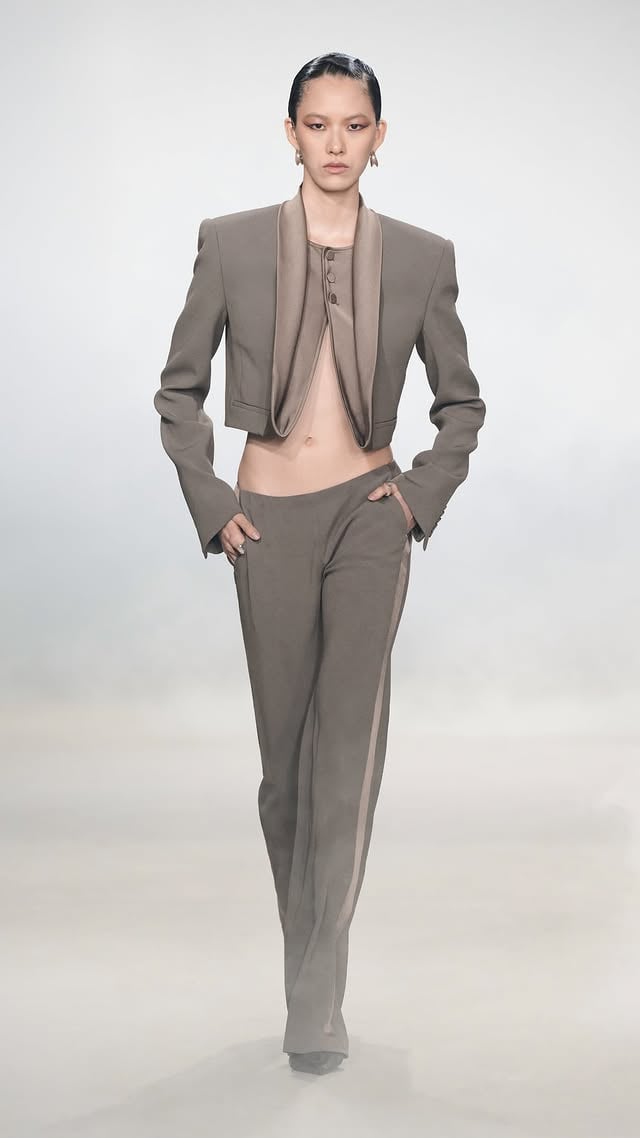
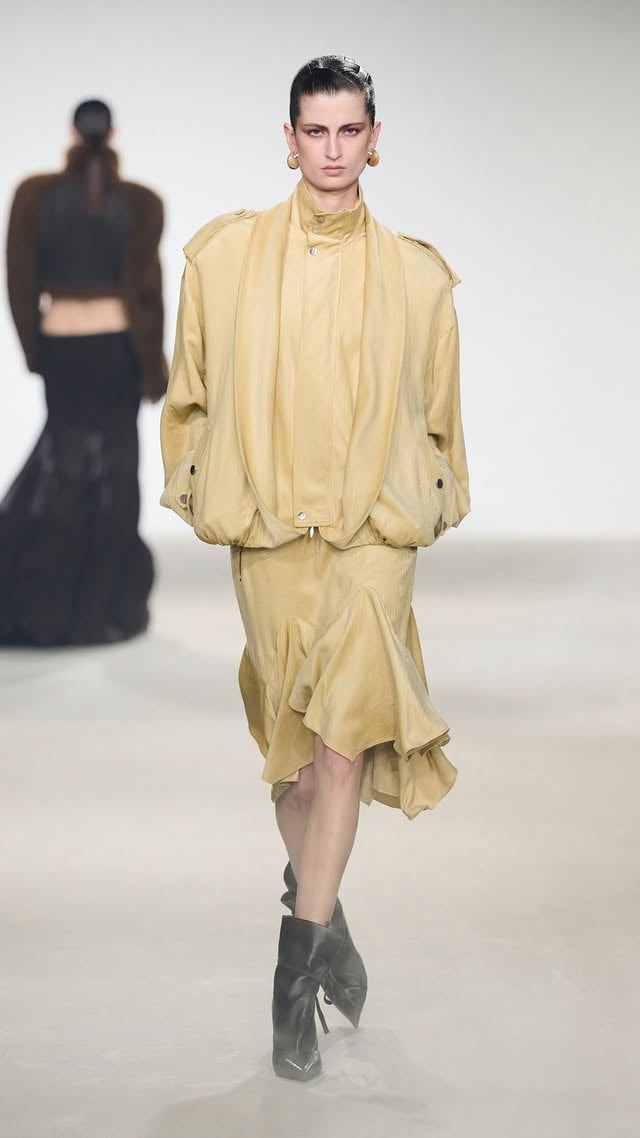
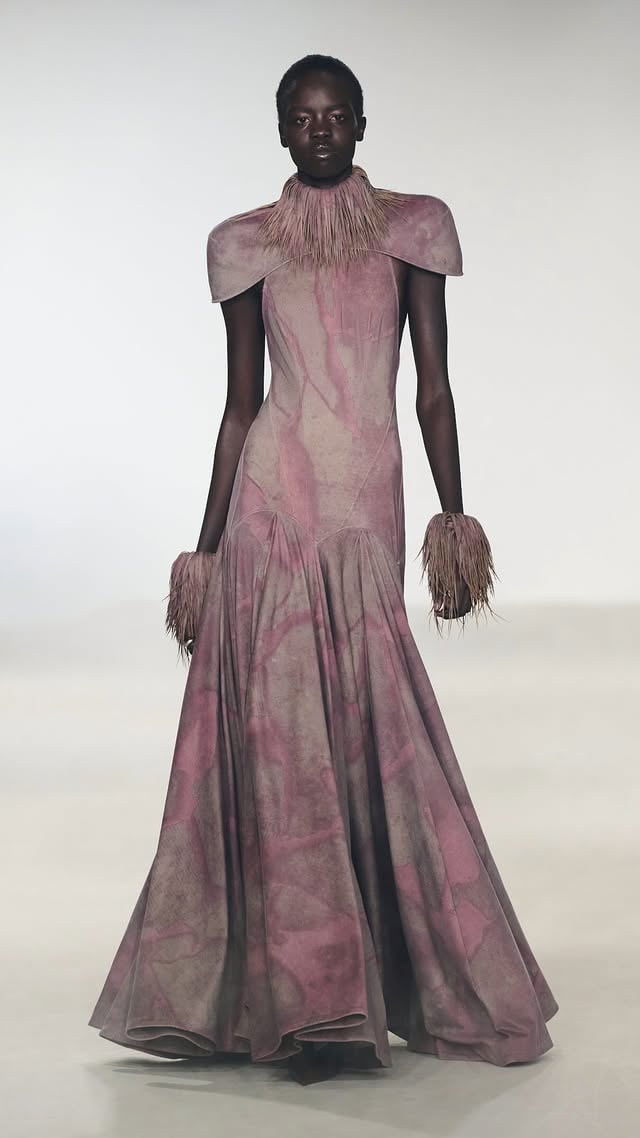
For the FW26 presentation, designer Ming Peng channelled the interior weight of loss into every seam. The collection’s defining flourish — an act of radical recontextualisation — involved fang-like spikes, symbols historically associated with danger and aggression, reimagined as soft, swaying fringes crafted from eco-suede. Nothing here was what it seemed. The threat was rendered tender. The sharp became yielding. It was, in the language of ফ্যাশন, a visual argument: that strength and softness are not opposites, but the same instinct reaching in different directions.
“Asian pattern cutting is more about creating volume in the space between the body and the garment.” — Jingwei Yin, founder, Oude Waag
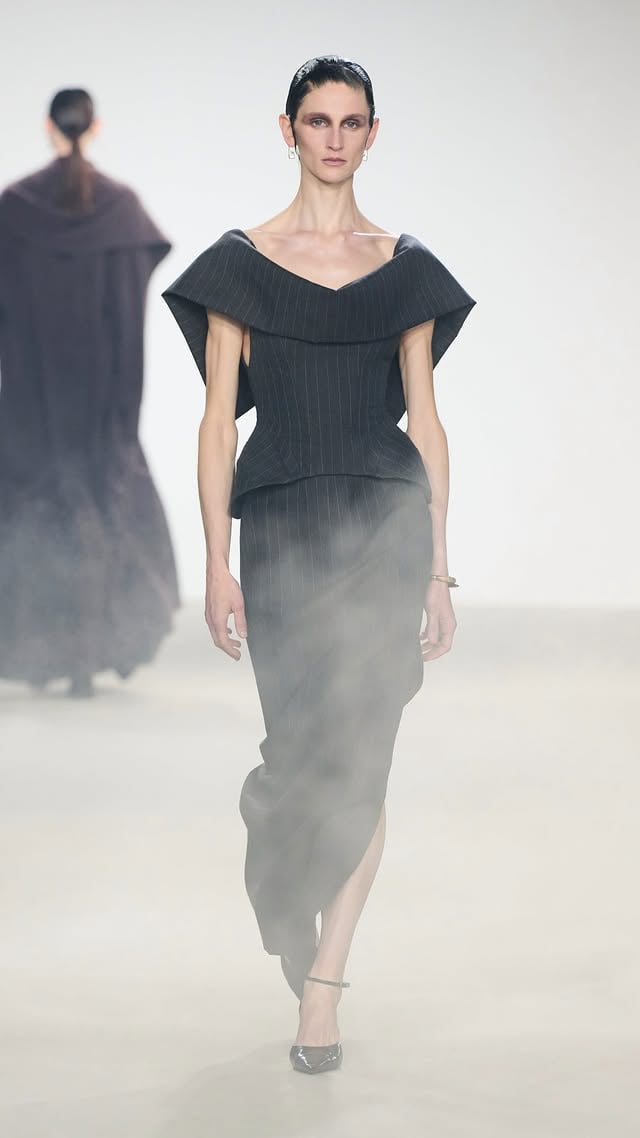
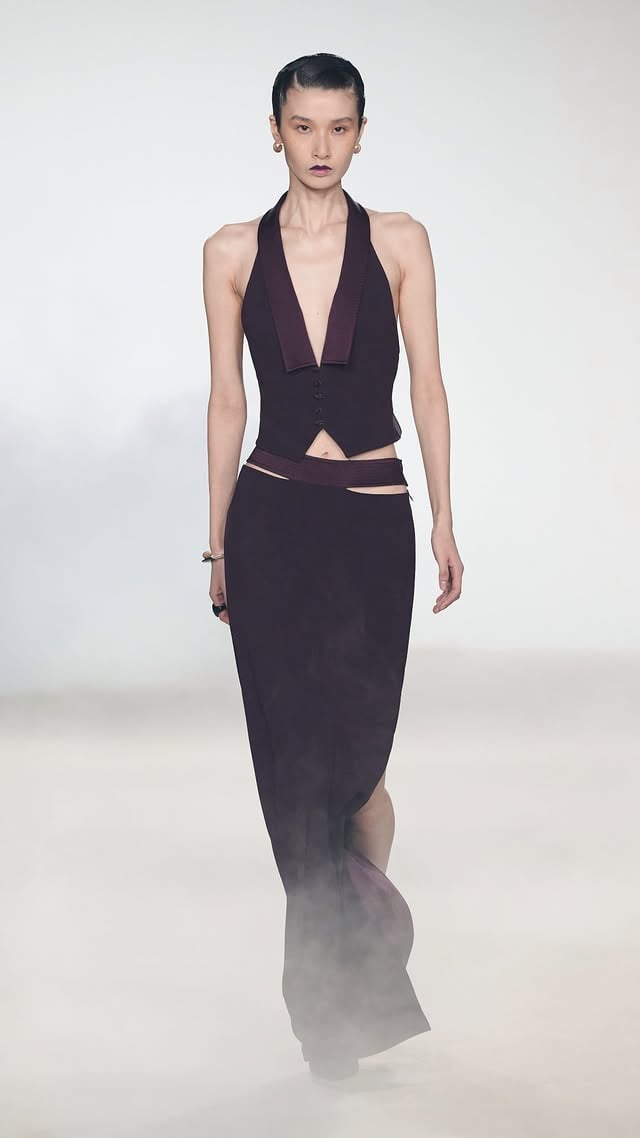
The silhouette across the collection maintained the brand’s signature relationship with negative space — garments that hover and breathe rather than cling. Produced entirely in Chinese ateliers, the finishing and textile work demonstrated a quality that invites direct comparison with the finest ready-to-wear houses operating out of Milan and Paris. The palette held throughout: those deep, earthy browns, occasionally lit by copper and the oxidised warmth of late-season stone. Clothes that looked as though they had been worn through something and survived.
Cultural Resonance
Oude Waag’s FW26 collection arrived at a meaningful moment for Chinese fashion. সাংহাই ফ্যাশন সপ্তাহ‘s FW26 edition — running from March 25 through April 1 and bearing the theme “Ascending Through Design” — has quietly become one of the most watched weeks on the global calendar, drawing international participants including Maison Margiela, Vera Wang, and Adidas Originals alongside a formidable roster of independent Chinese talent. The international gaze is no longer simply curious; it is genuinely covetous.
Within that context, Oude Waag’s continued home at Labelhood — the platform founded to support and amplify independent Chinese design — reads not as a limitation but as a statement of loyalty. The label has grown through that ecosystem rather than away from it, and the FW26 collection felt like the fullest expression yet of what that investment yields. Where some designers might move to larger stages in search of validation, Oude Waag seems to understand that meaning is made in smaller rooms.
Legacy in Motion
Grief, the collection’s declared subject, is not a fashionable theme in the conventional sense. It does not photograph easily. It does not trend. And yet Radical Tenderness understood something that the most enduring clothes always do: that emotion is not ornamentation. It is structured. It is cut. It is the reason a garment moves the way it does across a room. By turning loss into a formal language — transforming its weight into fringe, its colour into earth, its sound into a single mournful note — Oude Waag produced a collection that will outlast the season in which it was made.
In a ফ্যাশন সপ্তাহ populated by spectacle, that kind of restraint is its own form of ambition. And the clothes, rising silently from the smoke on that Shanghai floor, carried every ounce of it.
Images Courtesy of Oude Waag