
Max Mara built its spring 2027 collection around the two garments it sells best in winter, the trench coat and the safari jacket, and passed on the lingerie trend the rest of Milan spent the week on. The bet is commercial: outerwear is the house’s pillar, and its creative director wants it selling in spring
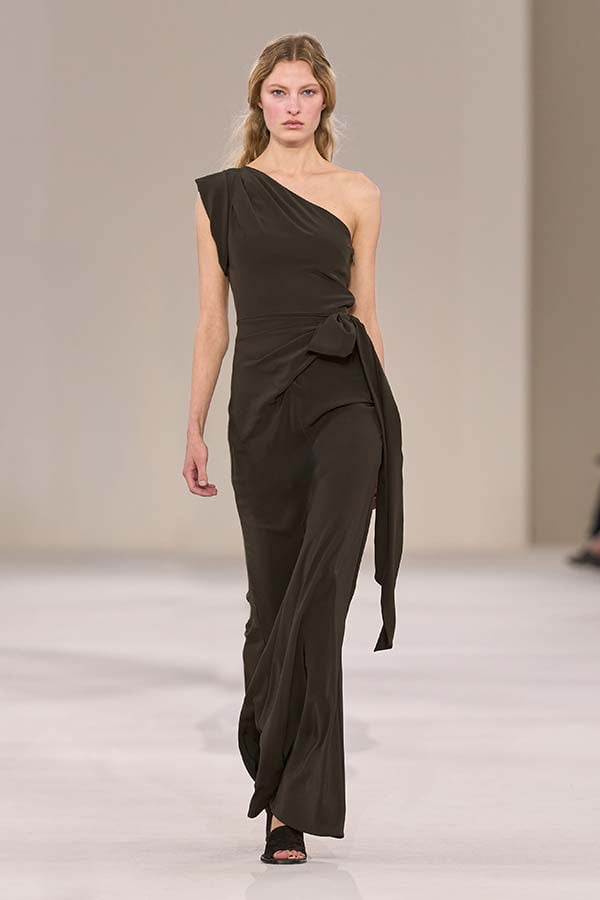
Max Mara showed spring 2027 ready-to-wear in Milan on Sept. 24 at a 9:45 a.m. slot. Creative director Ian Griffiths, nearly four decades into the job, centered safari jackets, cargo vests and trench coats under the phrase “utility lux,” in pointed contrast to the bra tops that became Milan’s defining garment this season. The read: a category-extension play that pushes the house’s strongest franchise into its weakest season.
The Collection’s Central Idea
The phrase was a contest, not a description. “Quiet luxury” has been the industry’s default marketing language for several seasons, and Griffiths went beyond it to claim the season’s other valuable word: function.
“Tokens of a busy woman who’s got a busy life,” he said of the utility garments. “They make you feel like you’re equipped for your day.” That customer is not new. The collection aims to keep the Max Mara woman the house has addressed for decades rather than recruiting a younger one.
Griffiths calls the standard “equipment for living,” and he tests designs on the women who work in his office before they reach the runway. It is a working definition of utility that has less to do with pockets than with whether a garment can be forgotten by lunchtime.
Silhouette and Styling
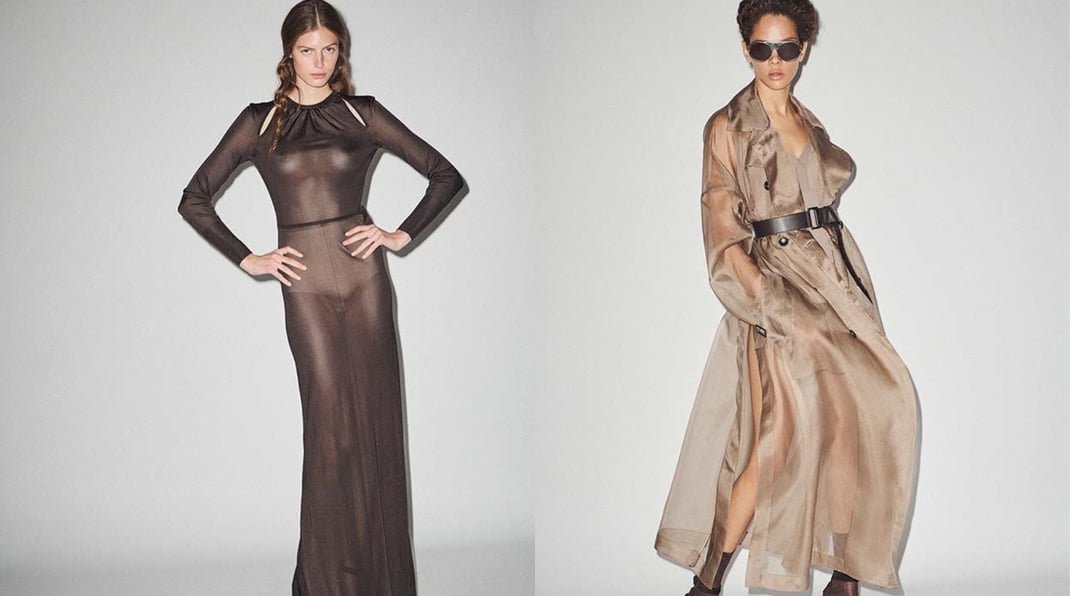
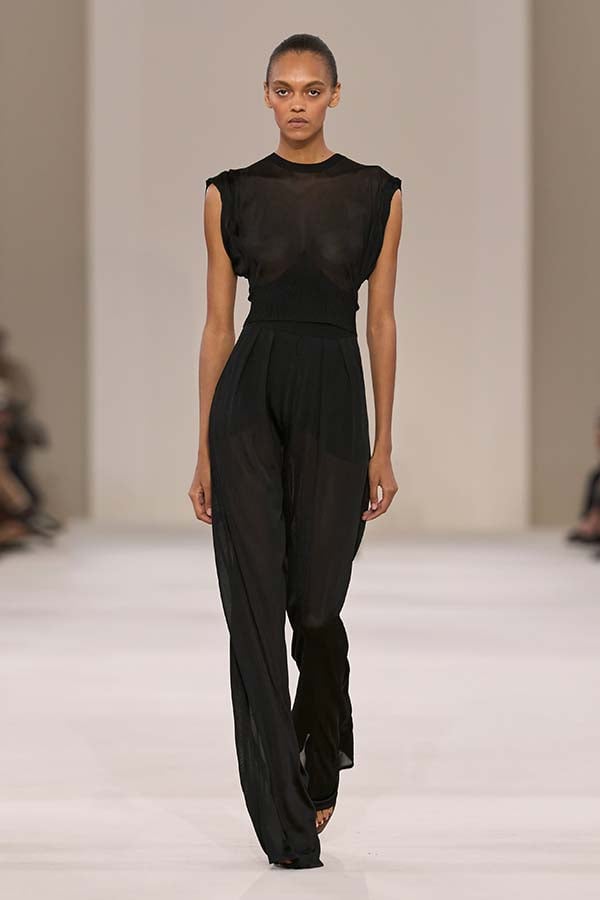
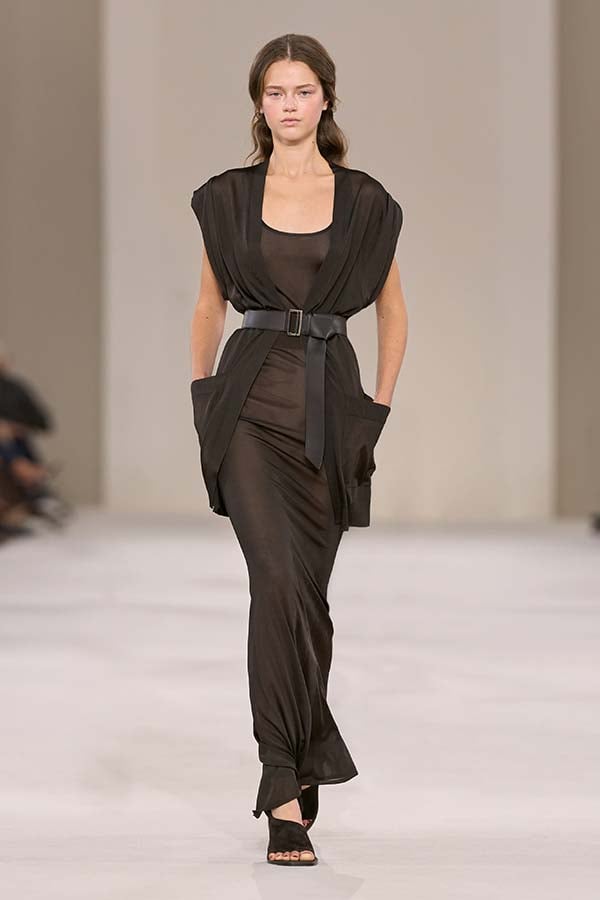
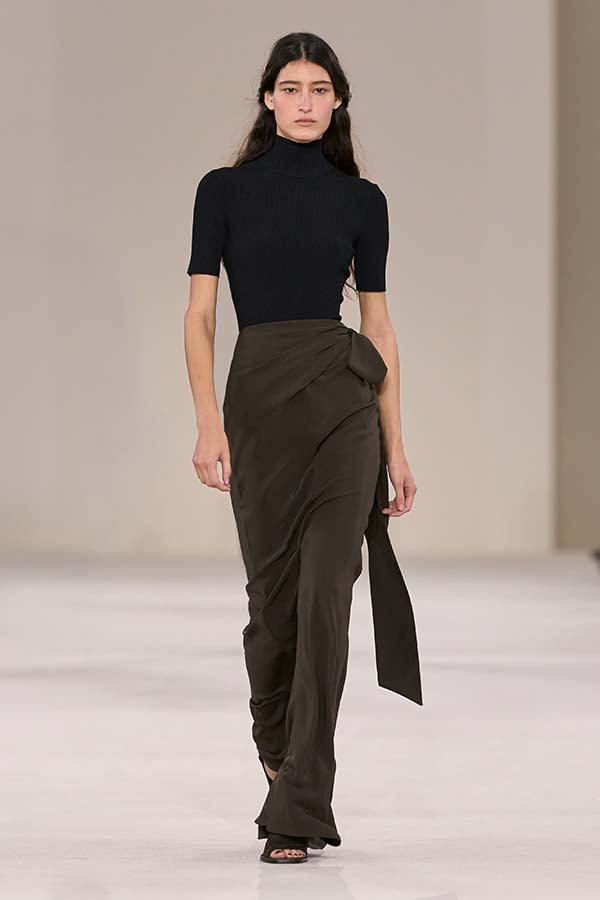
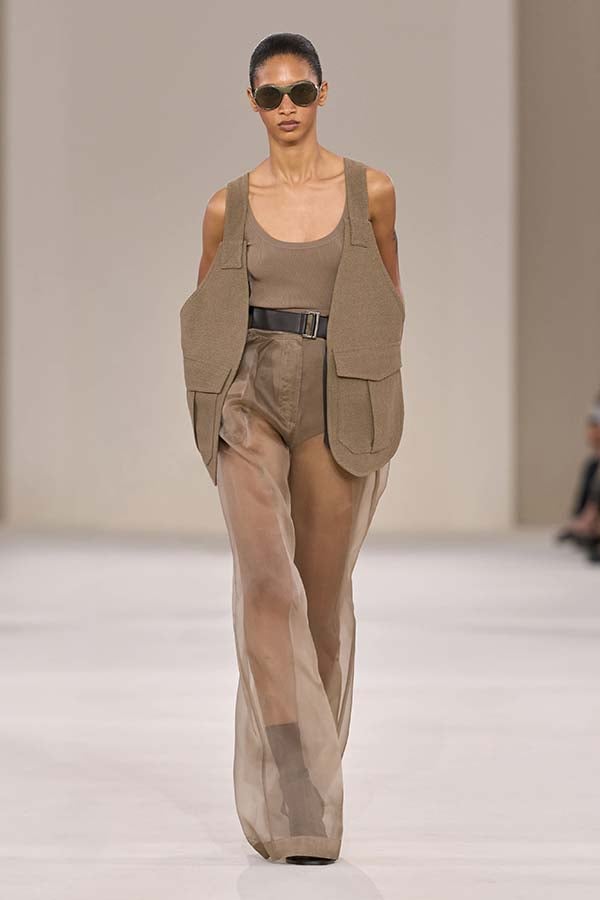
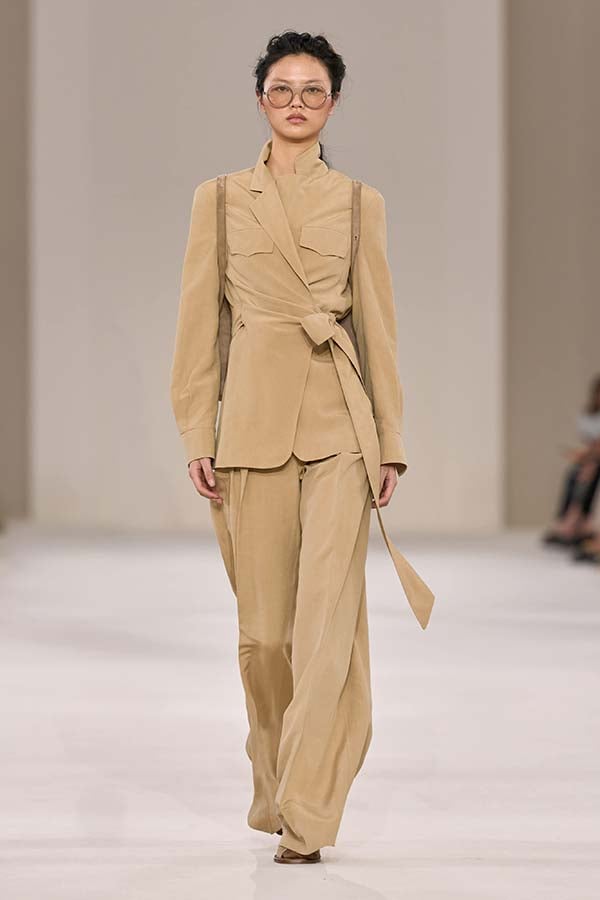
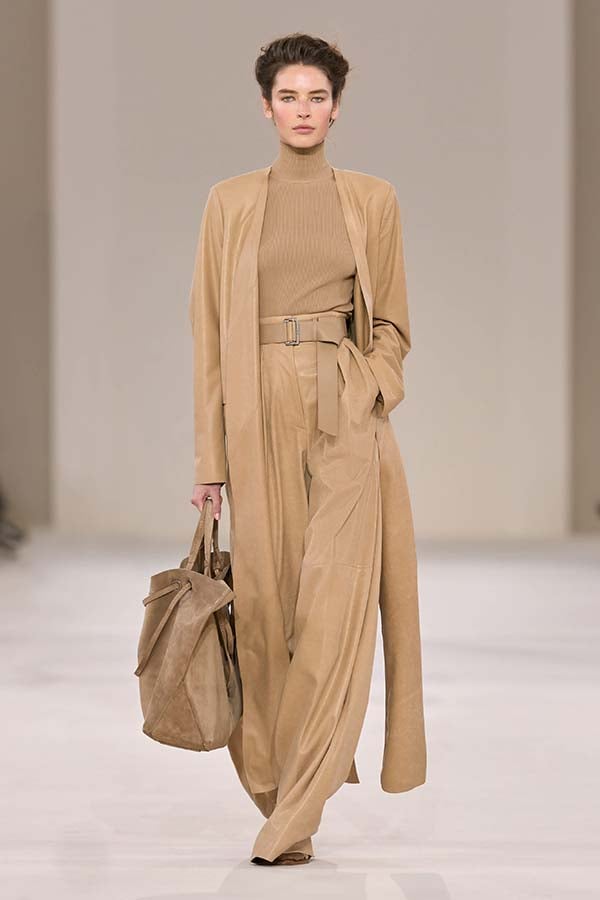
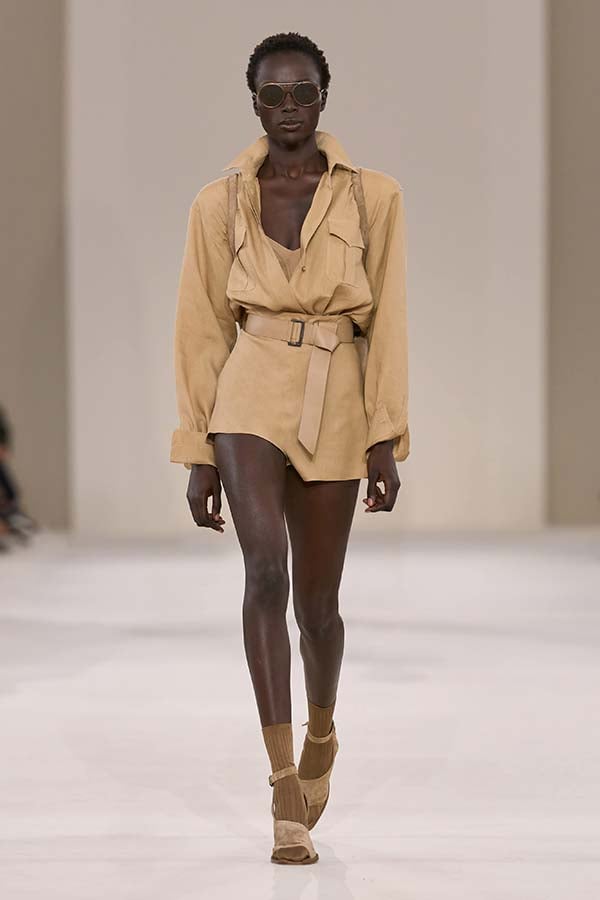
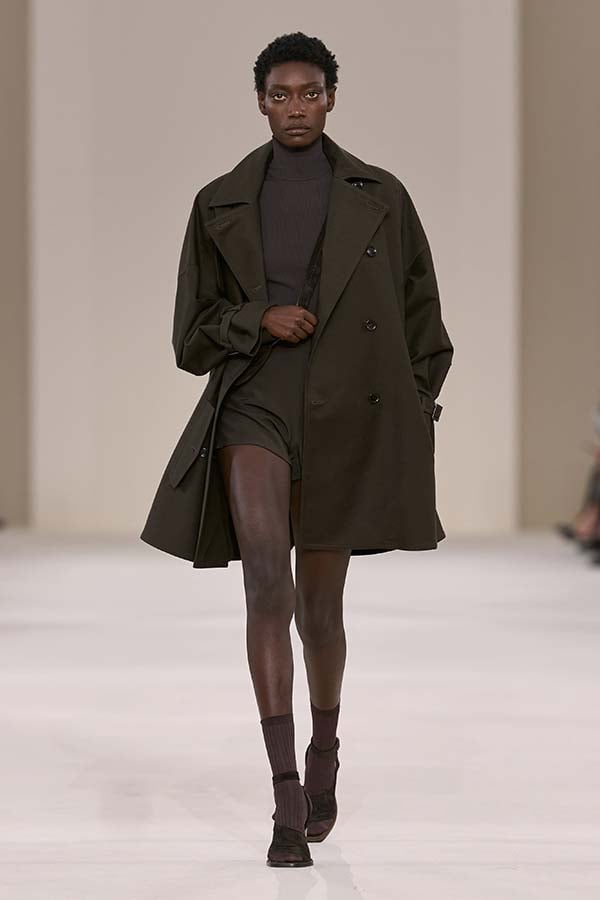
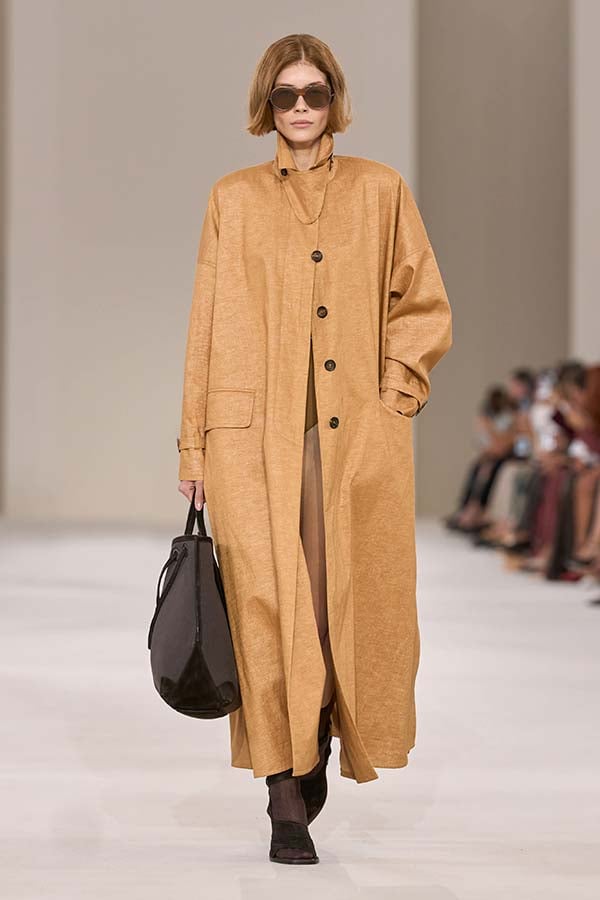
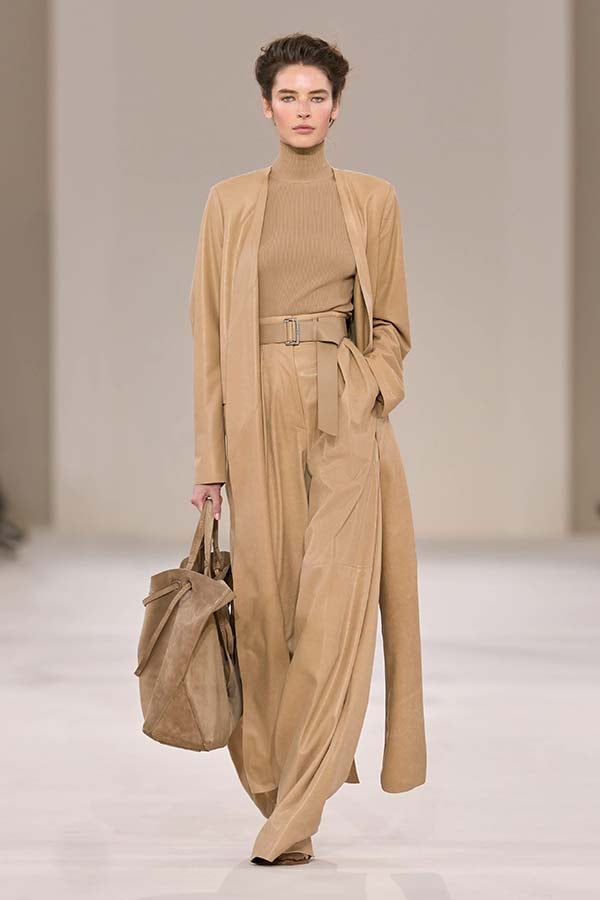
The outerwear carried the argument, and fabrication carried the outerwear. Griffiths worked in linens heavy enough to hold a trench silhouette and gabardines finished until they read as leather. Both are warm-weather cloths doing a winter job, which is the whole point of the exercise.
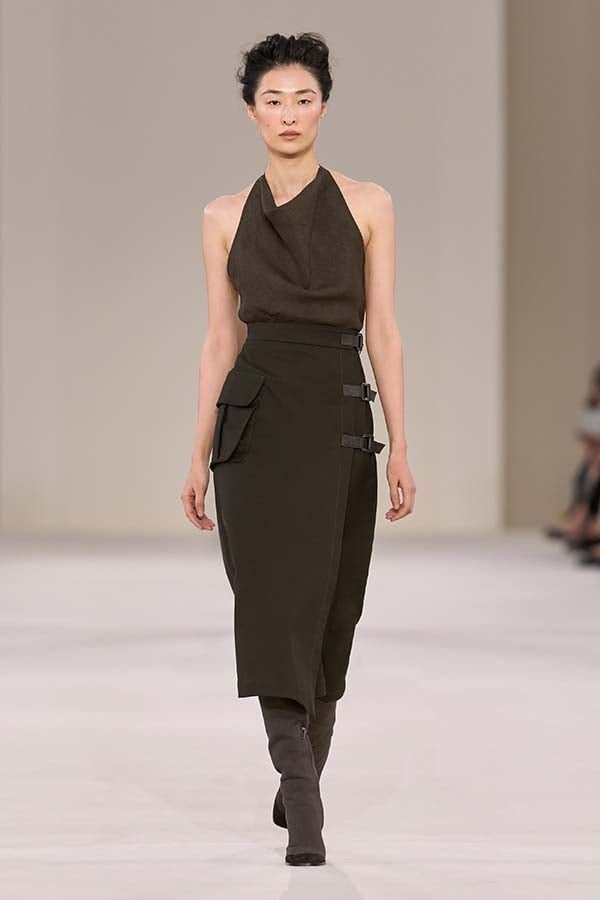
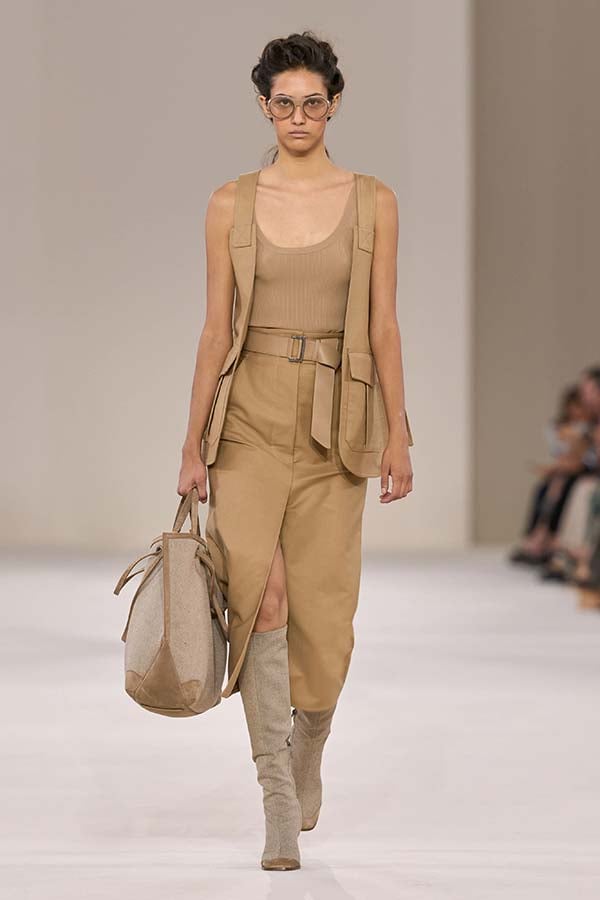
The drawing did the work: bellows pockets, storm flaps, belt hardware. The coats ran long enough to cover a dress underneath, which is the proportion the customer already owns from winter.
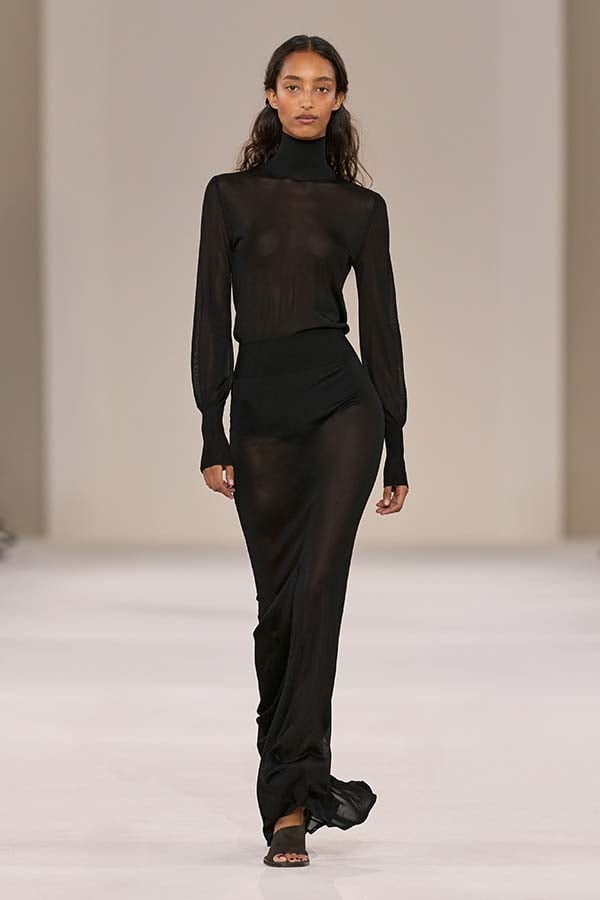
Knitwear was the counterweight. The house’s knit dresses ran close to the body without depending on transparency, holding a line that much of Milan solved this season by removing fabric.
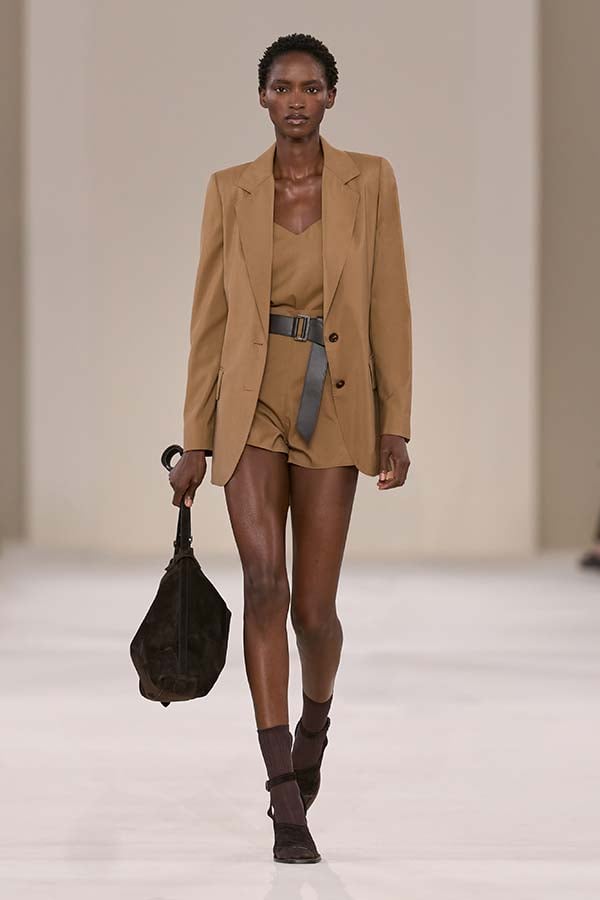
The styling moved the whole collection to the 1930s: pin curls, glacier glasses, Bermudas. The mood board pushed further, with 1990s ম্যাক্স মারা advertisements and Carolyn Murphy in a safari suit.
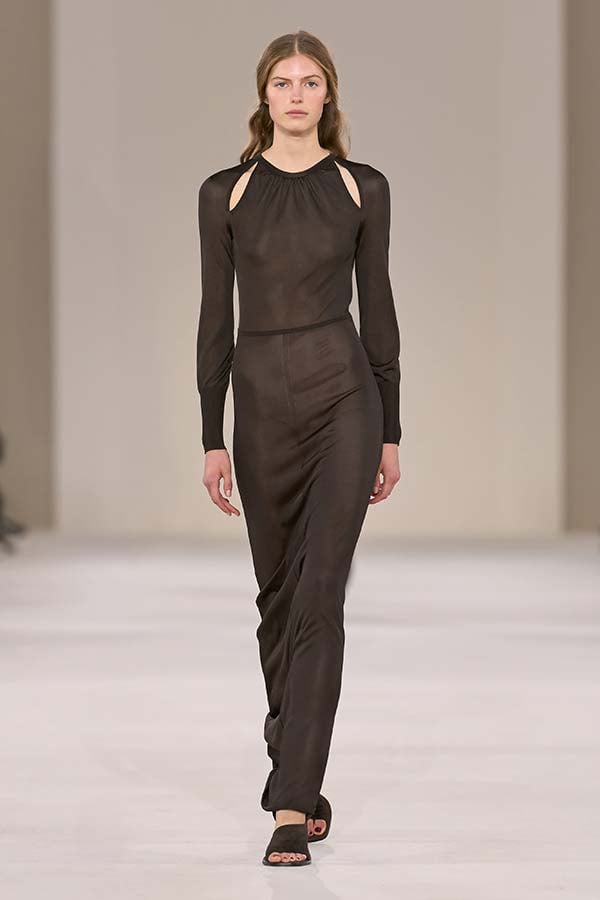
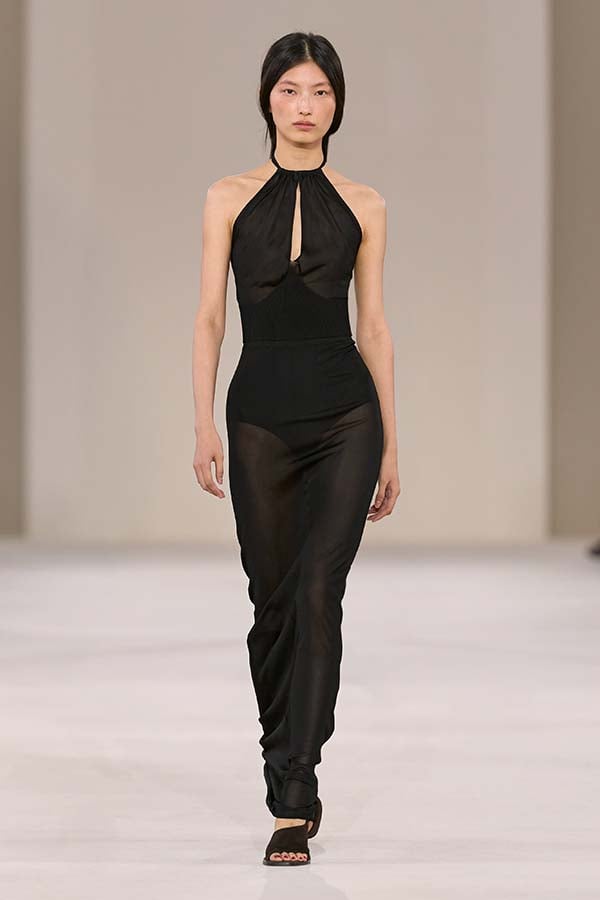
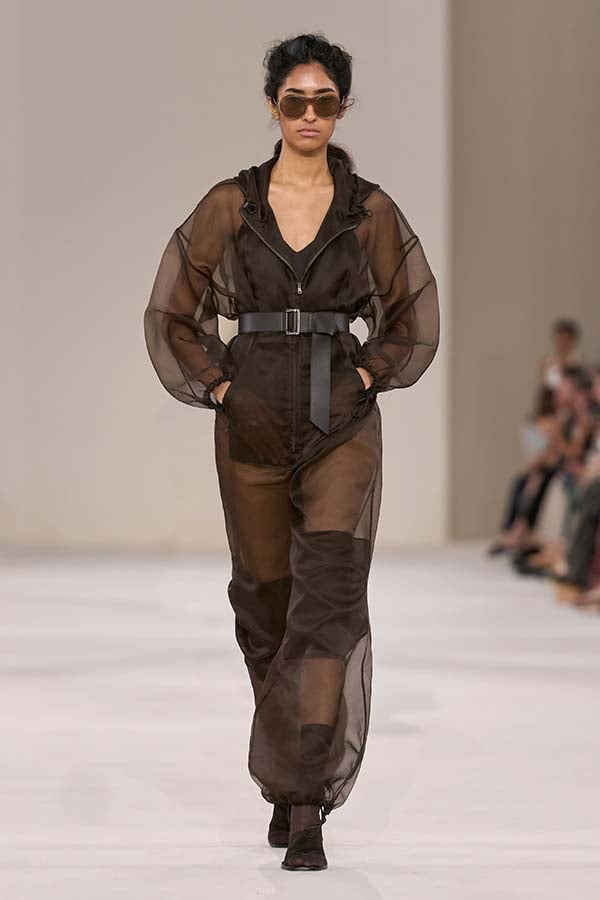
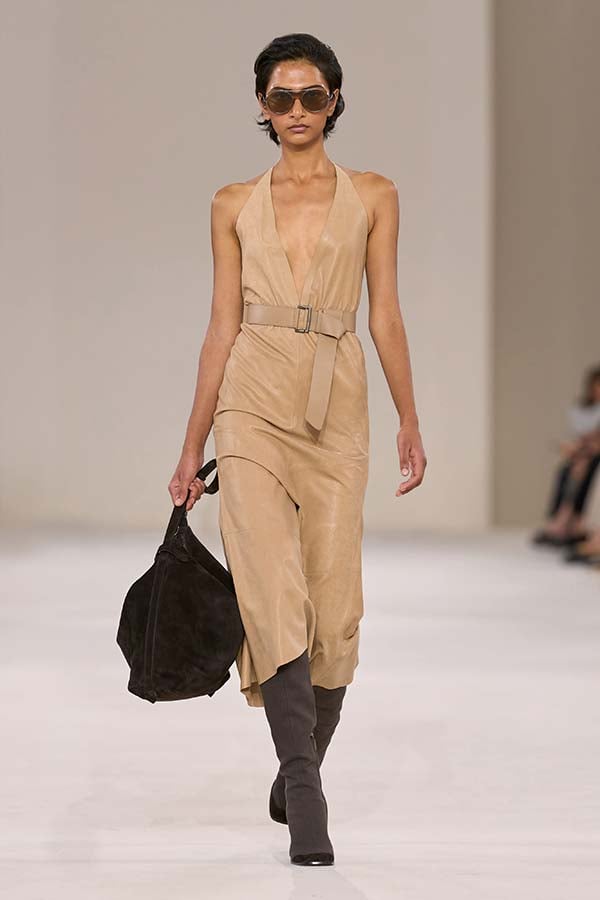
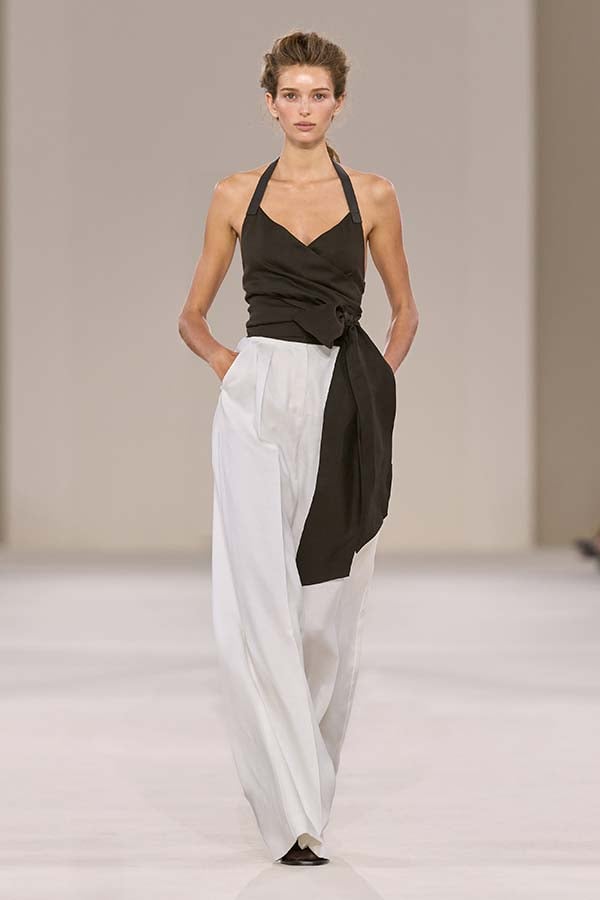
Where the collection reached for evening, the argument weakened. Cutout backs, halter necklines, a flight suit and a pair of cargo pants in black organza all appeared: garments that borrow the language of function from a fabric and a shape that cannot perform it.
The House Codes
The mood board named its historical company: Amelia Earhart and Beryl Markham, the aviators; Freya Stark, the travel writer; Osa Johnson, the explorer and filmmaker. All four belong to the 1930s, and all four sold the same proposition: a woman equipped for terrain.
The archive sells it too. Anne-Marie Beretta designed the 101801 camel coat in 1981, and it is still in the line 45 years later. The Manuela wrap followed in 1998, and Griffiths added the Teddy Bear coat in fall 2017. Utility is not an excursion for Max Mara. It is the house code, and this collection re-read it rather than replacing it.
Griffiths had been down this lane before, as the 1990s advertisements on his board attested. That is the useful context for the season’s framing: “utility lux” is a return, marketed as a new position.
What Worked
Translating coat shapes into spring fabrics is the collection’s strongest technical move, and it is why the business case holds. Linen and gabardine keep a trenchcoat recognizable in a season that usually reduces outerwear to a windbreaker.
The restraint showed in what it left out. One bra top appeared on the runway, in a season where the bra became Milan’s most ubiquitous garment. A house that sells coats does not need the top of the moment, and Max Mara declined to chase it.
The knitwear held as well. Dresses cut close without sheer panels or exposed construction are harder to make than they look, and they give the floor a second category that works in the same temperature range as the outerwear. That is what a spring proposition needs.
The comfort standard is not marketing language in this case. Testing a design on the women in his studio before it walks is a real filter, and it explains why the plainest pieces in the show were also the most resolved.
Where It Faltered
Much of the utility was notional. Bellows pockets that no wearer opens and storm flaps that never get fastened are signifiers of function rather than function, and a collection that argues from usefulness has to survive the test of use.
The organza pieces failed it outright. A cargo pant in black organza carries nothing, because the pockets are drawn rather than built, and the flight suit in the same fabric turns a workwear reference into decoration. When the hardware outlives the capacity, the argument thins to styling.
The evening gestures did similar damage from the other direction. Cutout backs and halter necklines are not functional in any sense the rest of the lineup allows, and they arrived precisely where the collection got dressed up. The strongest looks were the least eventful ones.
The styling props also carry more of the reference than the rack can. Glacier glasses and Bermudas do the storytelling, and they are the pieces least likely to arrive on the floor in those proportions.
The Bigger Picture
Max Mara Fashion Group is private and family-controlled, chaired by Luigi Maramotti, and its portfolio runs from Sportmax and Weekend Max Mara through Pennyblack, iBlues and Marina Rinaldi to Max&Co. The flagship line carries the group’s price architecture, which is why its রানওয়ে has to keep the coat selling at the top of the range.
Laura Lusuardi, the group’s design director emeritus, now runs its archive and library, the institutional memory that keeps a 45-year-old coat in production. It is a commercial asset as much as a cultural one.
The show’s logic sits in the category mix. Outerwear is where Max Mara’s recognition and margin concentrate, and spring is the season that normally thins it out. Putting the trench coat and the safari jacket at the center of a spring collection extends the franchise into the months the coat usually sits out, and it gives the floor a third piece priced above the knitwear, with bags and shoes following it.
The “busy woman” framing is a retention play rather than an acquisition one. It addresses the existing customer instead of the younger editorial audience the bra tops were built to reach.
The renaming is the show’s sharpest commercial move. “Quiet luxury” has been worked hard enough to lose its premium; “utility lux” claims the same product idea, understated and expensive and built to last, without inheriting the phrase’s fatigue. The clothes did not need to change for the label to work.
Max Mara’s argument for spring 2027 is that a coat house does not need a new category, only a new season. Griffiths has spent nearly 40 years showing the house can re-cut the same idea without exhausting it, and the utility framing is the cleanest version of that skill so far. The proof arrives when the trenches reach the floor, and the customer decides whether function was the point or the pitch.
See the complete collection below:
Images courtesy of Max Mara
In another fashion week news, Fendi Spring 2027: Maria Grazia Chiuri Finds Freedom in Lingerie