
Yusuke Takahashi closed Paris Fashion Week with VOL.13, a translucent, hand-finished collection and a first jewelry collaboration with Kalevala — shown the same year CFCL spent roughly 1 billion yen on its own knitting factory
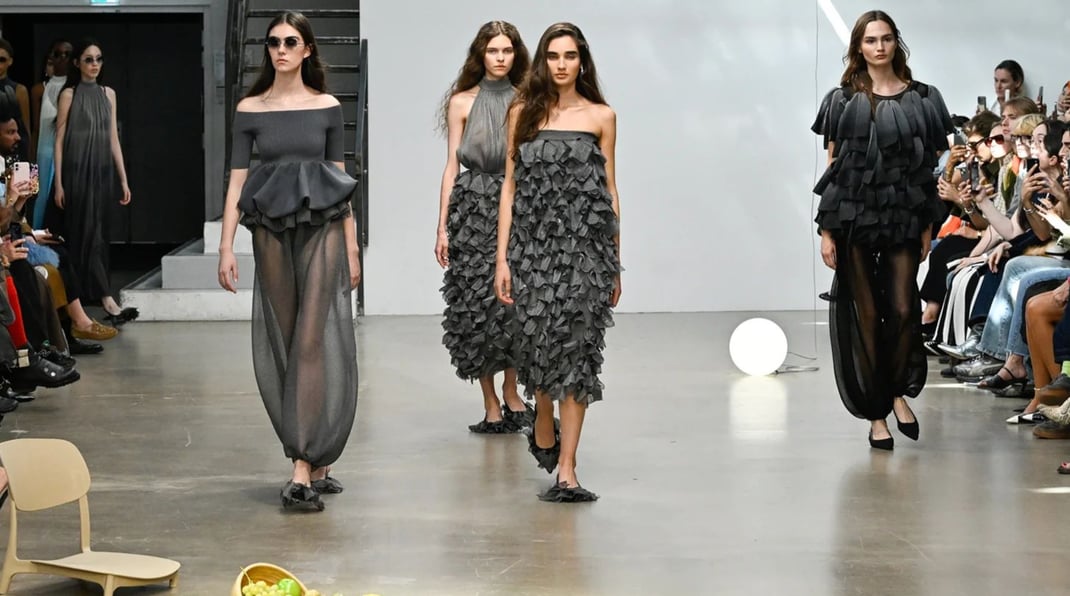
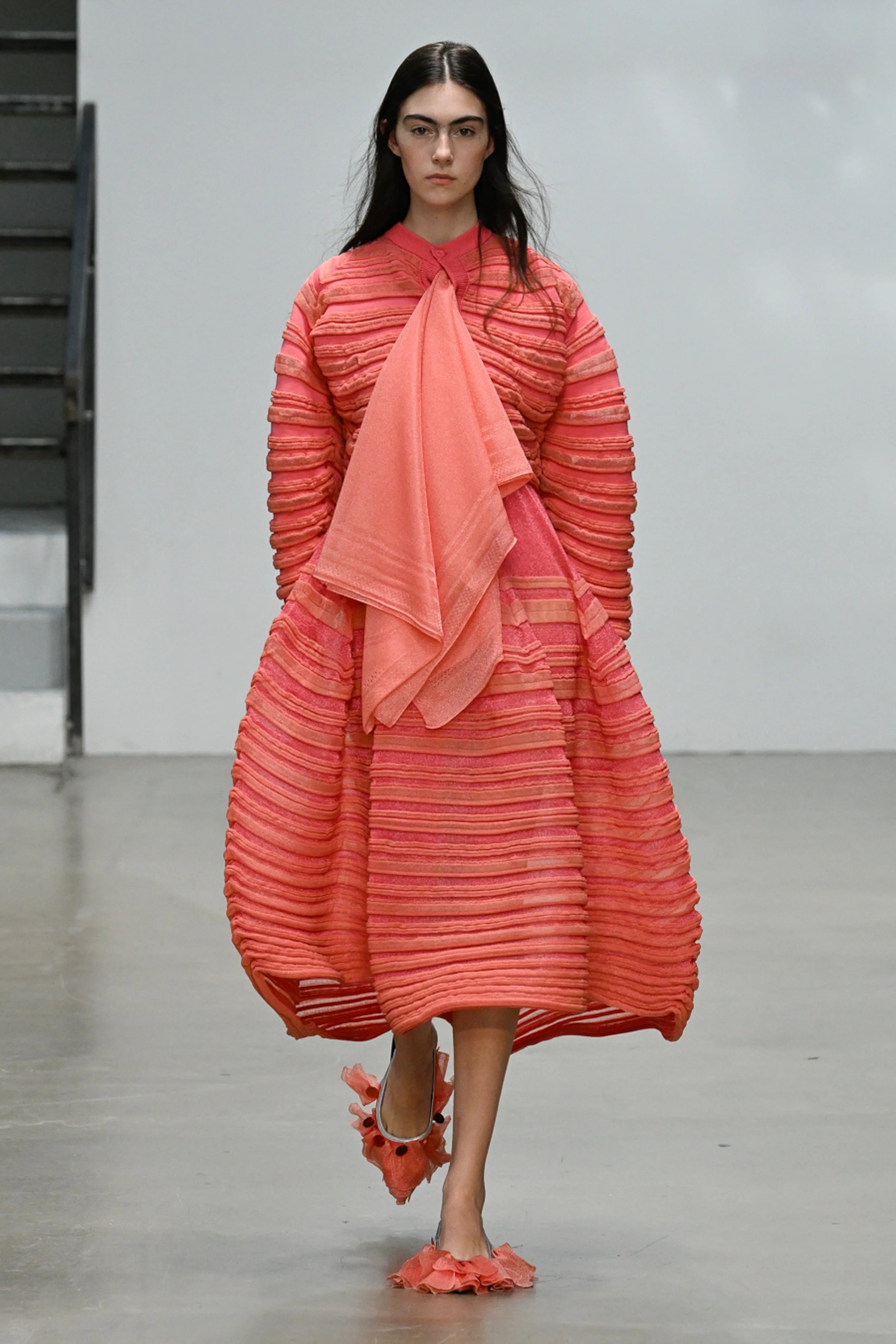
PARIS — CFCL showed VOL.13, its spring 2027 women’s collection, at Toguna inside the Palais de Tokyo on Oct. 6, the closing day of Paris Fashion Week. Founder and creative director Yusuke Takahashi built the collection around translucency and hand-finishing, and paired it with the brand’s first jewelry collaboration, made with the Finnish house Kalevala.
The set put sunken chairs and scattered fruit in a room-like space, scored by the Seoul ambient duo Salamanda. CFCL calls the theme “Harmony” and files the clothes, as it always does, under “Knit-ware.” What actually changed this season is the labor. VOL.13 is the first CFCL collection in which the hand does more visible work than the machine – and the brand has spent five years arguing the opposite case.
“What if clothing could feel as comfortable as a welcoming room?” Takahashi told WWD, describing the question behind the season. The architectural thinking of Alvar and Aino Aalto carried over from the menswear chapter shown in June, which ran under the same VOL.13 heading.
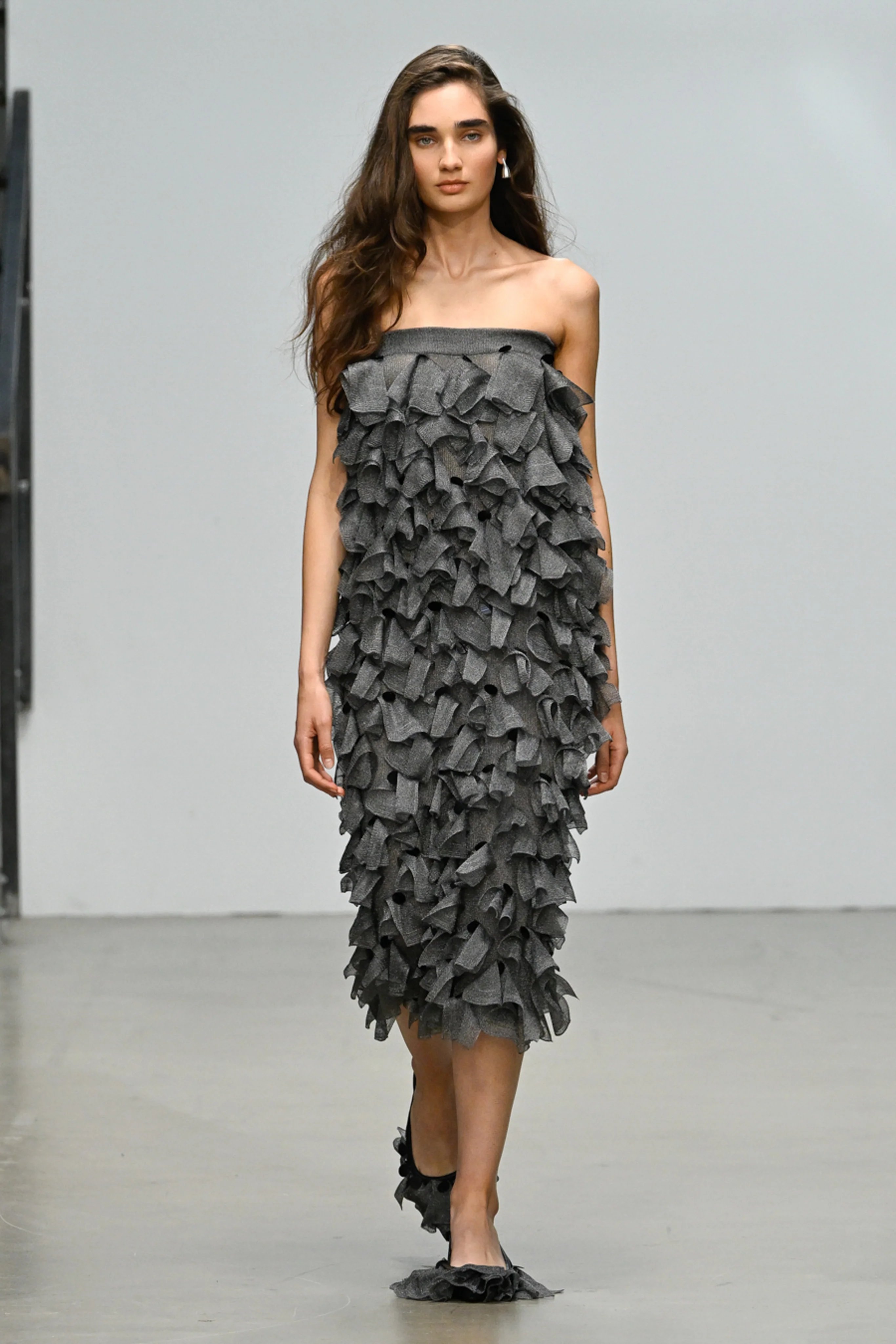
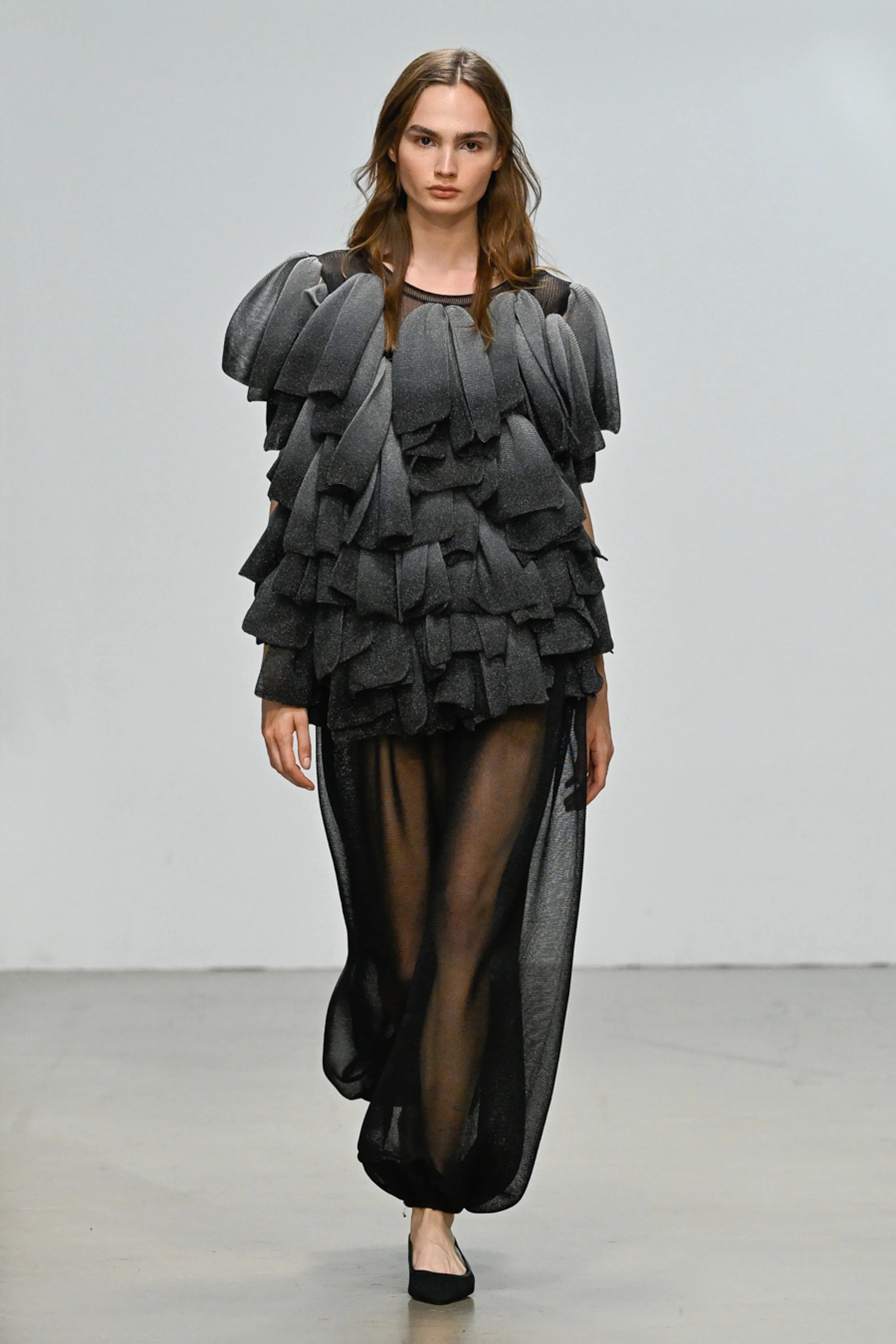
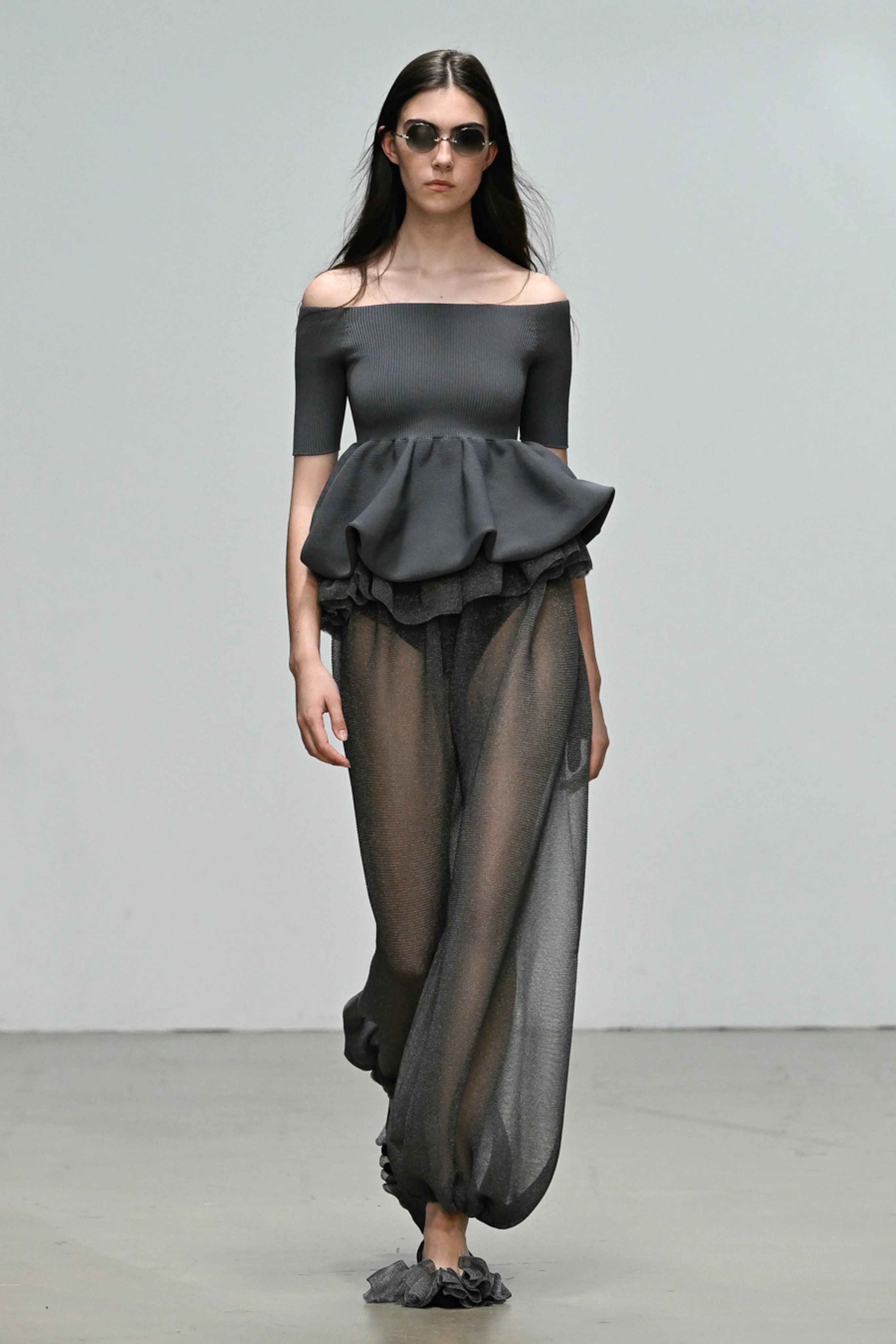
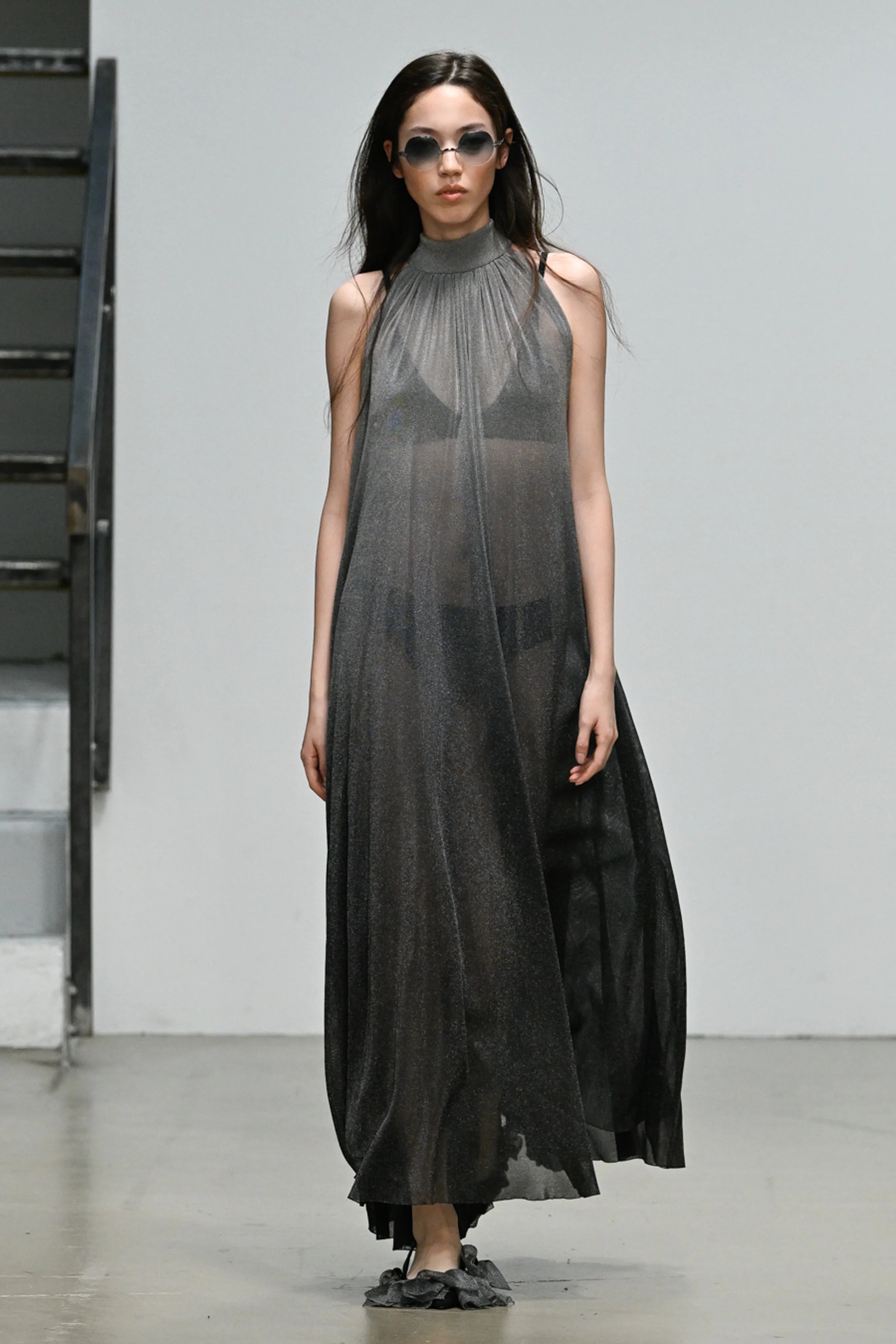
Six Technique Families Carry Most of the Show
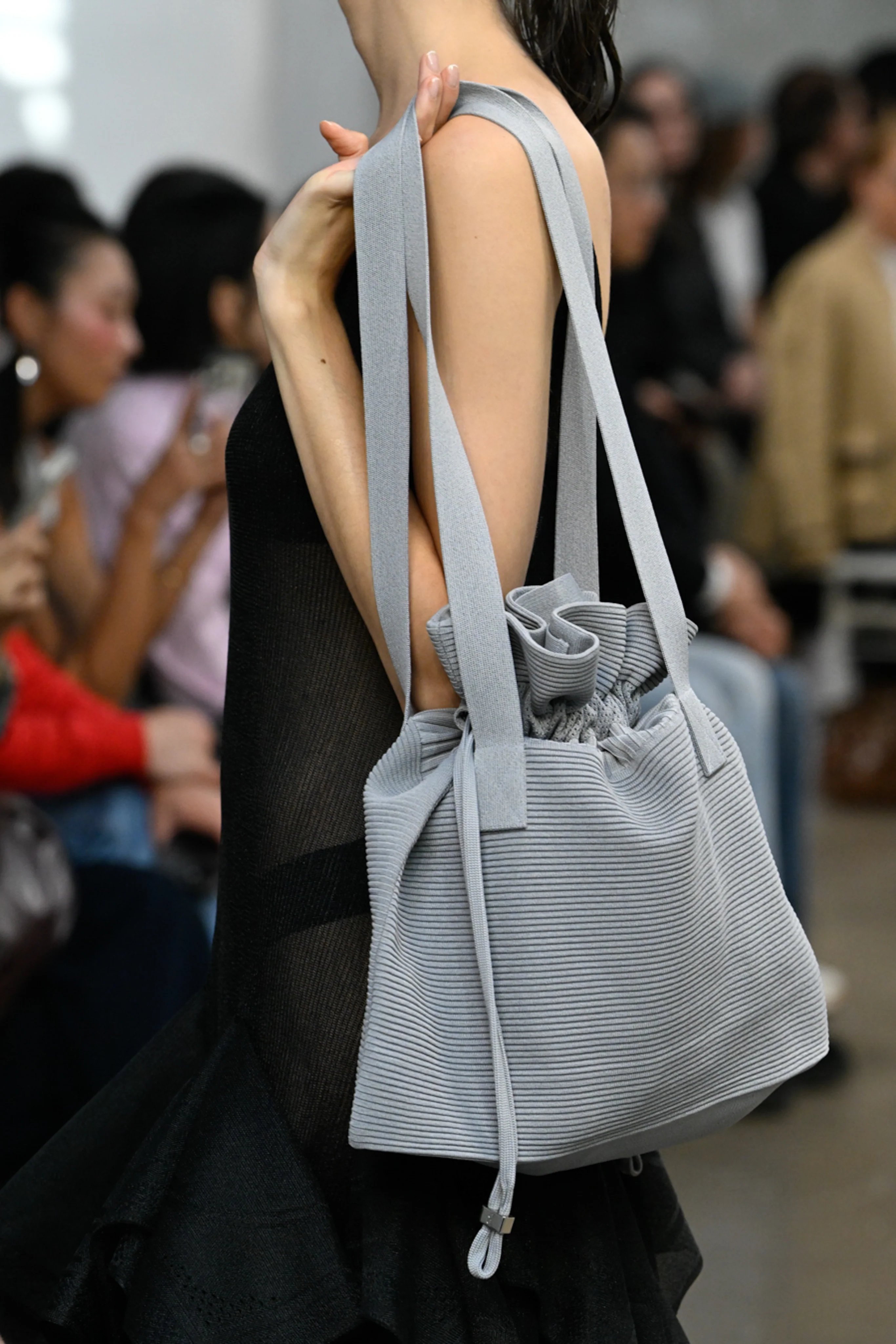
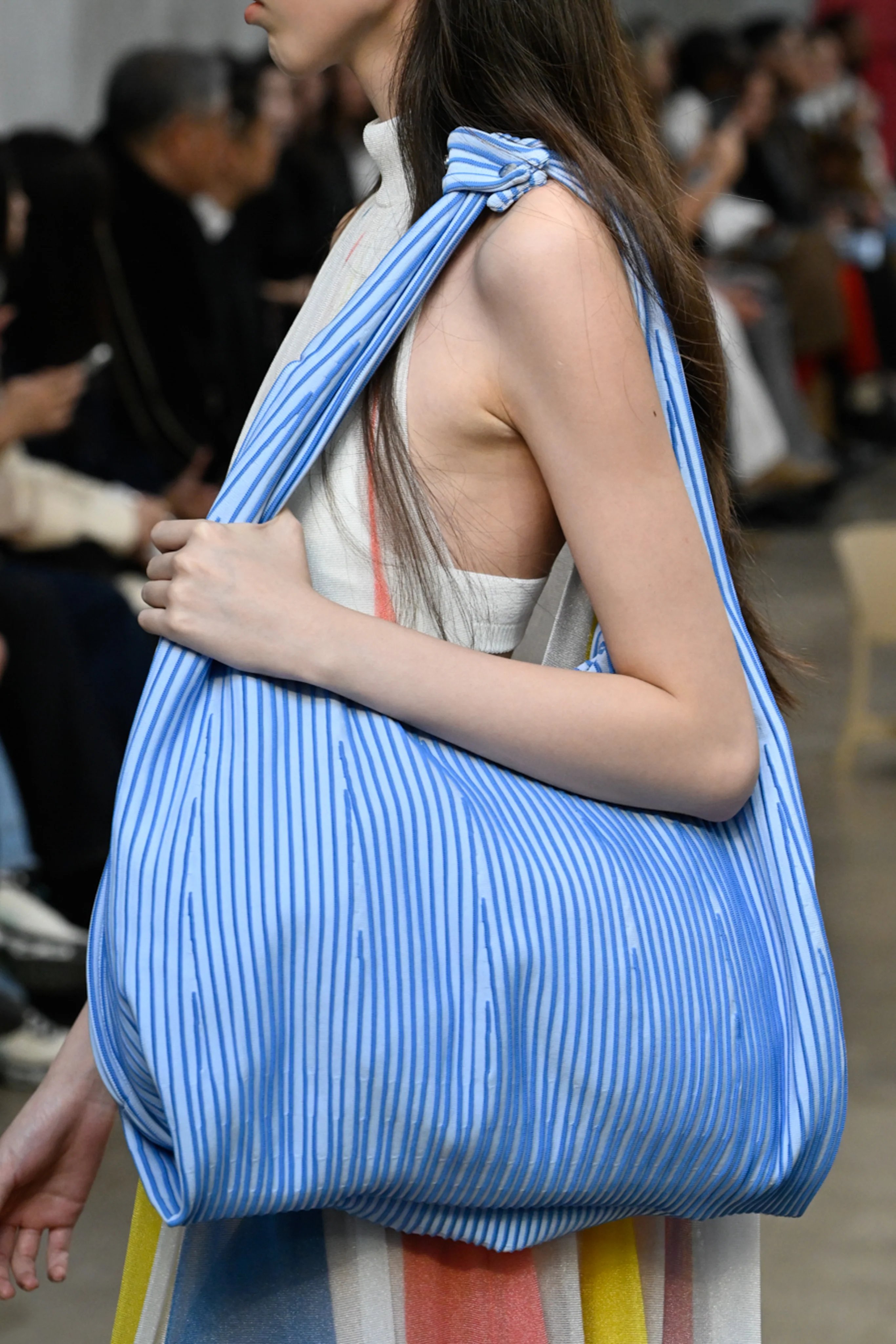
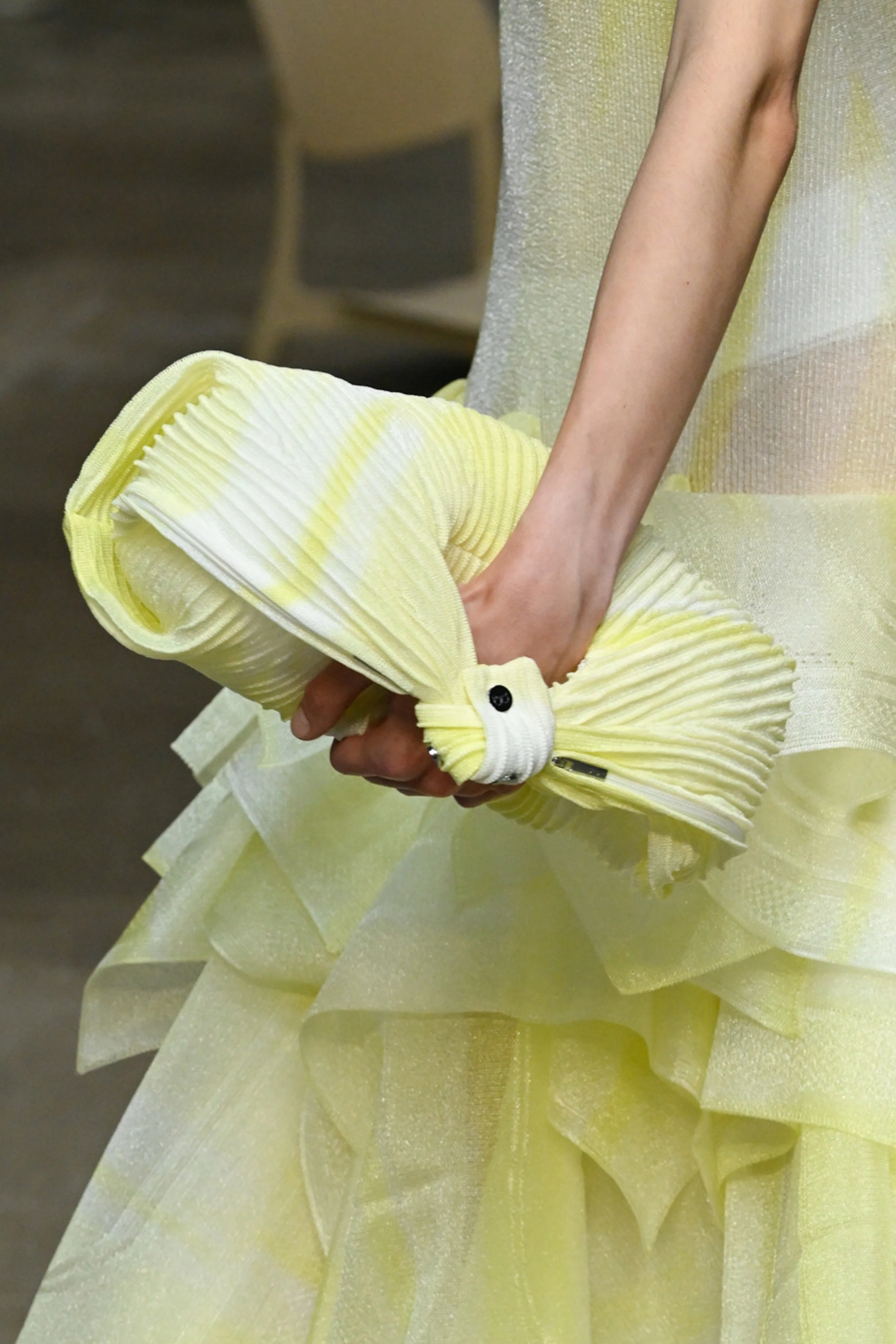
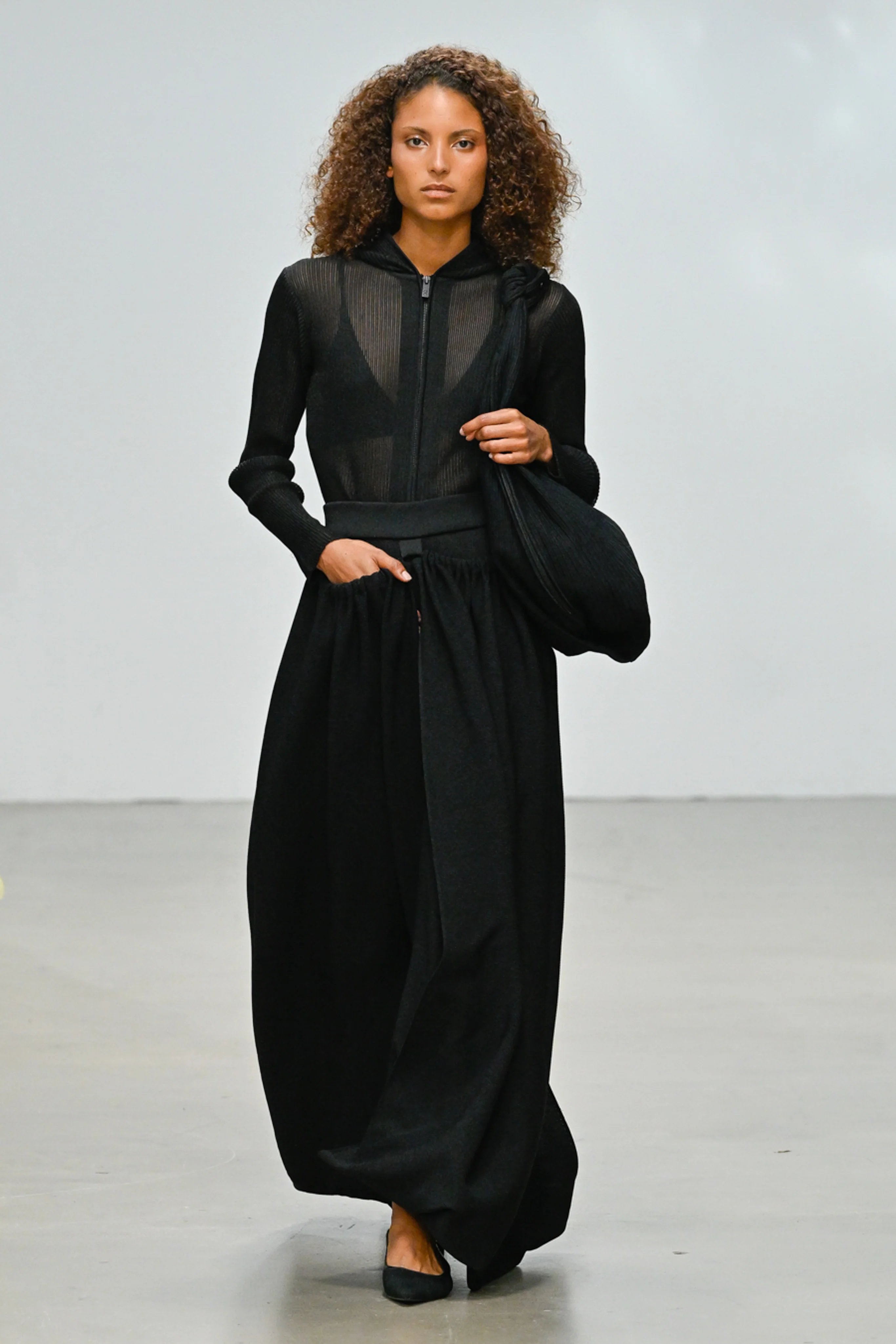
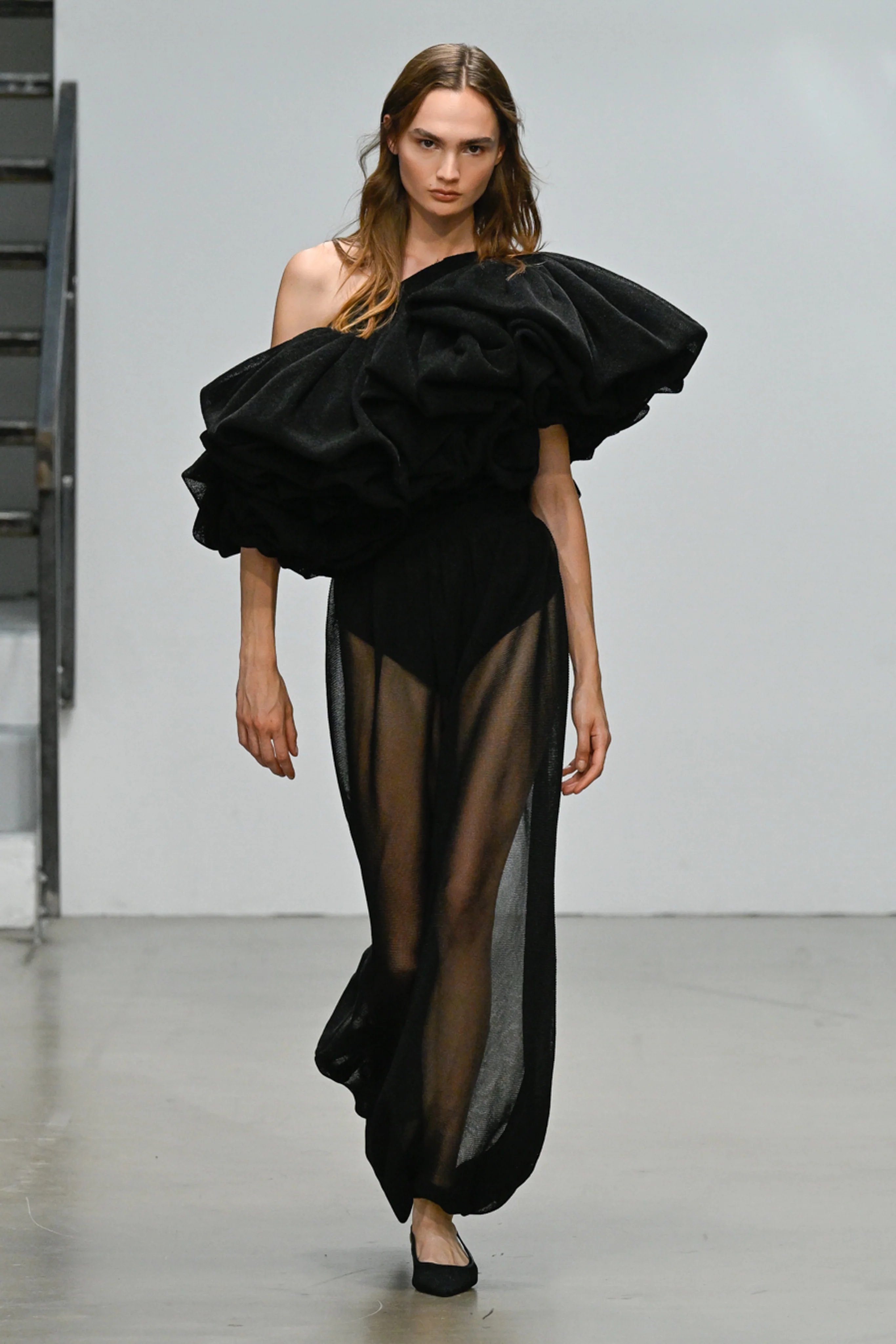
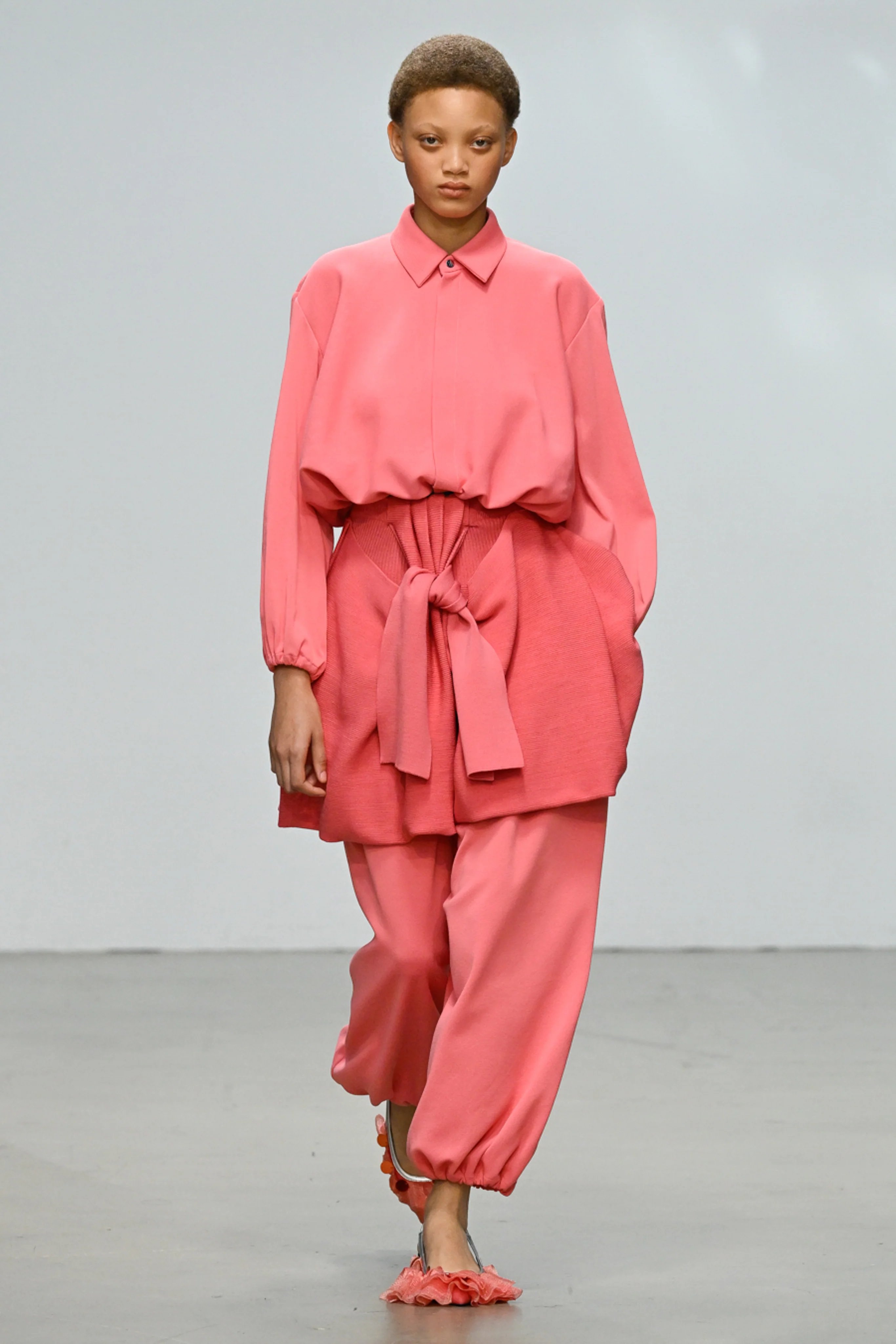
The brand’s collection notes assign 25 looks to six named construction families, an unusually high ratio of runway looks to a fixed set of methods. Gathered Pottery (looks 25, 26, 28, 36 and 39) runs elastic through the hem of CFCL’s signature Pottery series to make a balloon shape; raise the elastic to the waist and both silhouette and length change. Corded (13, 14 and 21) threads a cord through the waist of seamless knitted trousers and gathers the fabric like a curtain. Asymmetry Overwrapped (12 and 27) folds a seamless skirt hem outward so the panels overlap as the wearer moves.
Those three are the collection’s commercial spine. Each is adjustable by the customer rather than fixed by the pattern, a sensible answer to the problem of selling knit volume at four figures to a woman who cannot try it on.
The Lucent Group Repeats One Idea Three Times
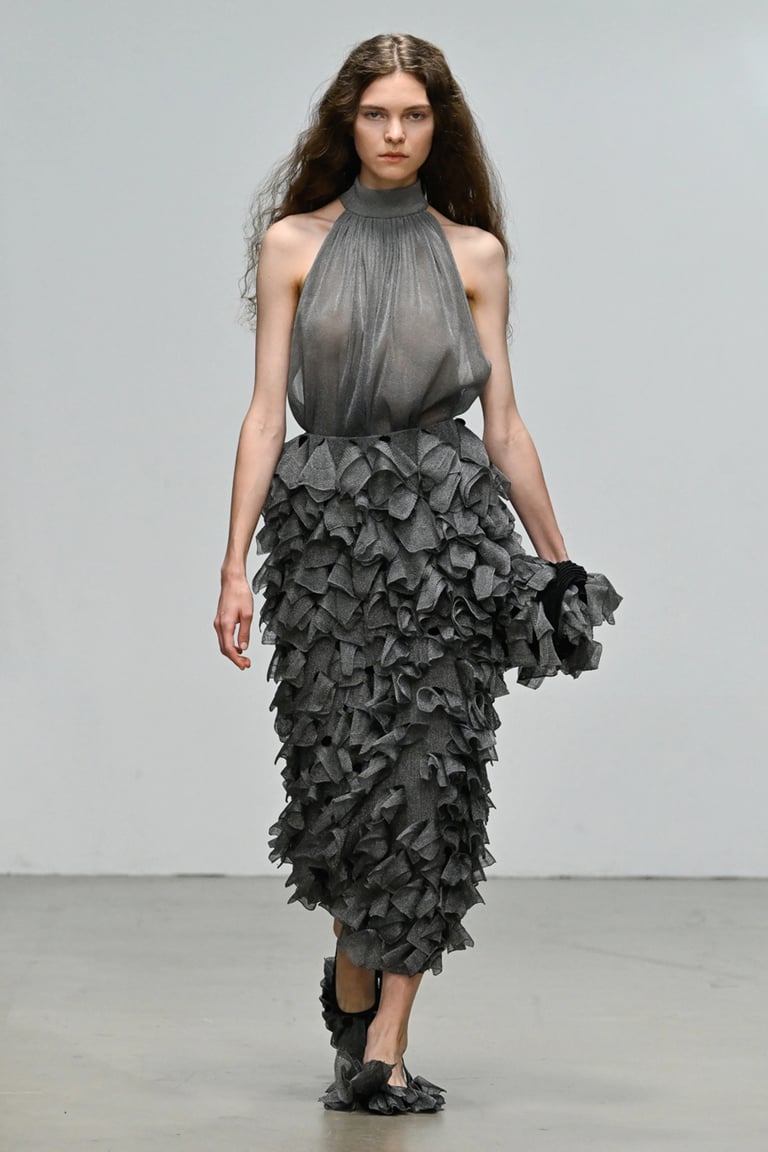
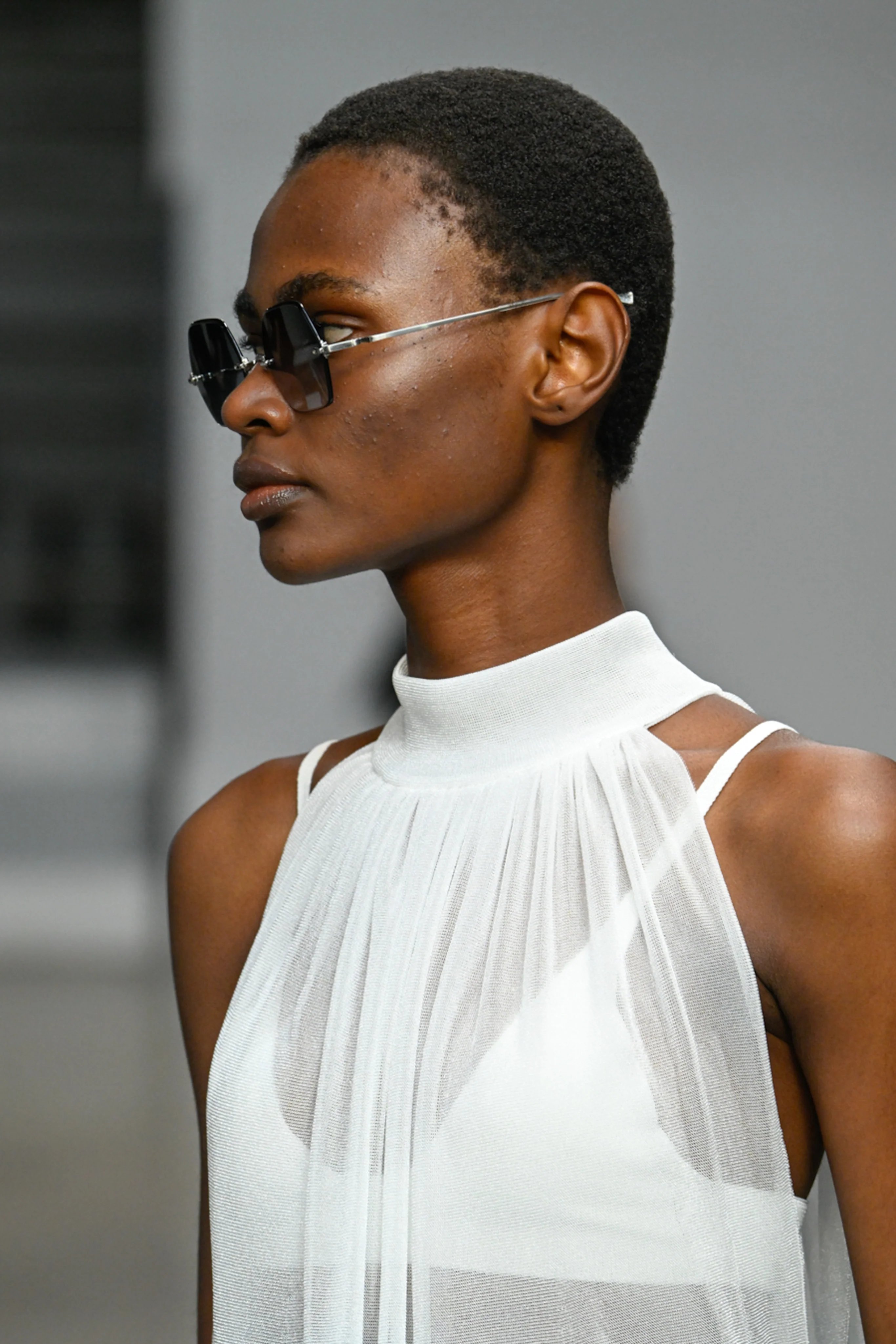
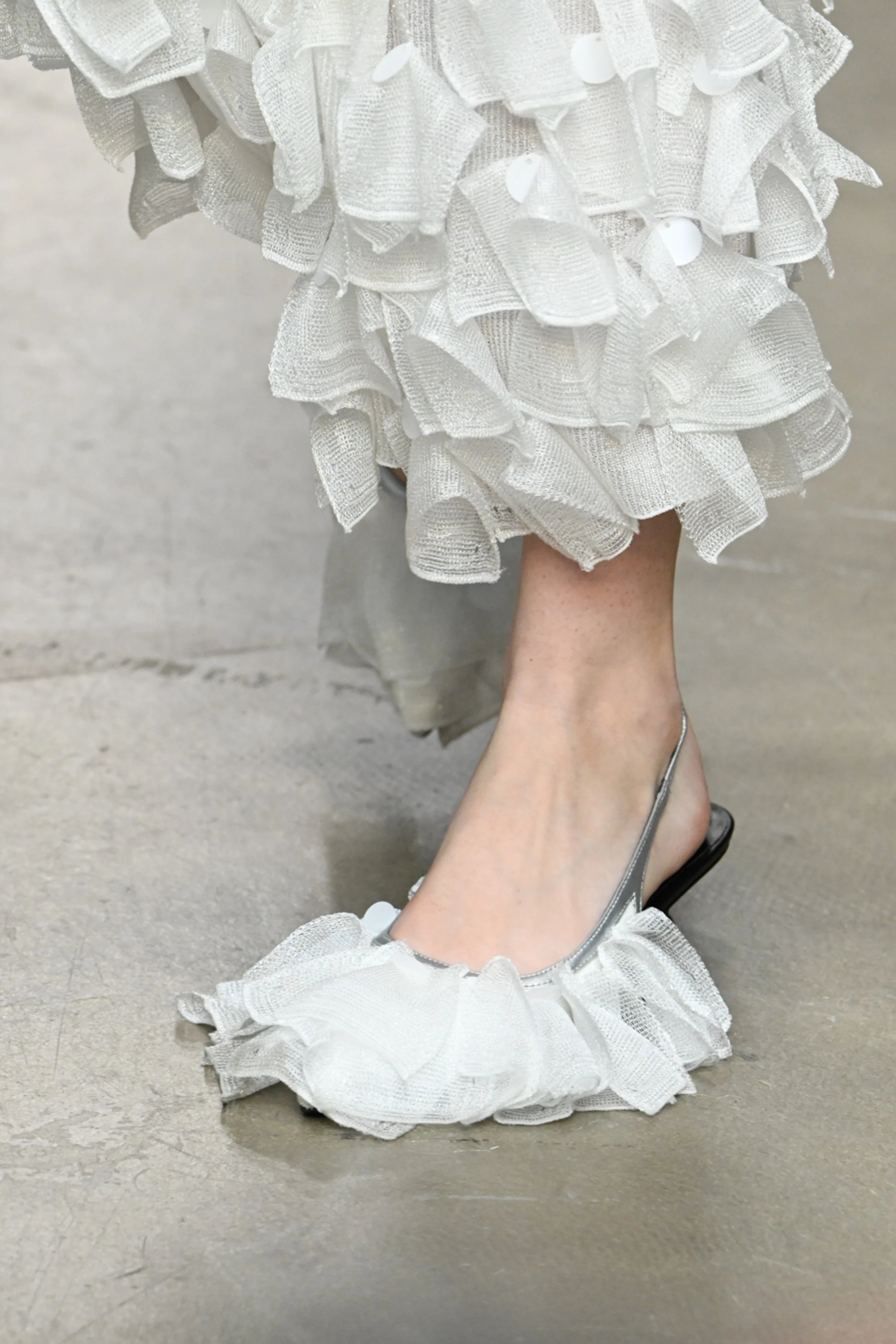
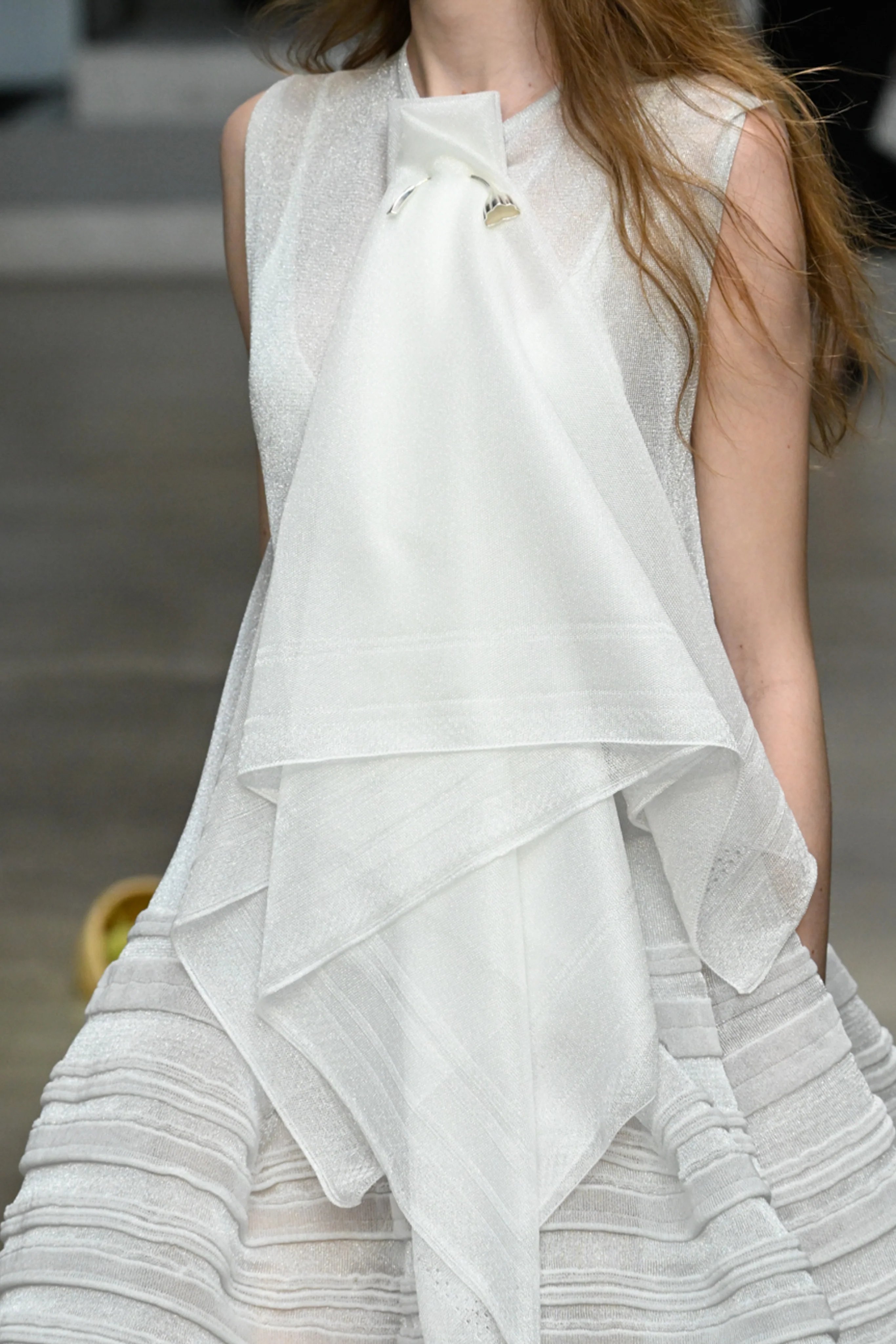
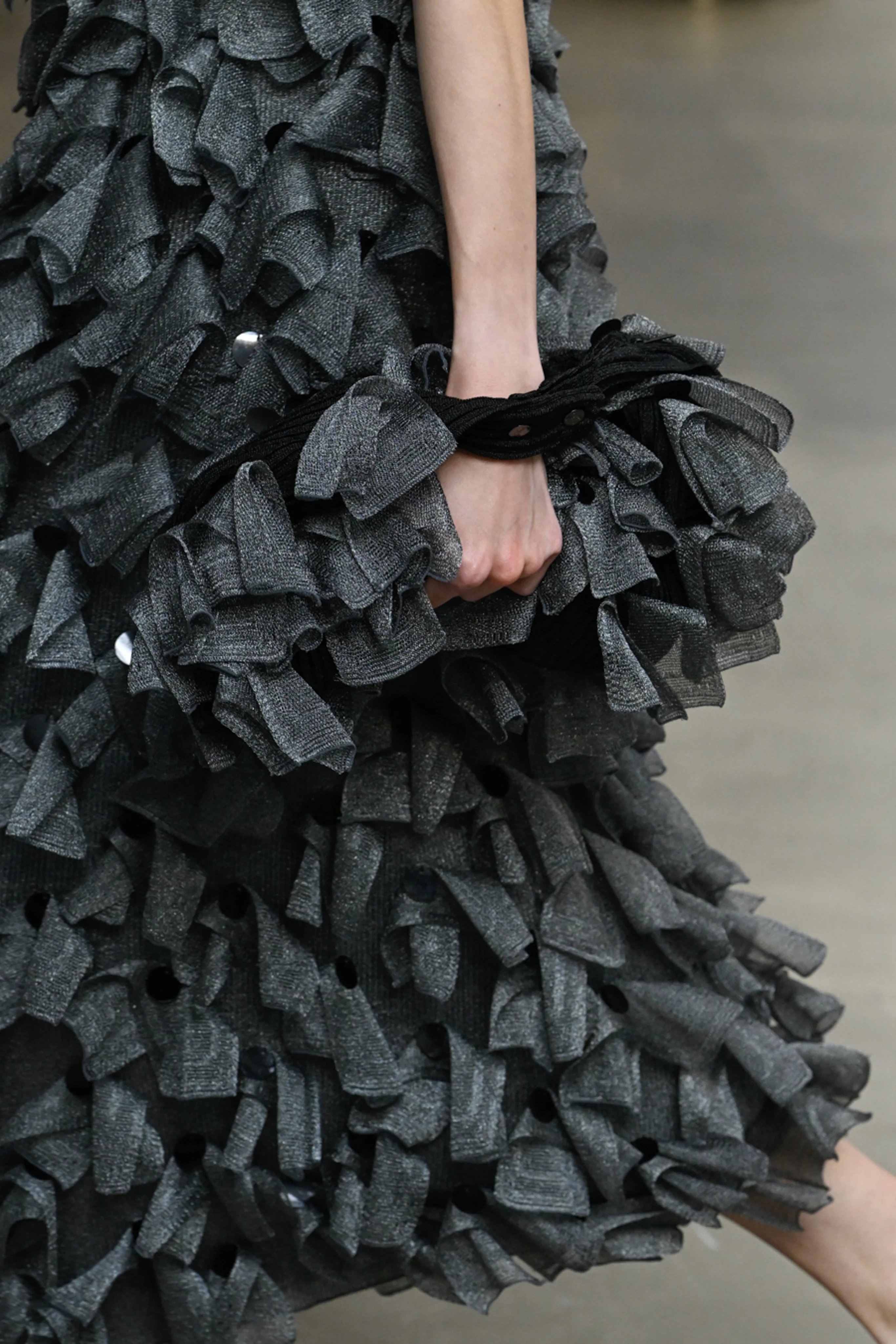
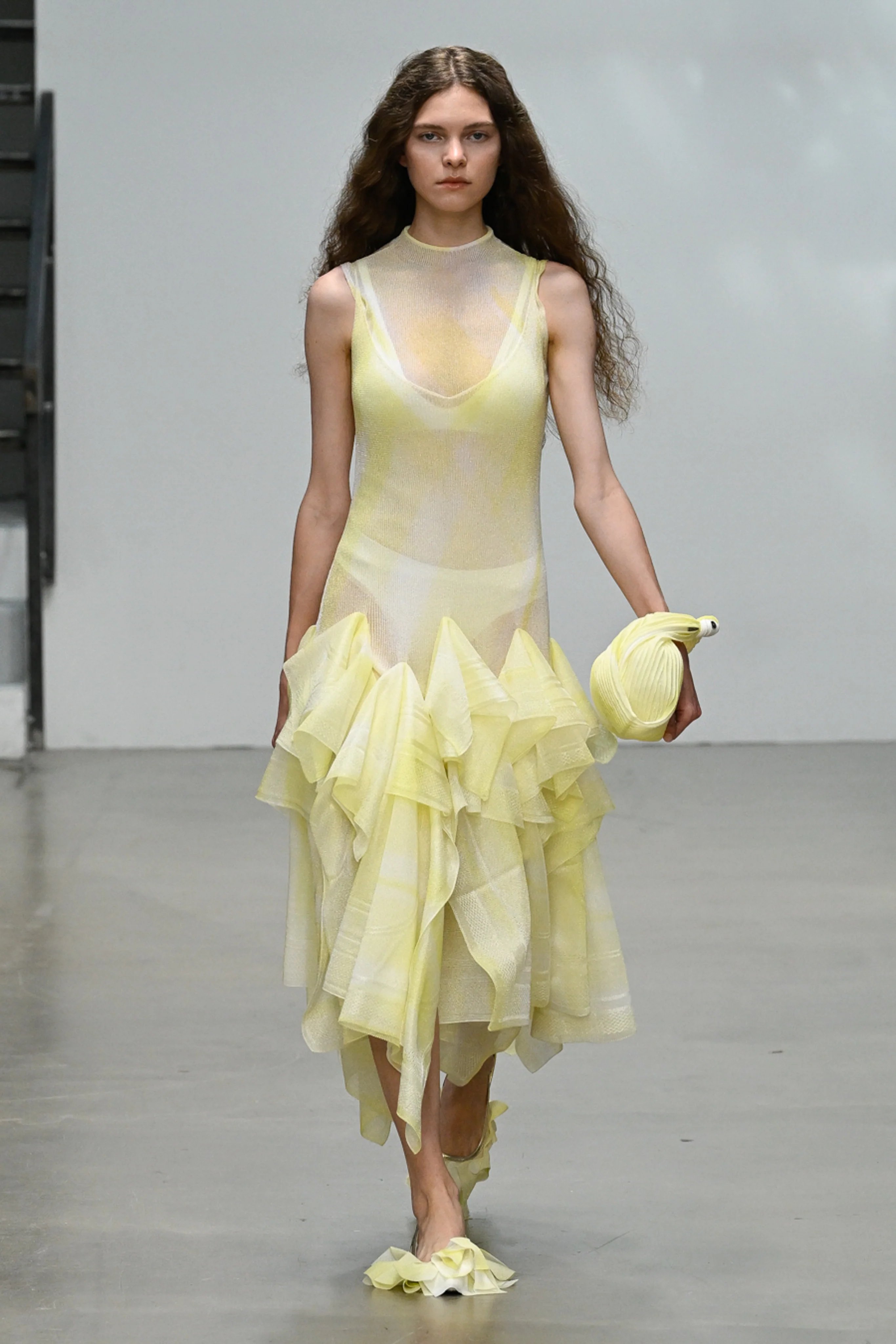
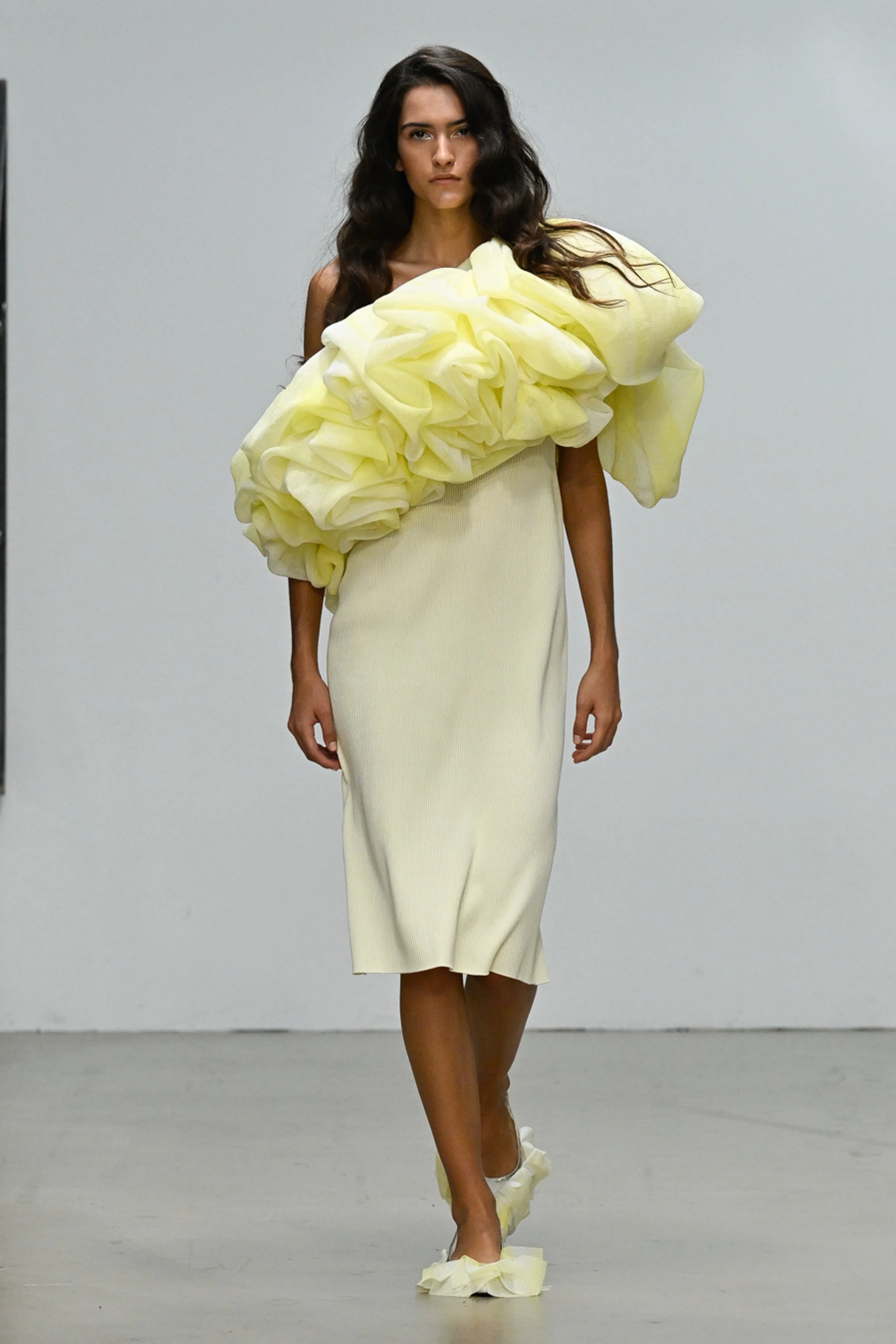
The Lucent Effect families – Handkerchief (11, 18, 22, 31, 33 and 35), Flapped (23, 29, 32, 37, 41 and 43) and Conic (15, 34 and 38) – account for 15 looks on their own. All four Lucent designs combine dyeing and handwork with translucent nylon and polyester bases, per the brand’s notes.
That is the structural problem. Handkerchief layers bias-set lace squares across the body; Flapped threads narrow knitted strips by hand through programmed holes; Conic knits a fan-shaped tube and gathers it at the neckline. Three different constructions, one idea – light passing through a surface – delivered serially rather than developed. By the third family, transparency reads as a finish applied to the collection instead of an argument the collection is making. WWD singled out a dusty lilac soft suit with balloon trousers and double-layer trousers with a corded waist gather; the standouts it named sit in the structural groups, not the Lucent ones.
Kalevala’s Silver Does the Collection’s Hardest Work
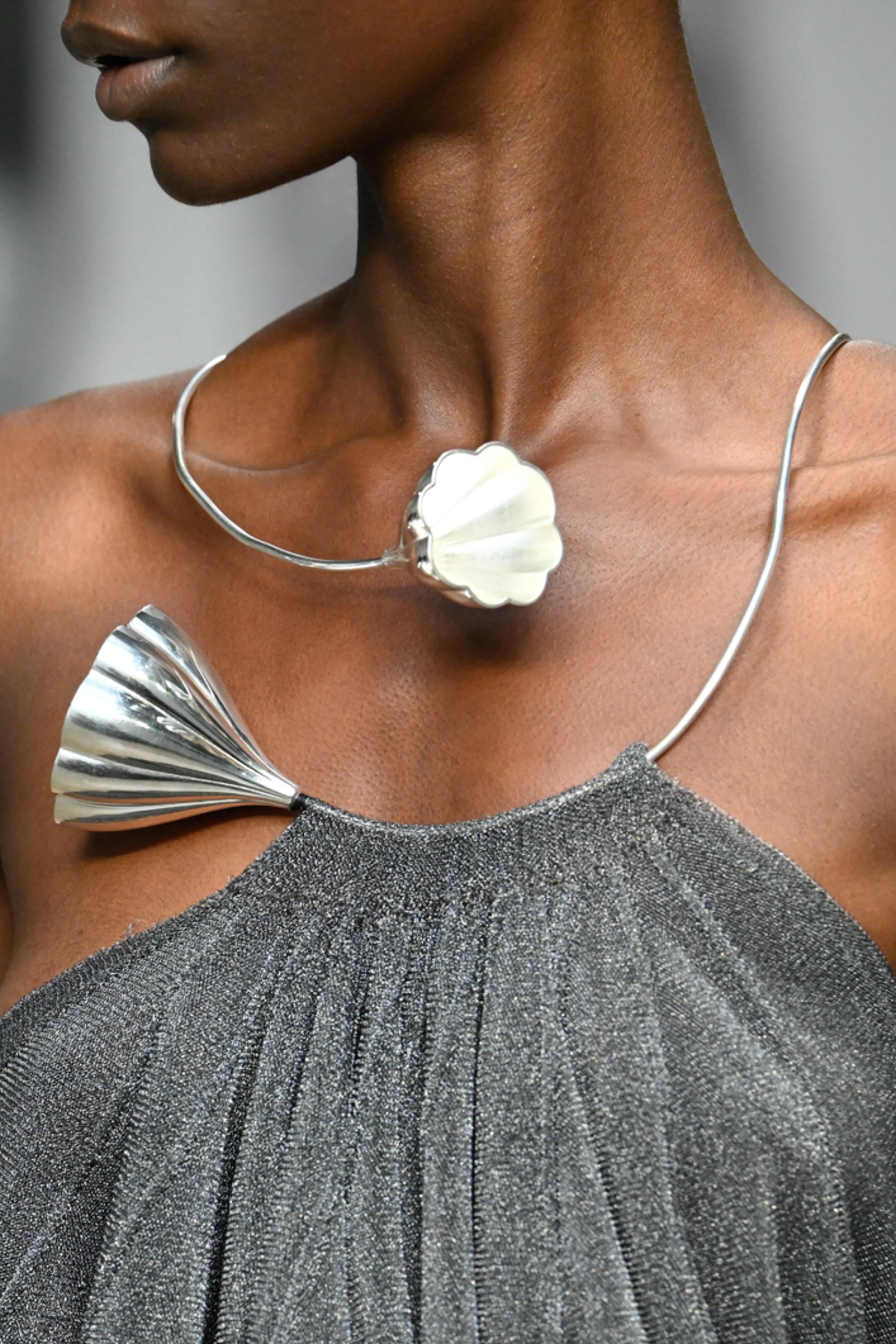
“Laine” means wave, which links the Finnish partner’s reference set to CFCL’s Pottery curve. Kalevala, founded in 1937 and built on Finnish craft and women’s-independence campaigning, cast the capsule in silver: brooches, ear cuffs, earrings, necklaces and rings. WWD reported a torque finished with the Pottery shape, worn as a dress collar, and a pin holding a gathered panel in place.
Using the গয়না as a fastener rather than an ornament is the sharpest thing in the collection. It is also, notably, the only new hard-goods category CFCL has added to a রানওয়ে in years, and the one with the clearest margin case.
The Handwork Runs Against the Factory Math
In January, CFCL established CFCL Knitting Factory in Sōka, Saitama, a lab-type facility covering roughly 960 square meters, according to Fashionsnap. The plan calls for 47 knitting machines, 43 of them whole-garment units, on a capital investment of about 1 billion yen, backed by a Ministry of Economy, Trade and Industry growth-acceleration subsidy for which CFCL was the only domestic apparel brand selected in the first round. WWD Japan reported that, at full operation, the site could produce roughly 64,800 Pottery dresses a year by 2028.
The money behind that build is also new. In July 2025, the textile trading house MC Fashion took 3.0 percent of CFCL’s issued shares through a third-party allotment worth about 250 million yen, with support covering production capacity and inventory systems, Fashionsnap reported. Annual revenue now runs above 2 billion yen, according to a Fashionsnap interview with Takahashi published this year.
Set that against what walked. Hand-threaded strips and piece-by-piece dyeing don’t come off a Wholegarment machine, and they run counter to the cost structure a 47-machine factory is built to deliver. Takahashi told WWD he wanted more handwork and evolved techniques in light of the brand’s global expansion push, and has widened the yarn palette to organic cottons and acetate. Those two ambitions pull in different directions, and VOL.13 still doesn’t say which one wins.
New York Still Has No CFCL Door
For a brand that closes Paris and sells through Le Bon Marché, Selfridges, 10 Corso Como Milan and Leclaireur, the American map is thin. CFCL’s own stockist directory lists exactly one U.S. account – Just One Eye in Los Angeles – and none in নিউ ইয়র্ক. The nearest North American doors are Gravity Pope and Neighbor in Canada. A New York customer who wants a Pottery dress buys it online or while traveling.
That gap is the real test before the factory comes online. VOL.13 argues that CFCL can make clothes delicate enough for a Paris closing slot. The harder argument – that a machine-knit brand can hand-finish at volume and still land the Madison Avenue and SoHo accounts it does not yet have – is one the next collection will have to make.
See the complete collection below:
Images courtesy of CFCL
In other fashion week news, Schiaparelli Spring 2027 Ready-to-Wear at Paris Fashion Week