
The house’s fall-winter 2026 campaign, shot by Jo Ann Callis, sets womenswear and menswear in conversation—and lets the tension do the styling.
There is a particular tension that lives in the space between two people: the charged pause before a word, the distance that makes proximity feel electric. Maria Grazia Chiuri has built her first فندي campaign inside that space.
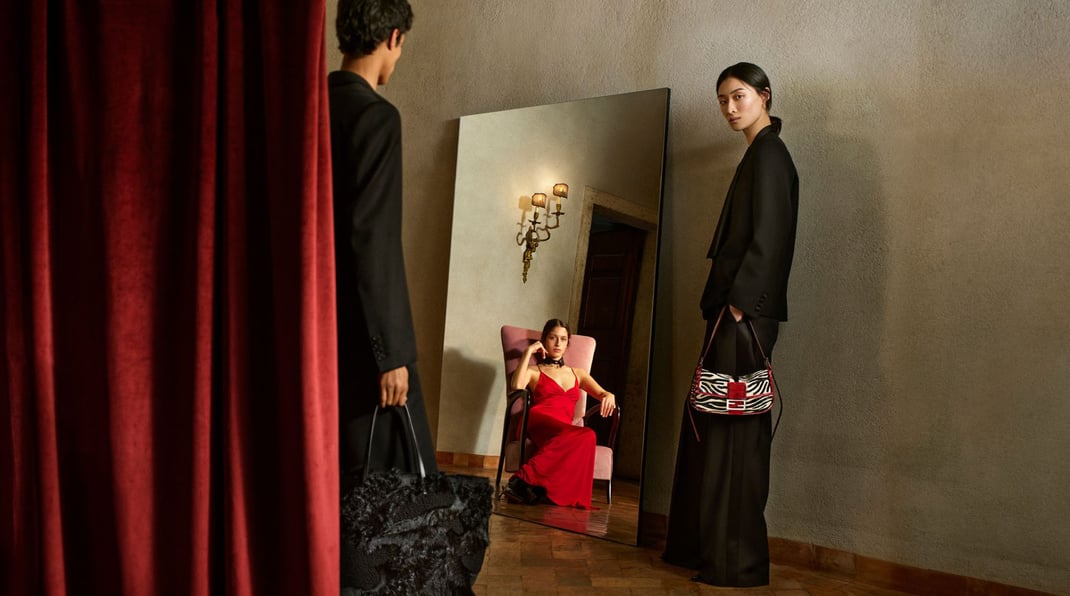
إن fall-winter 2026 imagery marks the designer’s debut season at the Roman house, and it turns getting dressed into a study of desire, distance, and tailoring. The collection arrives as a shared wardrobe, womenswear and menswear trading pieces back and forth until sharp structure meets softer, more sensual detail and the two collide on purpose.
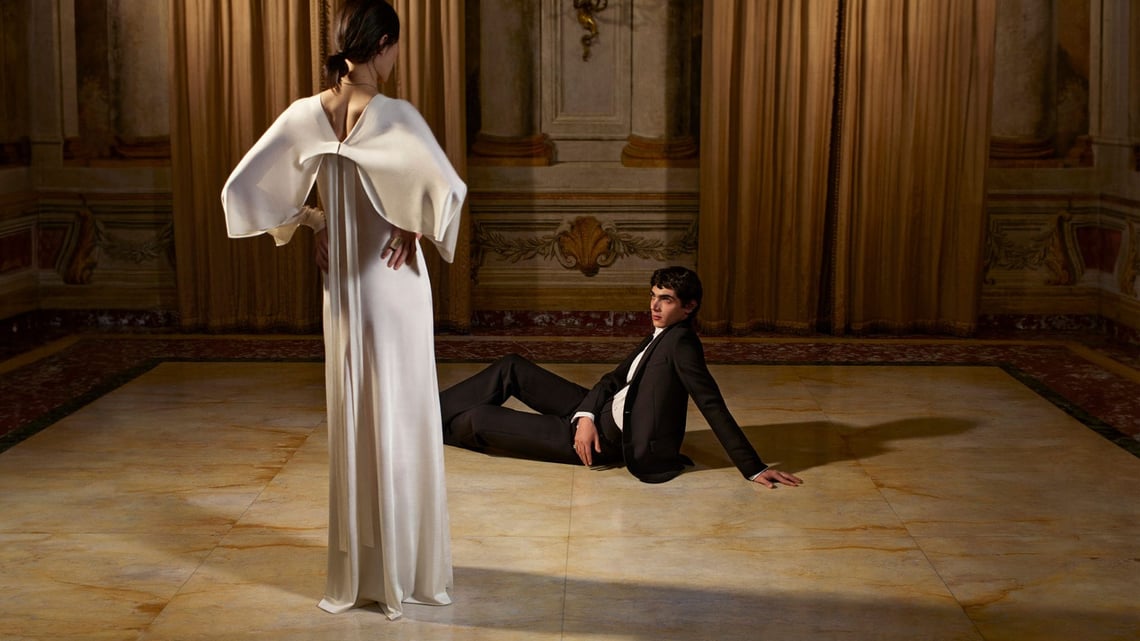
Photographer Jo Ann Callis shot the campaign, drawing on human connection, the choreography of Pina Bausch, and the charged space that can open up between two people. The influence reads in the framing: models positioned like duets, clothes doing the talking, each image holding its breath.
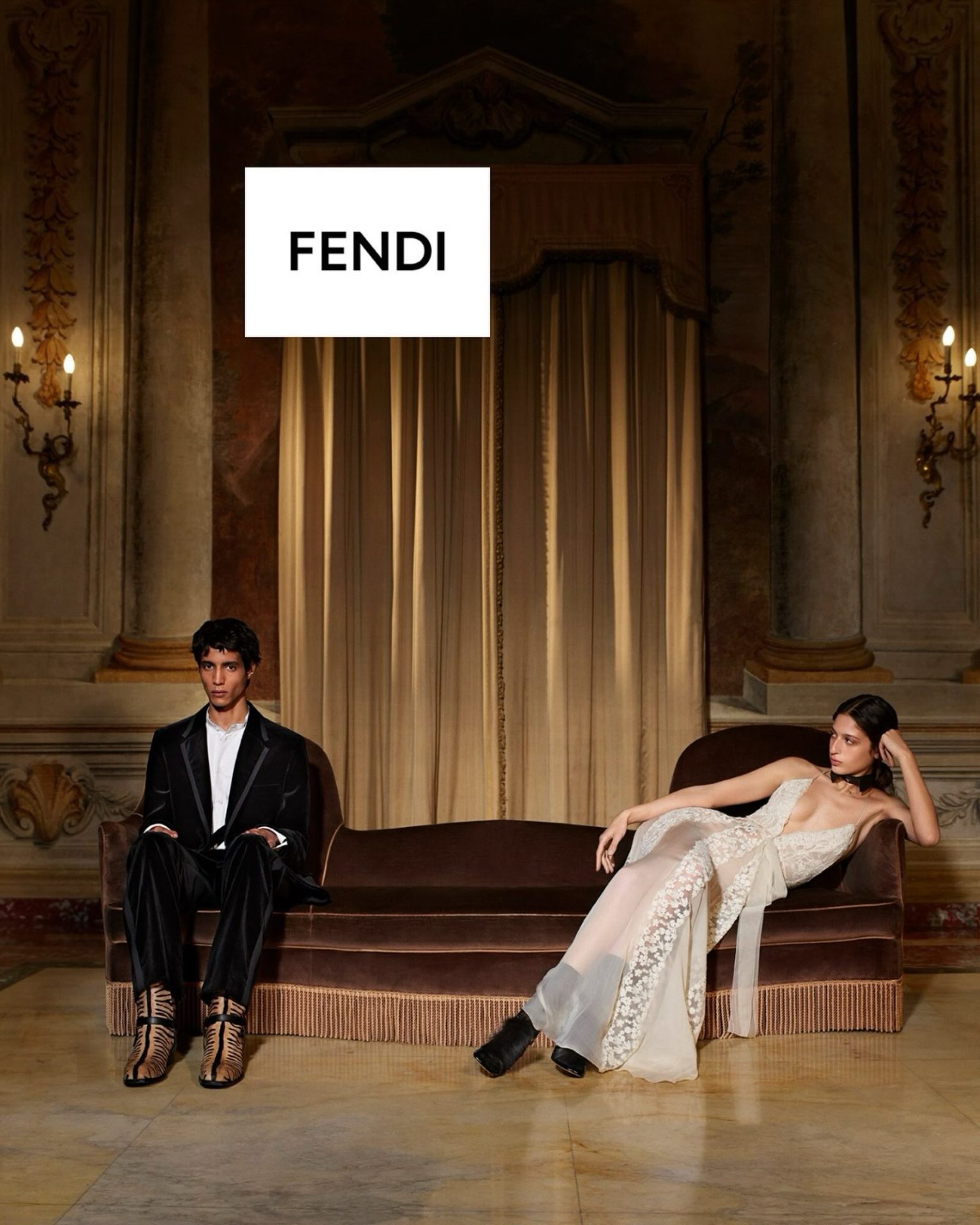
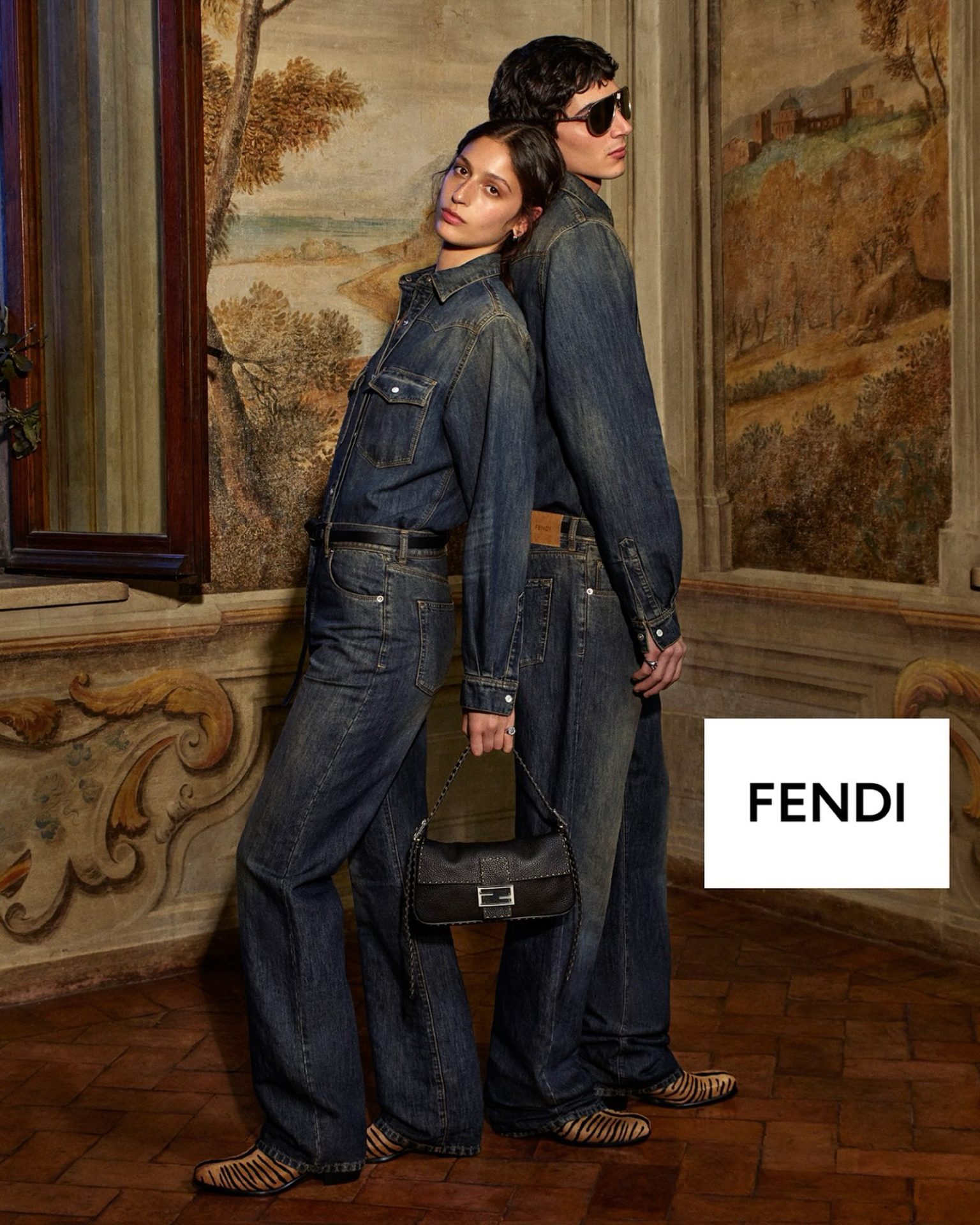
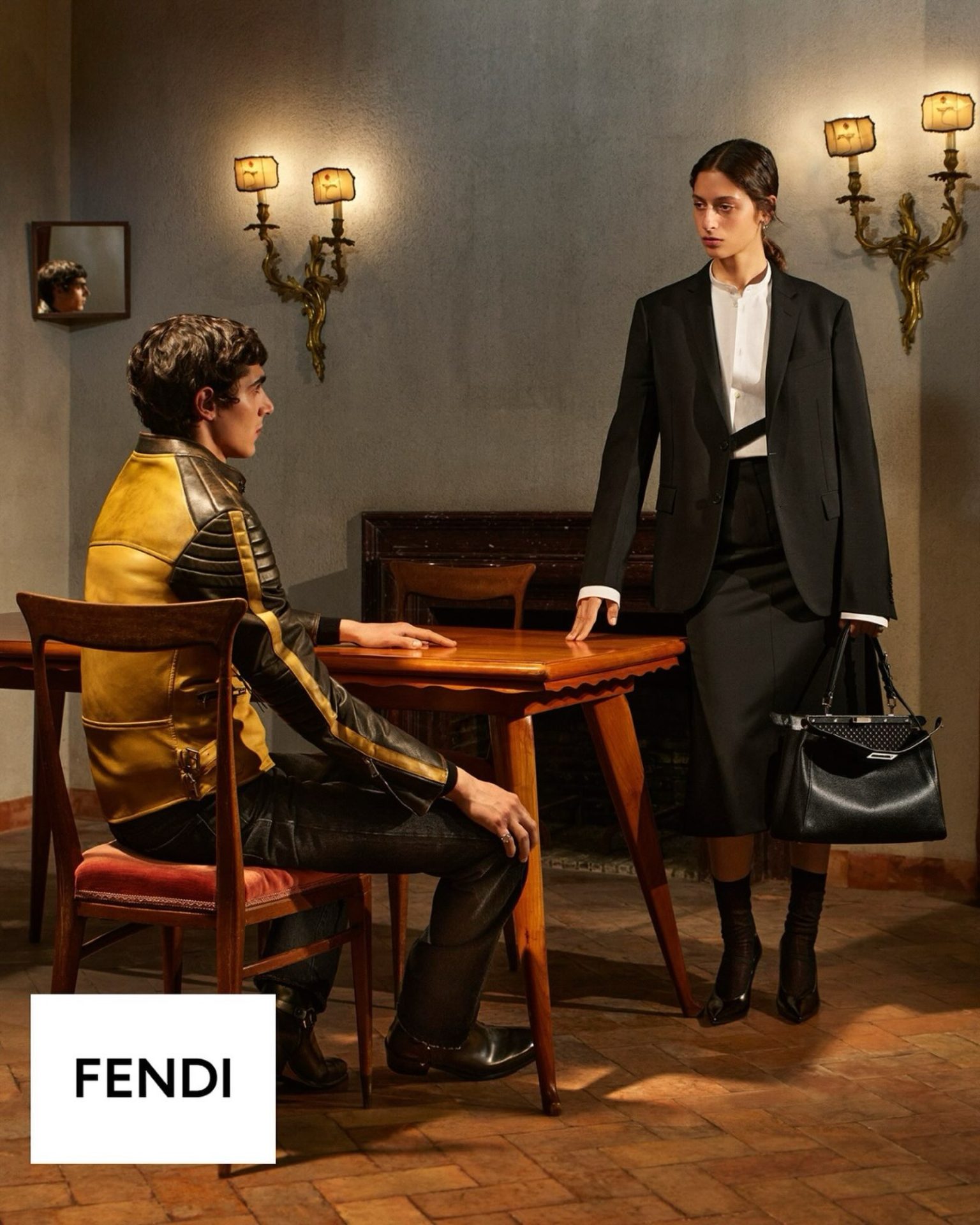
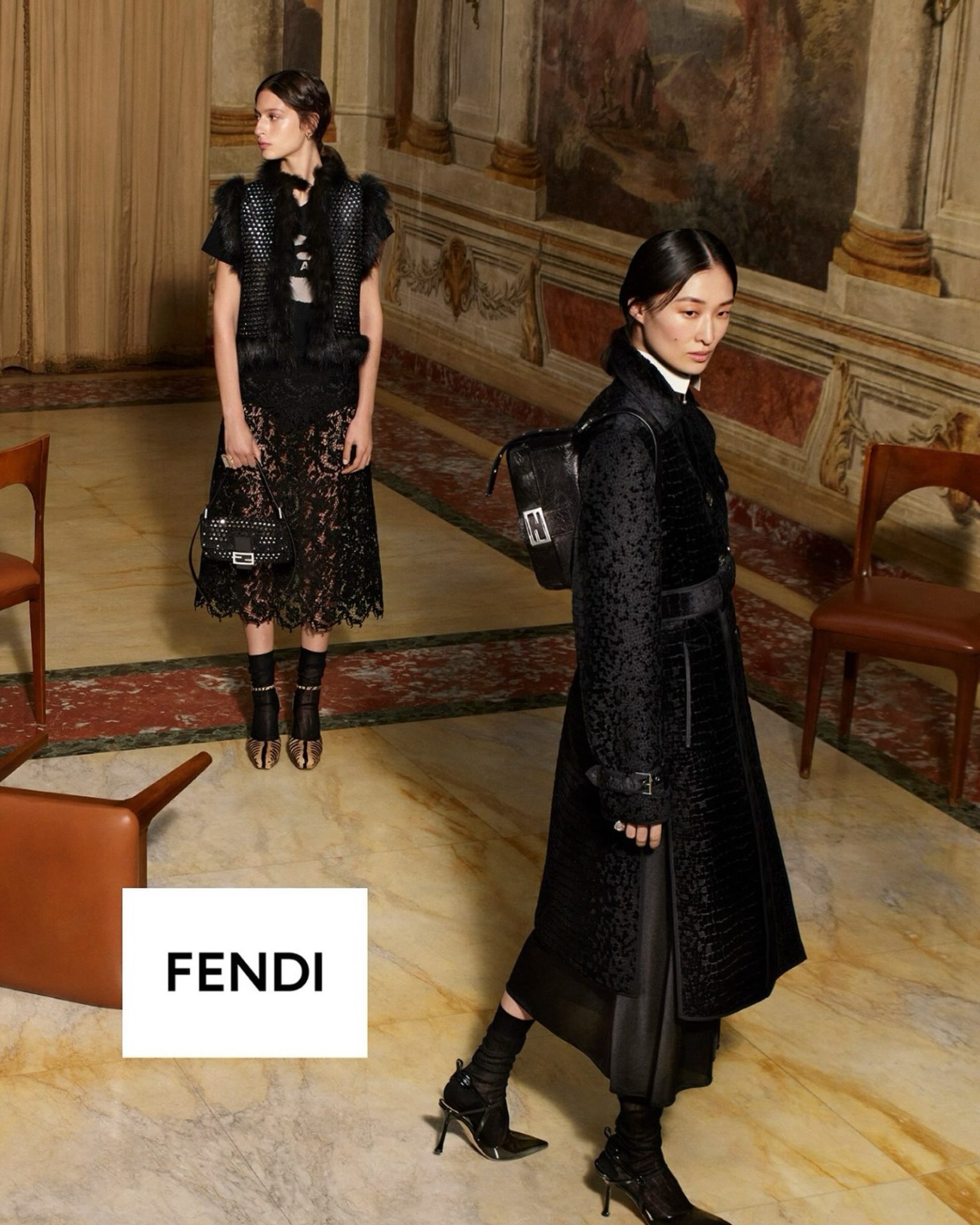
The tension runs through the clothes themselves. Oversized black tailoring stands next to fitted skirts, sheer lace, and floor-length dresses in sleek leather. One image sets two models in loose, dark denim, dressed almost like a matching uniform—same cloth, same stance, a couple learning to share a silhouette. Another pairs sleek black suits with romantic lace and textured eveningwear, letting rigor and softness argue it out in a single frame. The argument is the point.
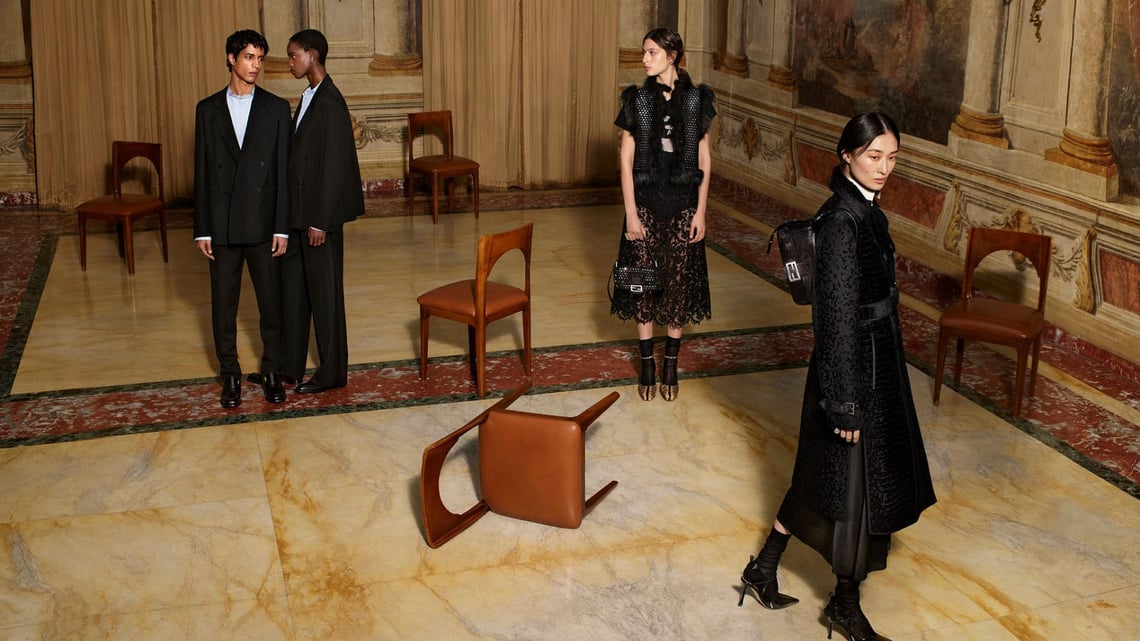
Rome does some of the heavy lifting. Ornate rooms, painted walls, heavy curtains, and mirrors catch a warm light—the kind that makes a suit look as though it has been waiting for its moment. The city reads less as backdrop than as co-conspirator.
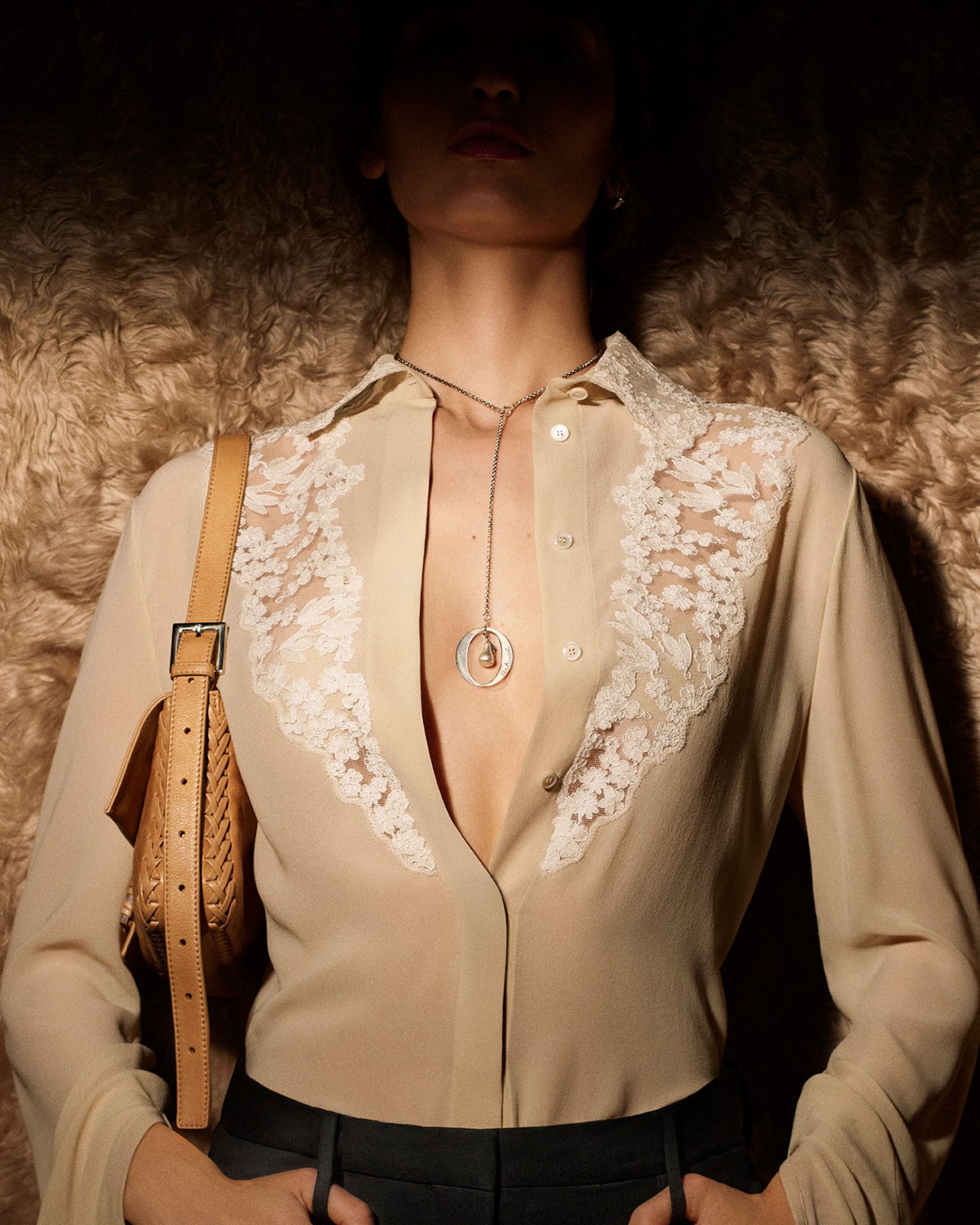
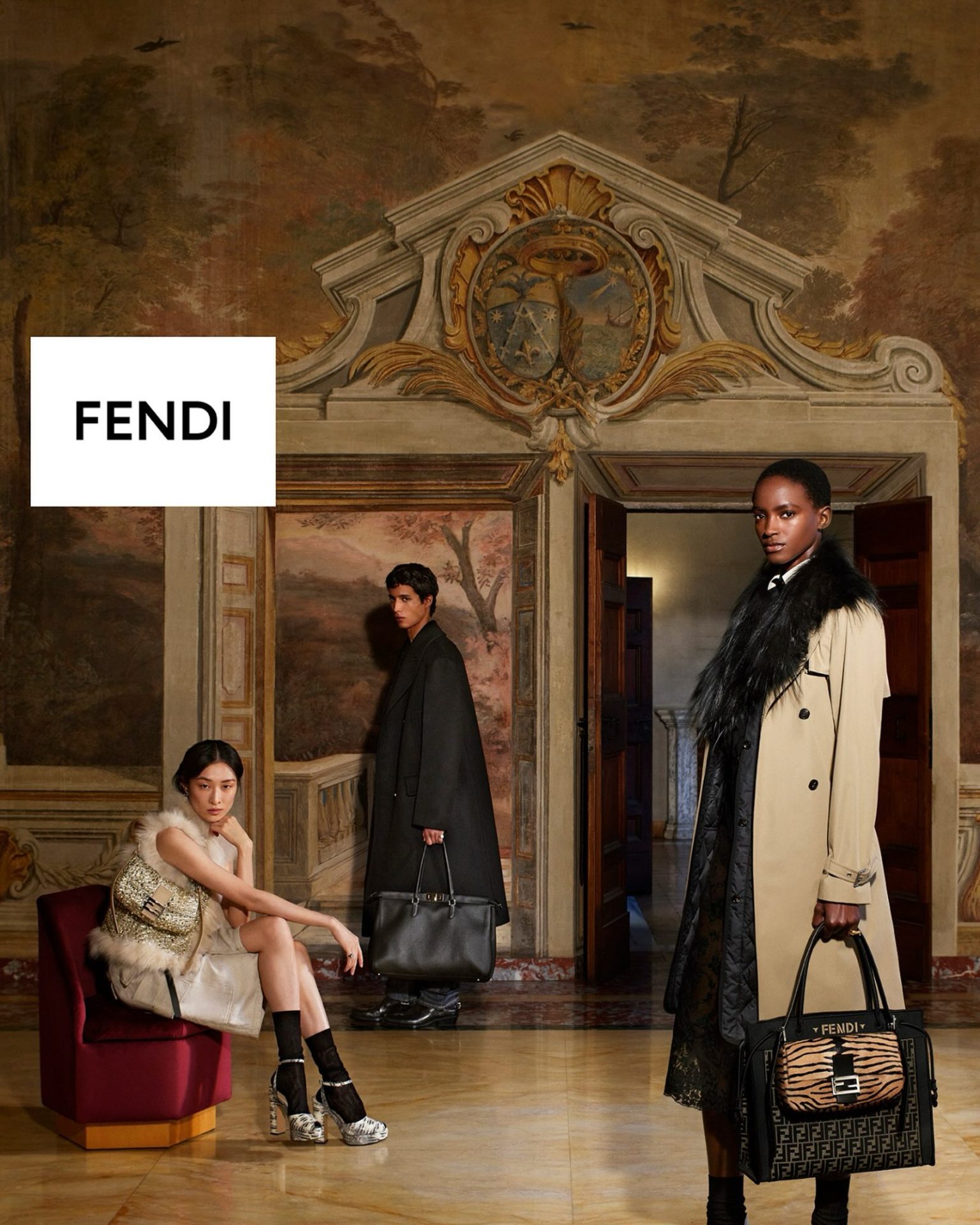
Accessories carry Fendi’s usual attitude: structured حقائب اليد, oversized totes, shoulder bags, pointed heels, boots, and مجوهرات البيان, each one sharpening the look around it. A cream coat gets a dark trim and a bold patterned bag for contrast. A beige blouse plunges under a frame of white lace. Detail does the deciding.
What matters here is what Chiuri is signaling, not just showing: a house that can hold rigor and romance in the same wardrobe, the same frame, the same gesture. For a designer whose debut at Fendi reads as a duet, that is a thesis worth wearing. Consider the first act underway.
Images Courtesy of Fendi
وفي أخبار أخرى متعلقة بحملات العلامات التجارية،, Jimmy Choo Fall-Winter 2026 Campaign Starring Africa Garcia
A Designer in a New House: What Chiuri Brings to Fendi
Maria Grazia Chiuri arrives at Fendi with a record of turning institutional houses into platforms for a particular kind of feminist inquiry. Her tenure at Dior reshaped how luxury fashion speaks about women, and her appointment at Fendi, a Roman house with its own deep history of craftsmanship and family identity, invites a different kind of conversation. Where Dior demanded feminism as statement, Fendi asks for something more interior: what it means to dress alongside someone, to share a wardrobe, to let structure and softness coexist without resolution.
The fall-winter 2026 campaign is not a declaration so much as a disposition. Chiuri is not announcing herself loudly; she is arranging a room and letting the occupants tell the story. That restraint is deliberate. Fendi carries the weight of Roman heritage, of fur ateliers and a founding family whose name still runs through the house’s DNA. Working within that legacy while redirecting its gaze requires precision over provocation, and the campaign suggests Chiuri understands exactly which tool she is reaching for.
The decision to shoot womenswear and menswear together from the very first image is also a signal. It positions the house not as a place that dresses one kind of person, but as a wardrobe that belongs to a world.
Jo Ann Callis and the Art of the Charged Frame
The choice of Jo Ann Callis as campaign photographer is not incidental. Callis, a Los Angeles-based artist whose work spans decades of exploring the body, desire, and psychological tension within domestic spaces, brings an art-world sensibility that sits at an angle to conventional fashion photography. Her images do not seduce through glamour alone; they hold something back, creating frames in which the viewer must do a portion of the interpretive work.
That quality reads clearly in the fall-winter 2026 campaign imagery. Models are positioned in relation to one another rather than in isolation, their posture suggesting conversation, negotiation, or the loaded silence that precedes both. The clothes occupy this interpersonal space as active participants rather than passive subjects. A structured jacket worn open over sheer fabric is not simply a styling choice; within Callis’s framing, it becomes a statement about exposure and protection existing simultaneously.
The influence of choreographer Pina Bausch, cited in the campaign’s creative references, reinforces this reading. Bausch’s Tanztheater placed the emotional lives of performers at the center of movement, treating gesture as the primary language of human experience. Callis translates that into stillness: each image feels like a held moment within a larger, ongoing performance, which gives the campaign a narrative coherence that extends well beyond individual product shots.
Bags, Accessories, and the Architecture of the Look
Within any Fendi campaign, accessories function as load-bearing elements, and Maria Grazia Chiuri’s first season is no exception. The fall-winter 2026 selection grounds the collection’s more atmospheric qualities in something tangible and immediately recognizable. Structured shoulder bags anchor outfits that might otherwise read as purely conceptual, while oversized totes introduce a studied casualness that balances the campaign’s more formal tailoring.
The interplay between bag silhouette and garment silhouette is worth close attention. A bold patterned bag pressed against a clean cream coat creates contrast through scale and print, drawing the eye to the junction between the two and making that meeting point the focal statement of the image. Elsewhere, accessories with strong geometric structure complement the angular quality of the suiting, reinforcing rather than interrupting the clothes’ primary lines.
Pointed heels and substantial boots extend the collection’s argument about rigor and romance downward, grounding each look in a footwear choice that declares an intention. Statement jewelry, worn with enough restraint to feel considered rather than decorative, completes the picture. Chiuri has long understood that accessories are not finishing touches; they are the punctuation that determines how the sentence of an outfit is finally read, and the Fendi campaign deploys them with exactly that kind of grammatical precision.