
There was a birthday, and Coach let everyone see the mess of it
The house showed its Spring 2027 collection in downtown New York City, the runway landing 85 years after a small family workshop began making leather goods in Manhattan in 1941. Creative Director Stuart Vevers was not interested in a museum tour. He was interested in what happens to familiar things after you have lived with them a while.
“For المدرب‘s 85th anniversary, I was thinking about memory and the way familiar things change as we live with them,” Vevers said. “I didn’t want to make a retrospective. We turned familiar Coach ideas inside out, exposed their construction, softened them and left traces of a celebration on them. Having 85 years behind us gives us the confidence to look forward.”
That instinct – wear it, love it, then turn it over and study its guts – runs through the whole collection.
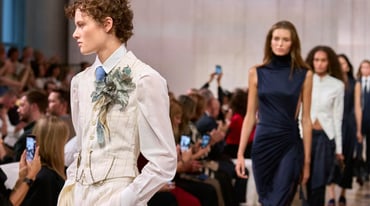
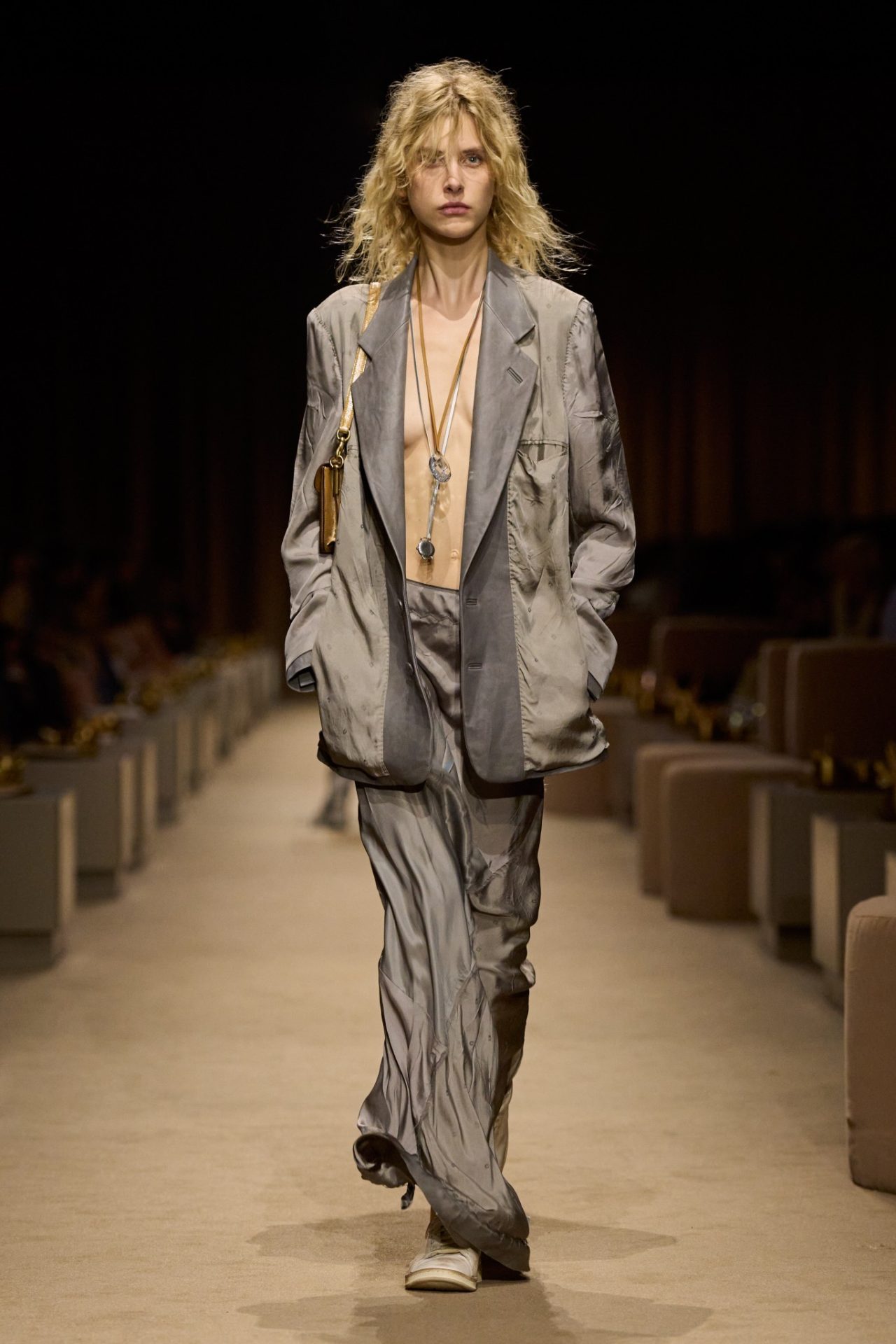
Tailoring arrived with cleaner lines than the house’s recent seasons: slim, classical proportions, shoulders squared and uncluttered, sleeves narrowed, trousers long enough to fall and pool at the ankle. It is polish applied to the street and countercultural references Vevers has drawn on for years, and the tension between the two is the point.
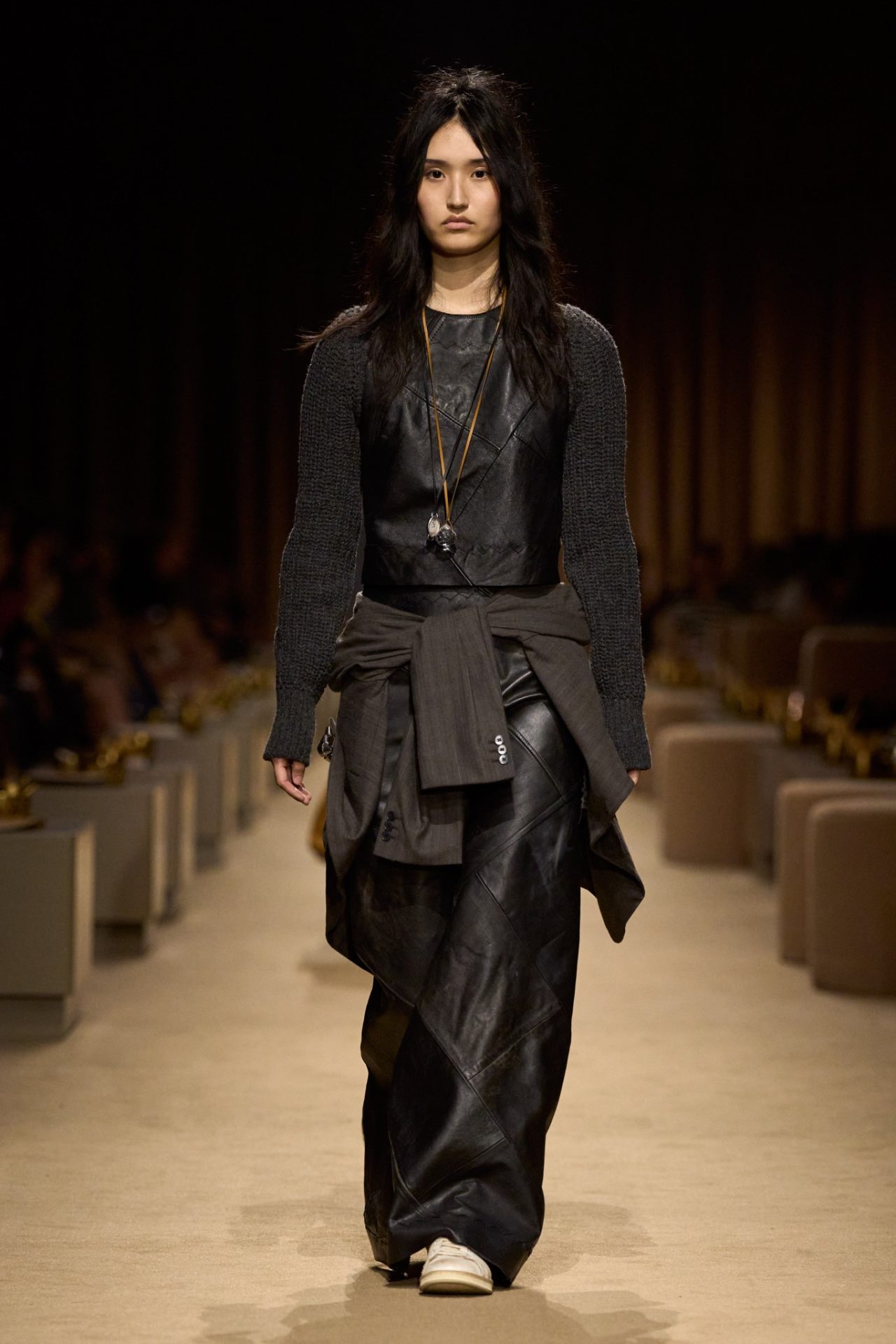
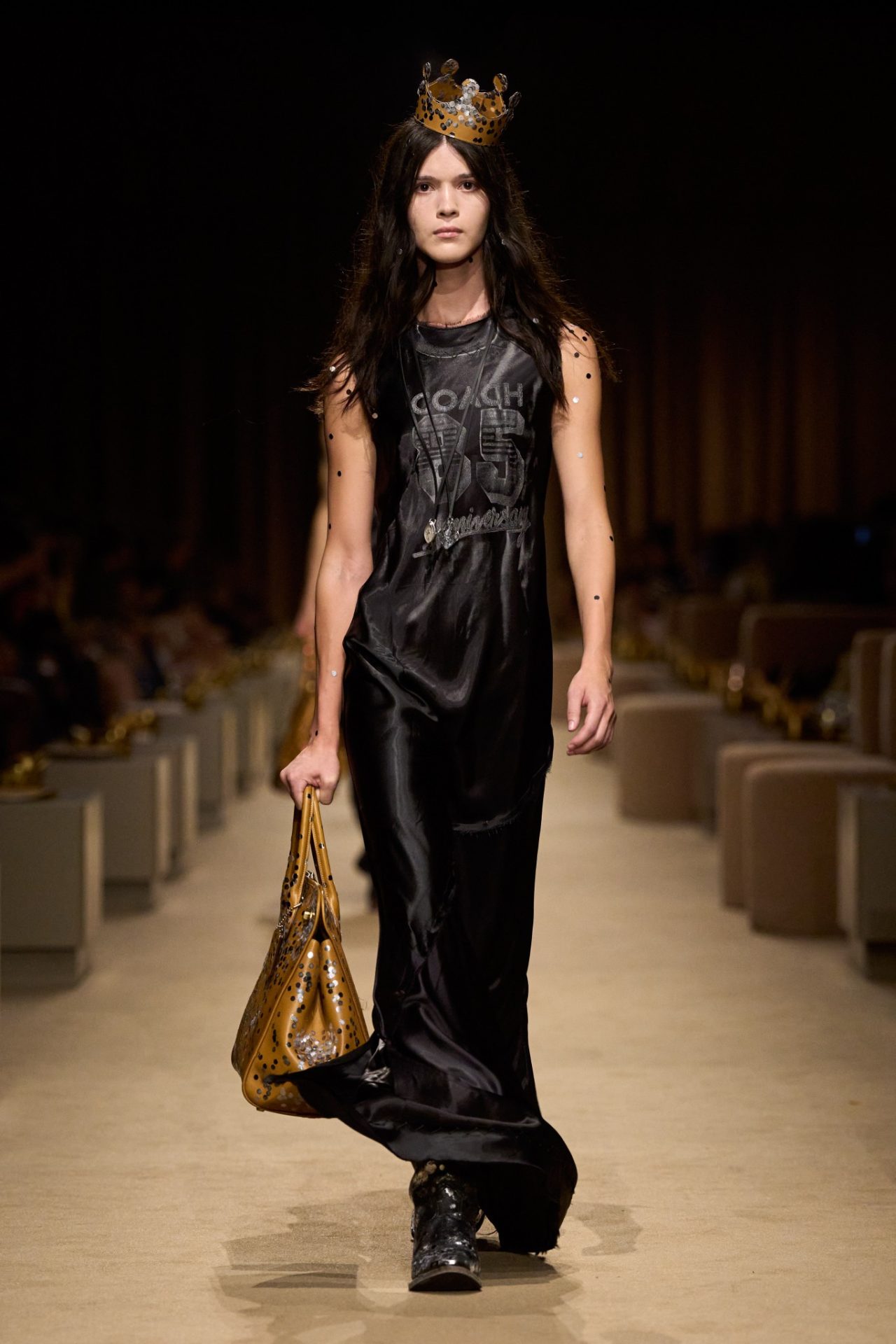
Outerwear carries the idea furthest. Overcoats, blazers and trenches are built inside out, linings and internal structure left where you can see them. Soft nappa leather with a faint grain gives the pieces movement, and kisslock pockets nod to hardware from Coach’s leather goods archive. Elsewhere, jackets and trenches come in garment-dyed, sun-faded heavyweight jersey, which lends traditional tailoring the softness of an old hoodie you refuse to throw away.
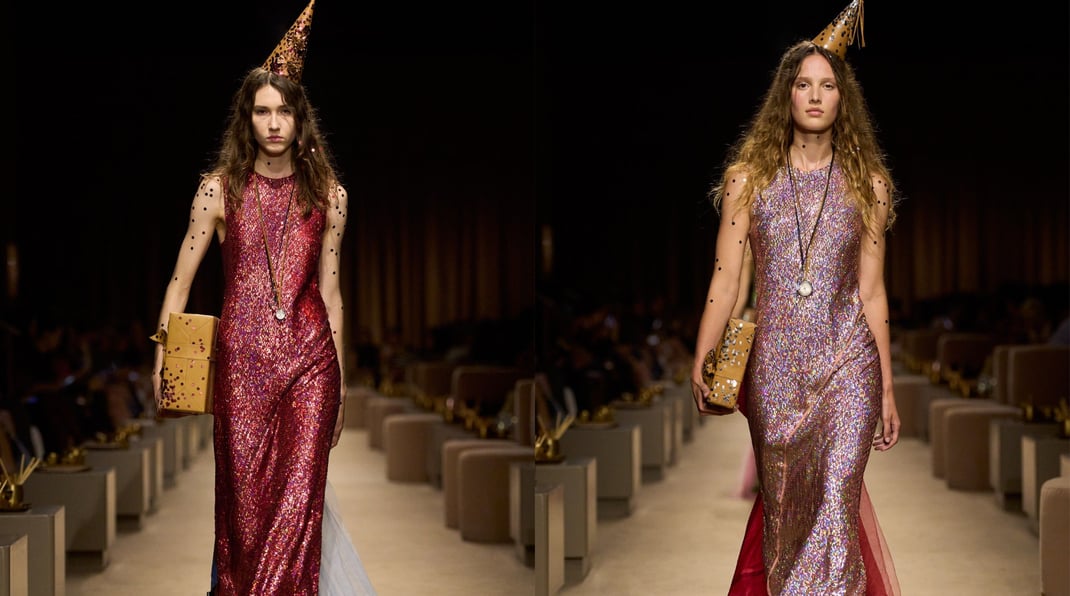
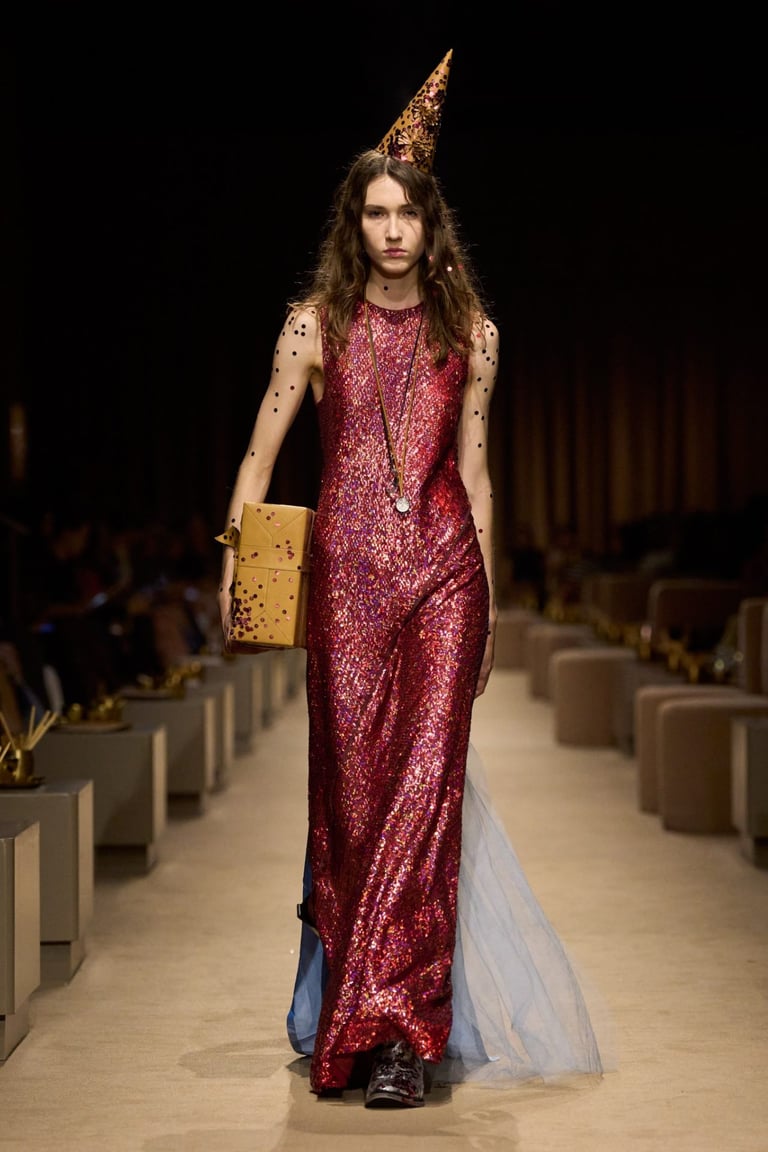
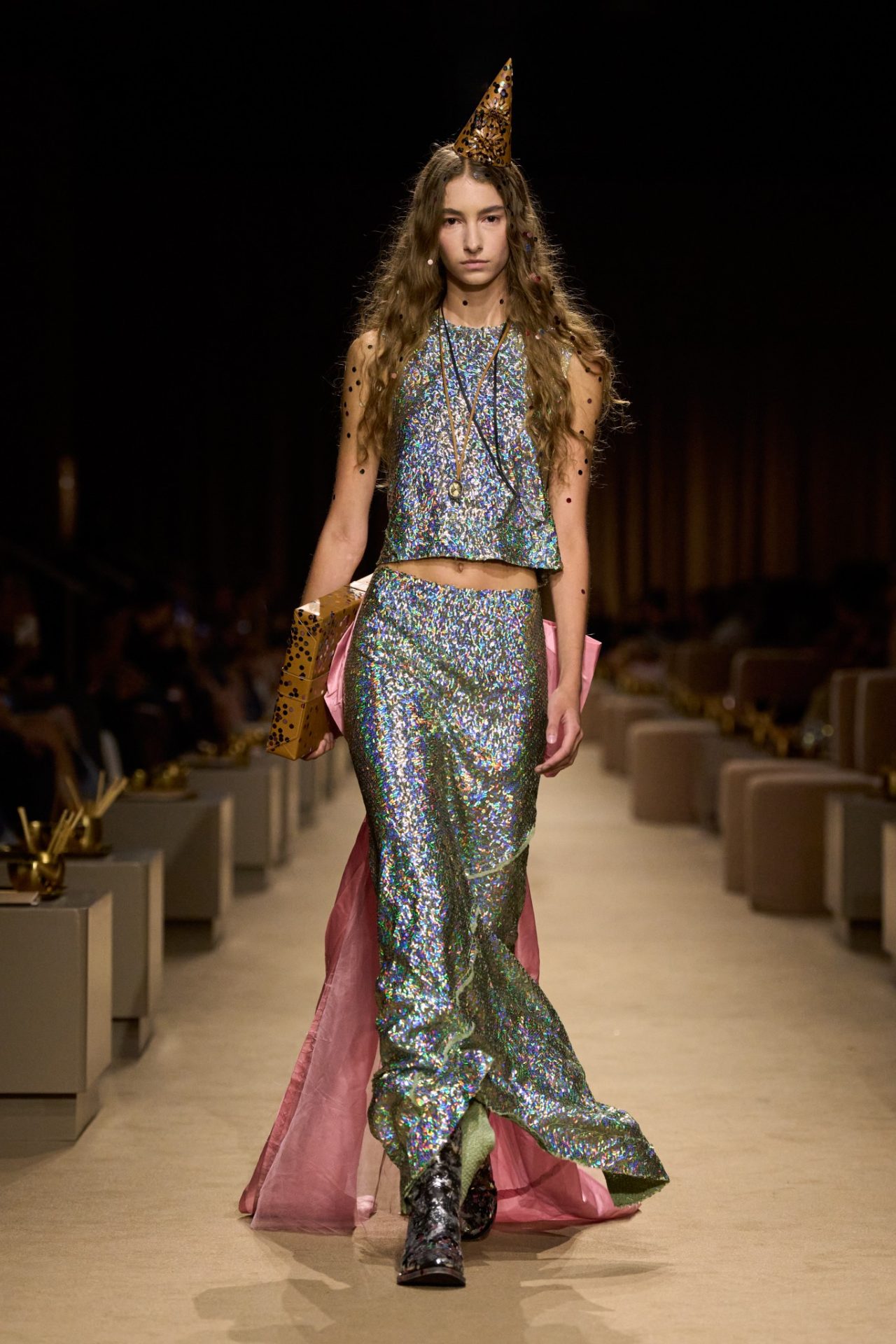
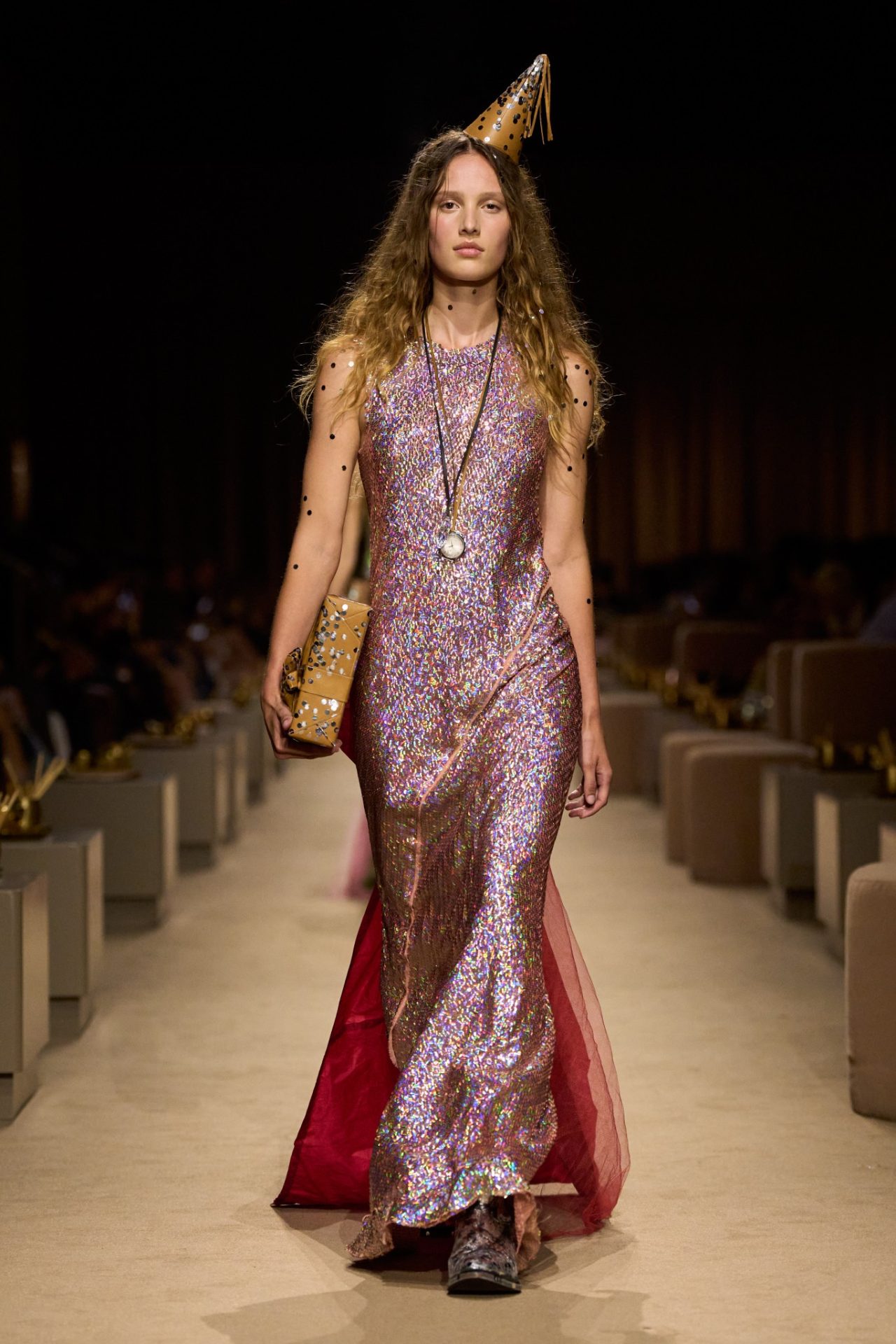
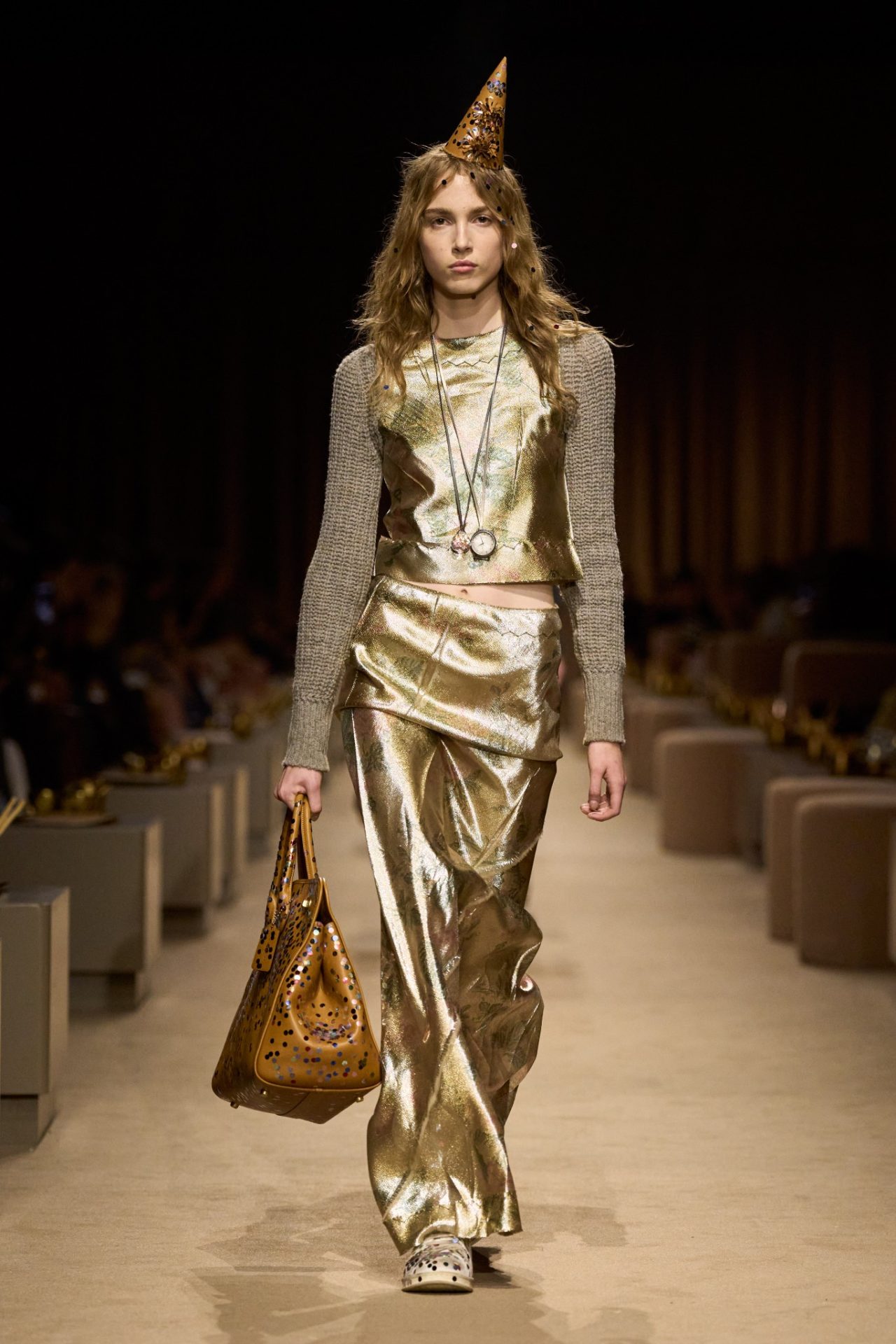
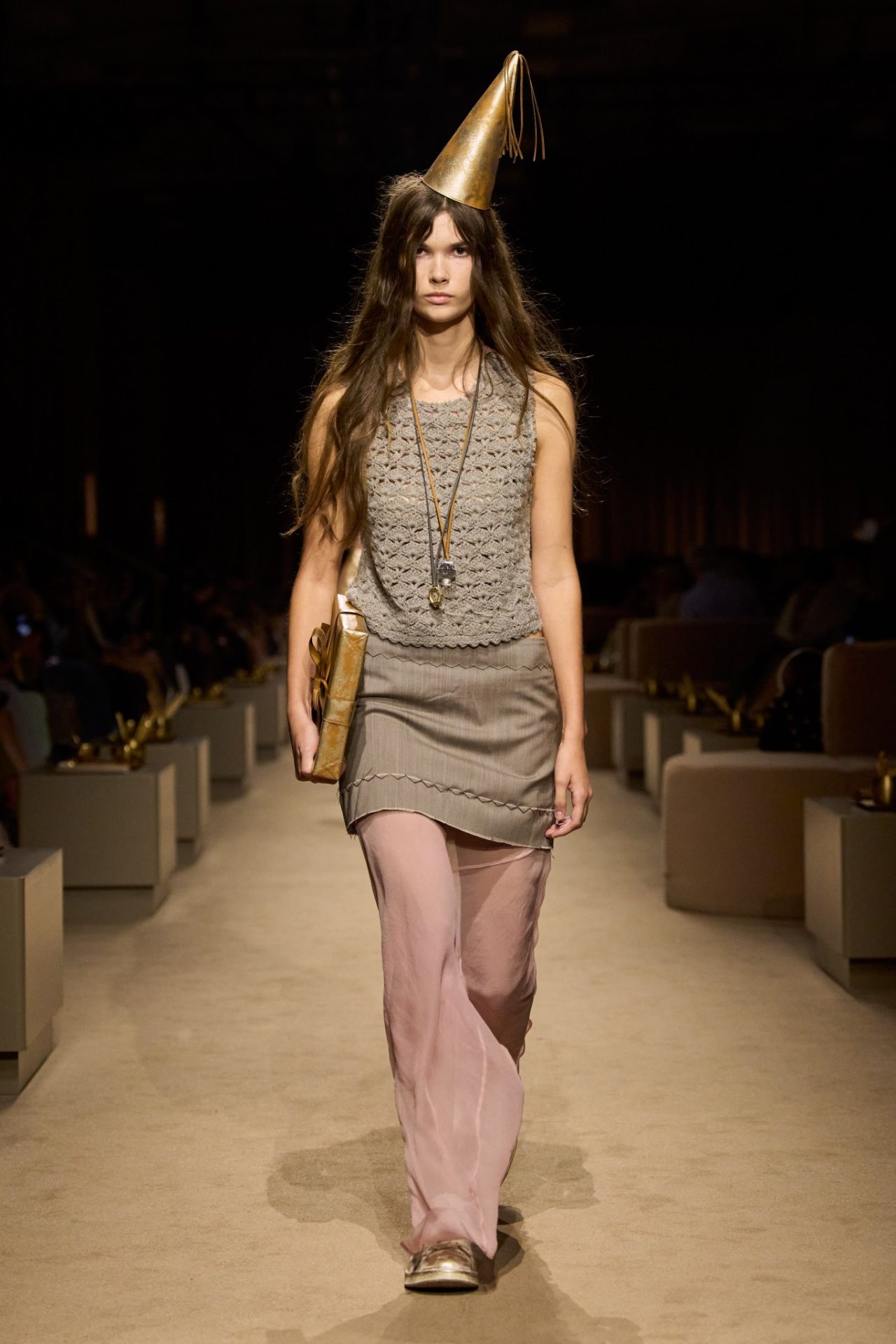
Bias-cut dresses and skirts make a continuous line through the show. The same essential silhouette turns up in repurposed garment-printed lining fabrics, overdyed georgette, repurposed denim, lamé and sequins, each material shifting its character. Visible facings, cut edges and decorative catch stitching leave the process on display. Knit or crochet sleeves can be added to dresses, tops and outerwear, so a piece feels improvised rather than finished.
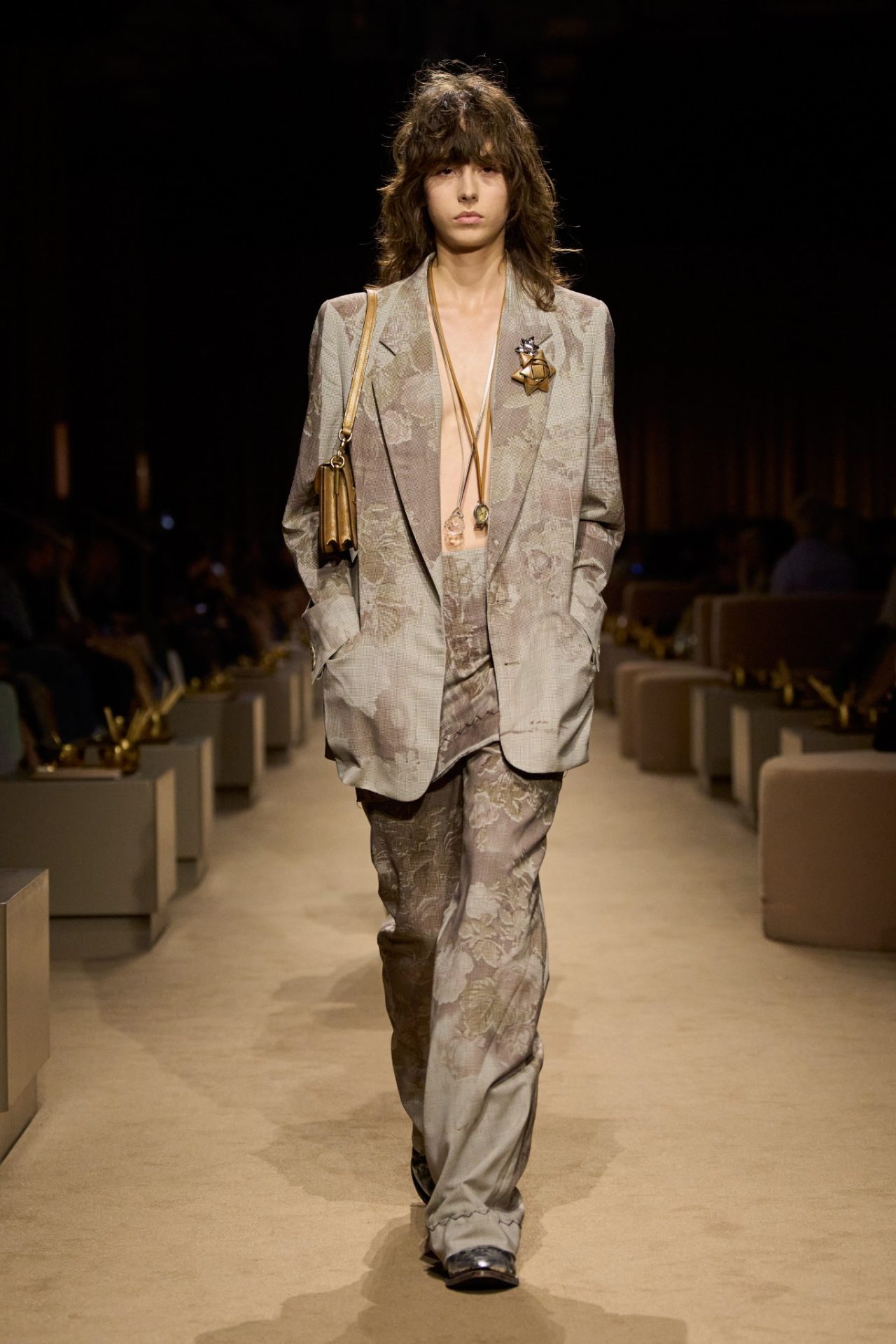
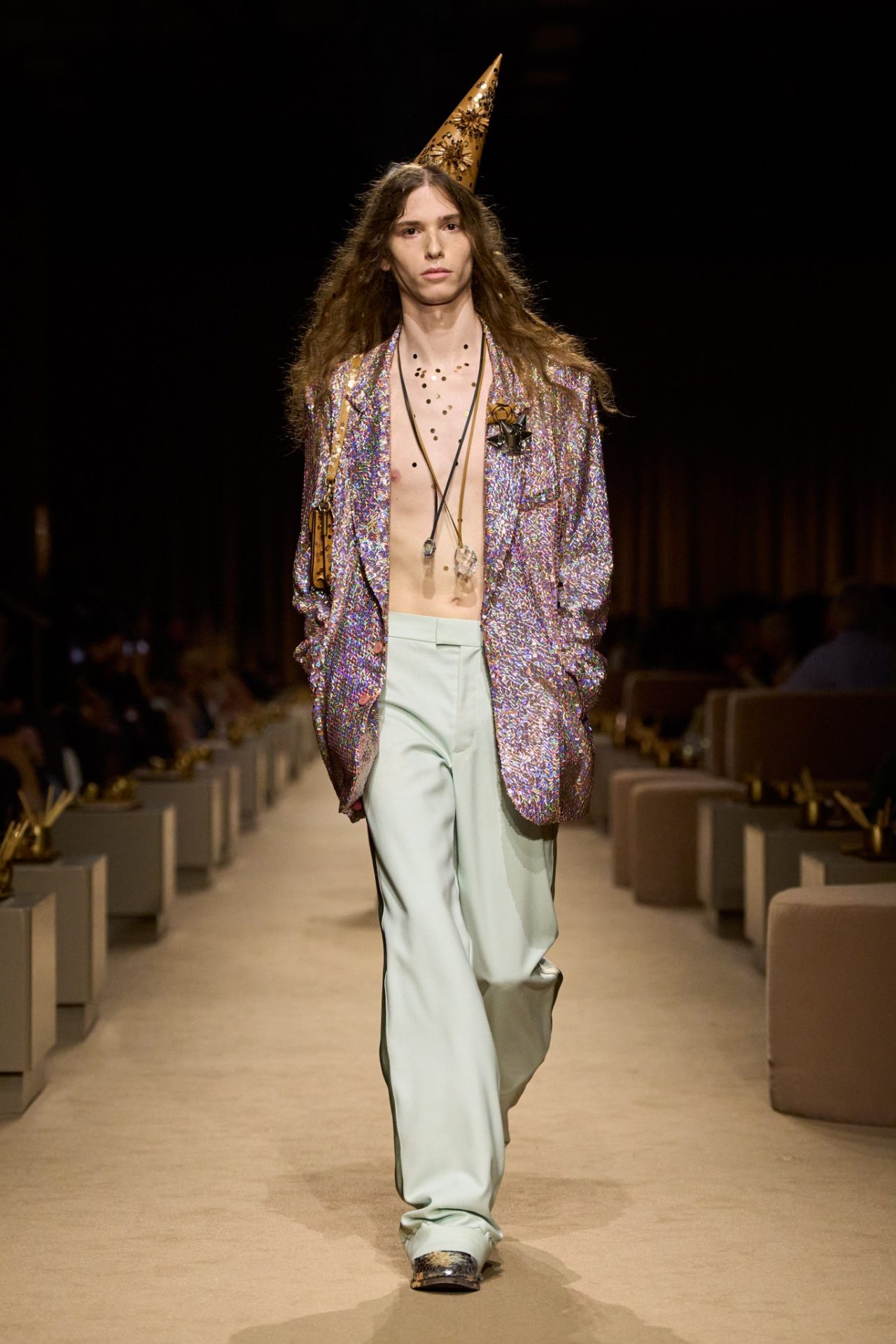
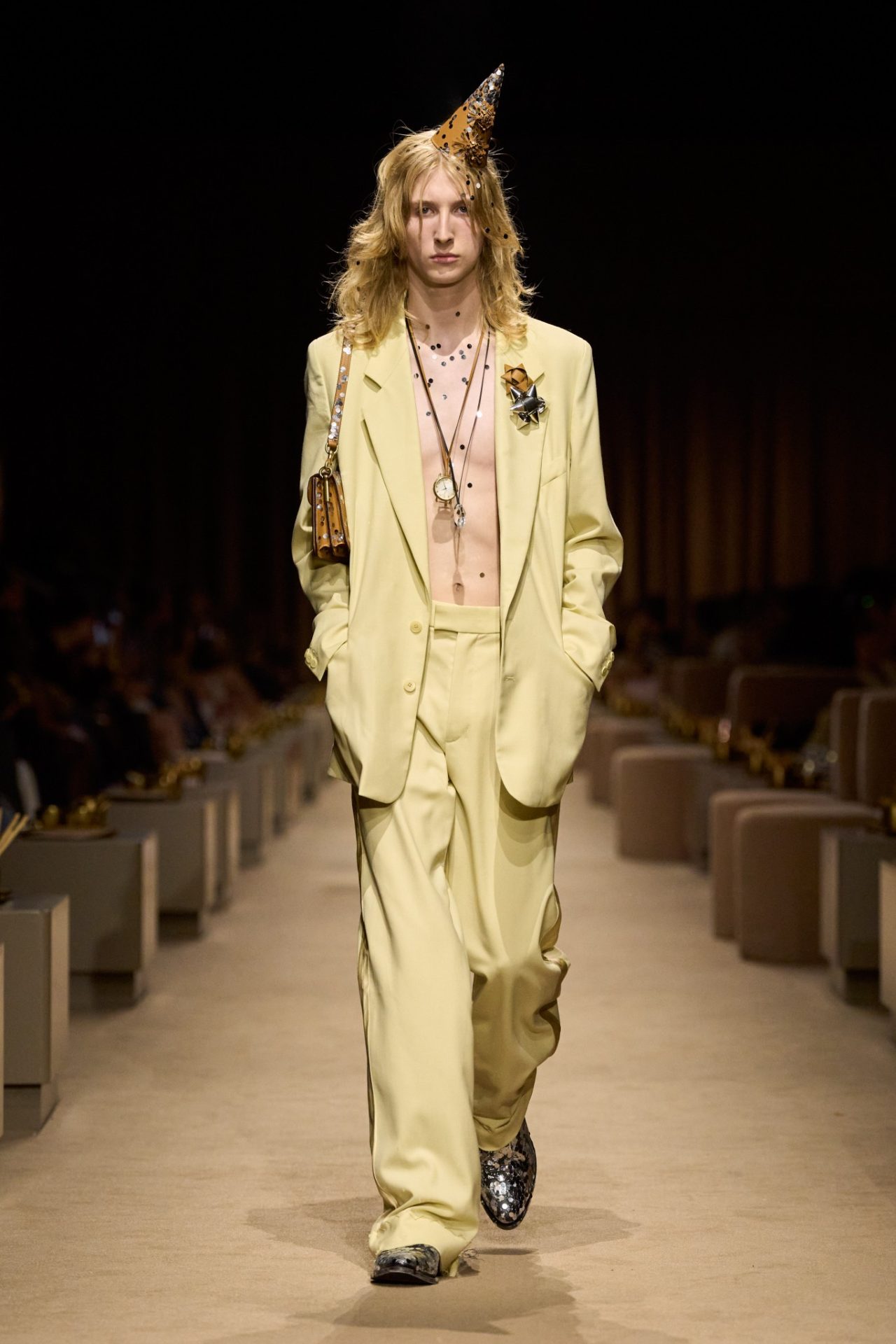
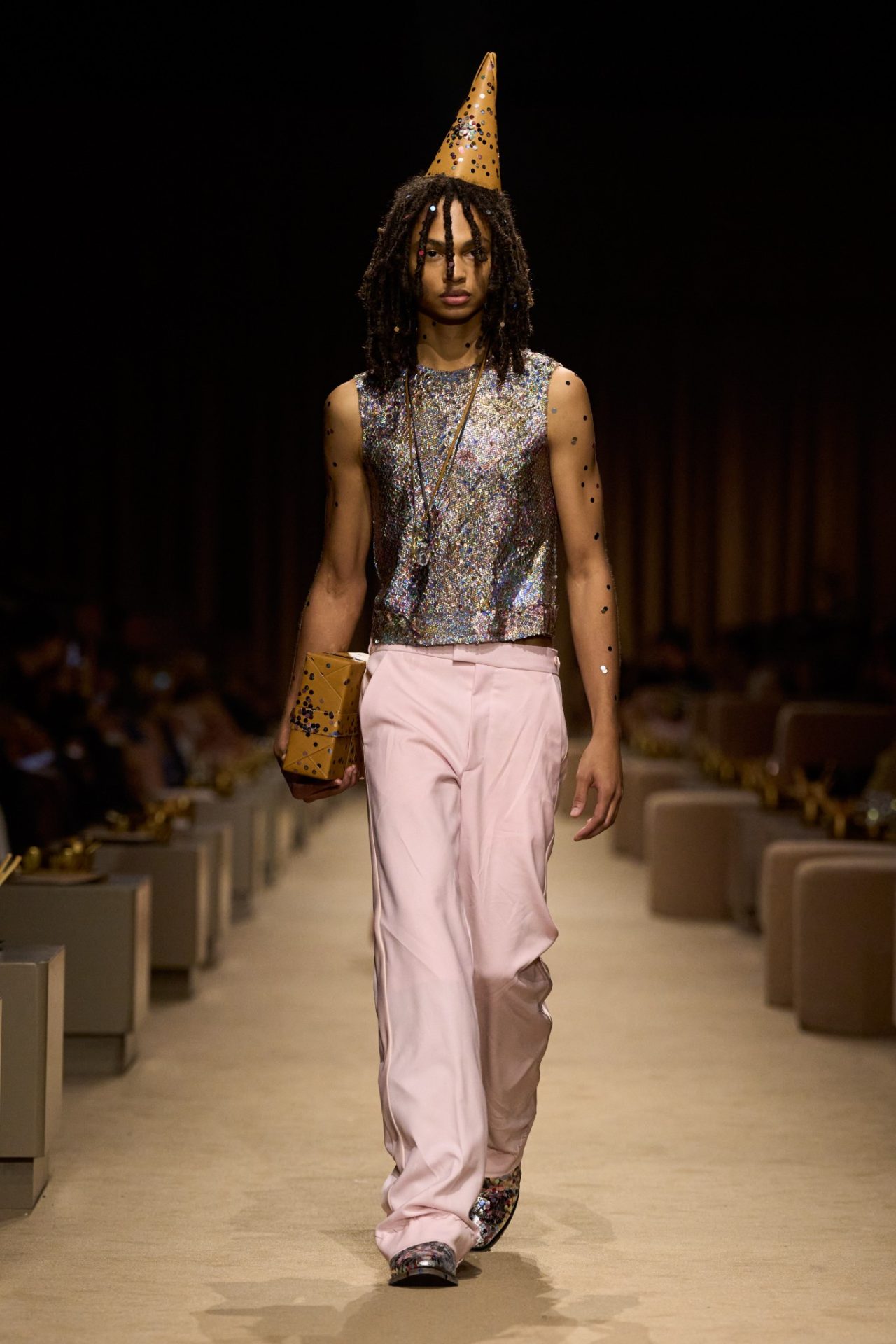
The palette opens quietly – dove gray, soft brown, black, white, natural leather tones – before periwinkle, powder pink, mint and reflective metallics arrive. Sequins shift from darker brown surfaces into softer pastels. Evening gestures are threaded throughout rather than quarantined at the end, which lets tailoring, leather, shine and bias-cut dresses move between day and night without a costume change.
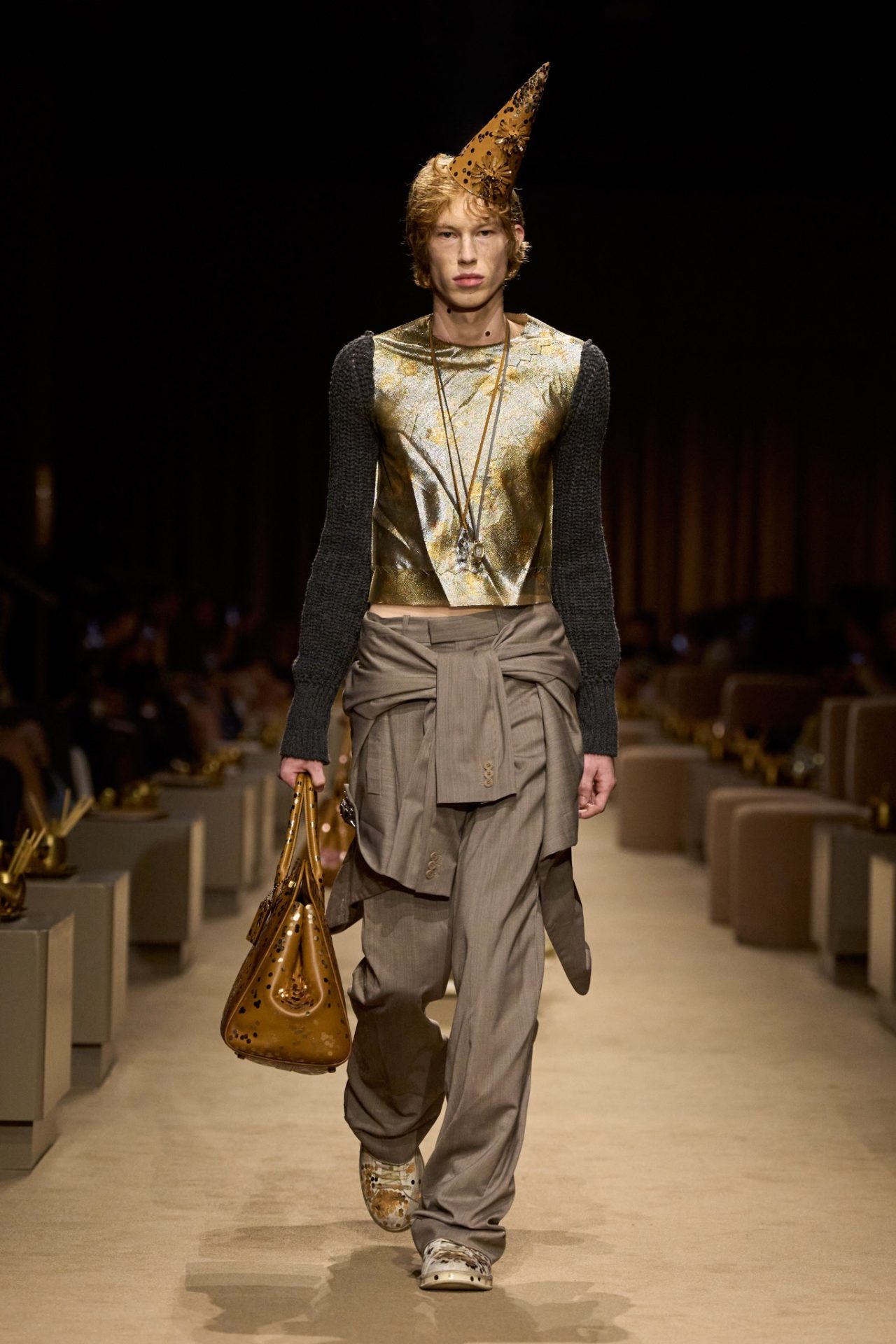
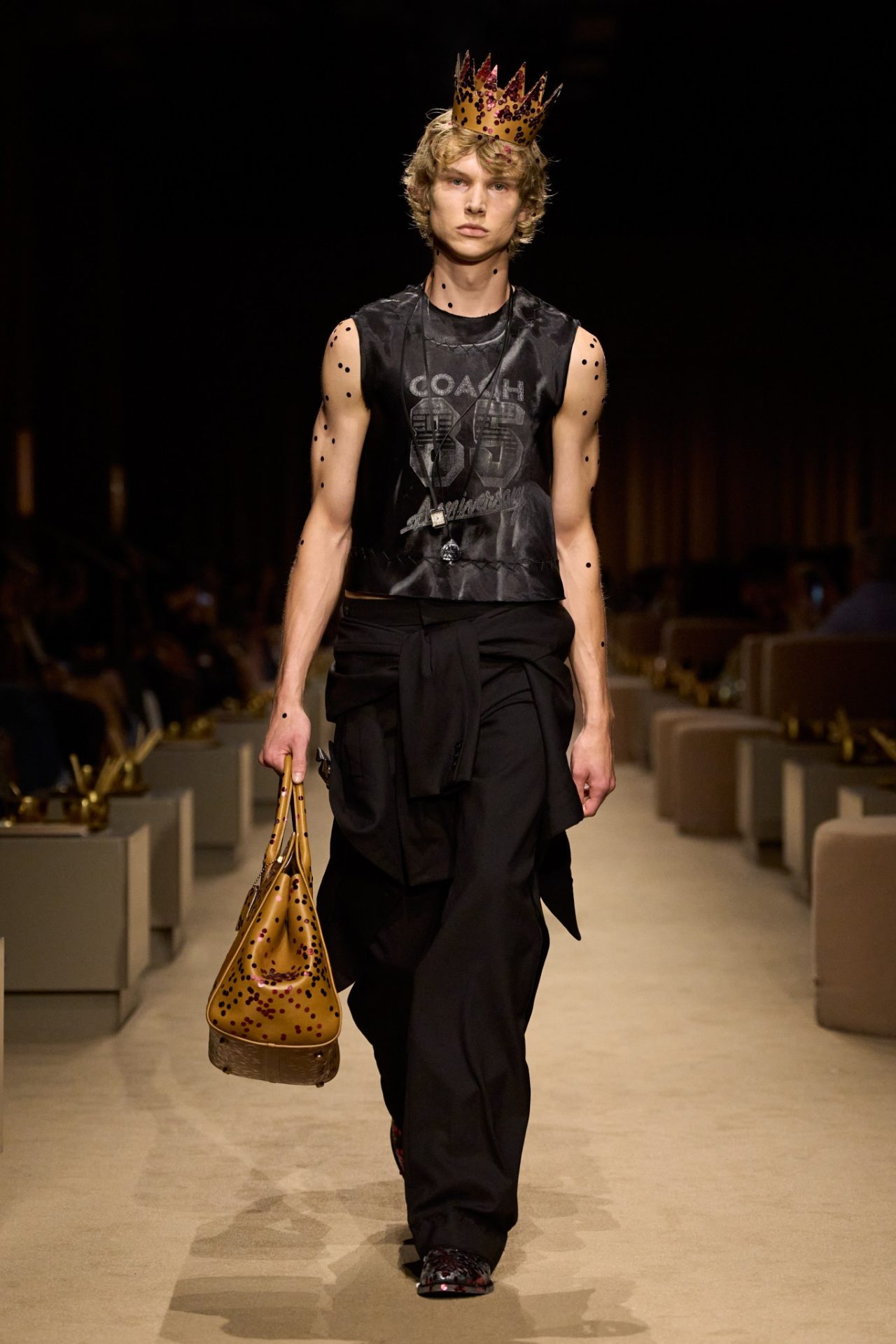
Then there is the party. Or rather, the evidence of one. Leather is rubbed with gold and silver metallic foil. Confetti is worked into the surfaces of bags and shoes. Glitter is mixed with red nail polish to create cracked, hand-finished effects. Crowns, pointed hats, bows, gifts and birthday cards are recreated in leather with the same attention given to the house’s bags and outerwear. It reads like the morning after, styled with intention.
Repurposing is structural here, not a talking point. Secondhand leather garments and denim are reworked into new pieces, using material that already existed instead of something new. Repurposed lining fabrics reappear in inside-out tailoring, dresses, tops and pants. Vintage Coach pouches are assembled into new bags.
That last idea produced the season’s most charming object. The collaged Tabby gathers a collection of sourced vintage Coach pouches into a single bag, a piece that carries several decades of the archive on one shoulder.
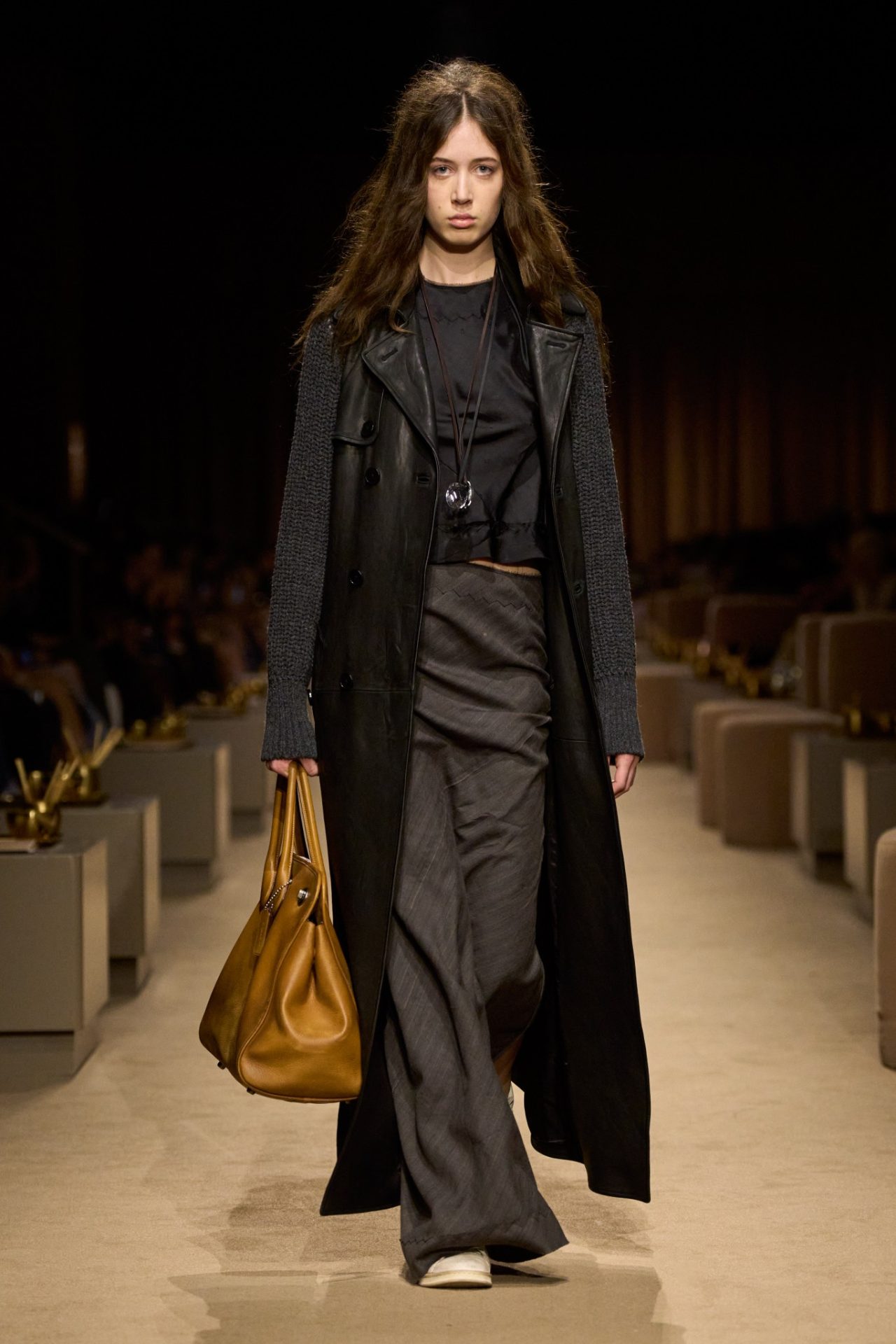
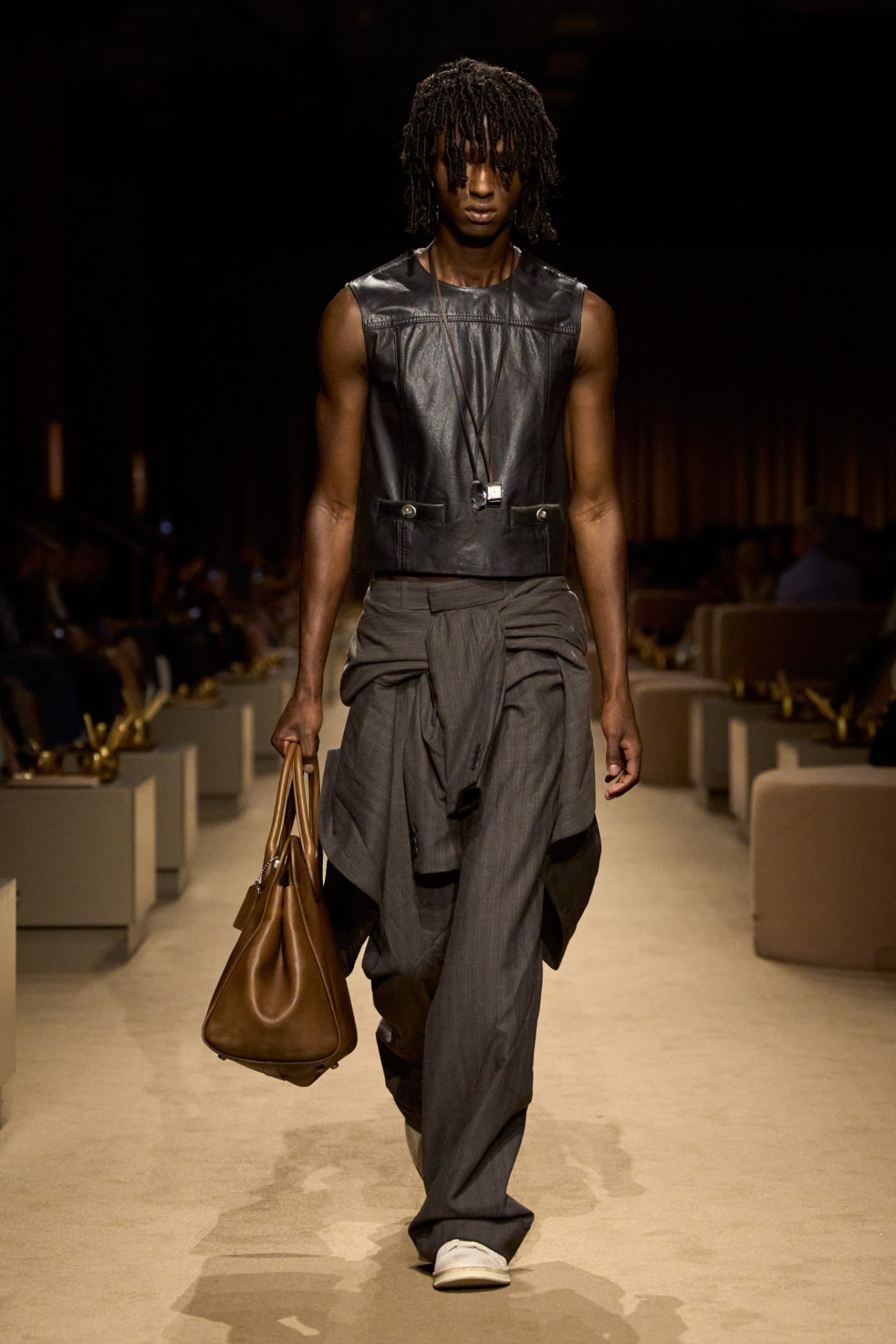
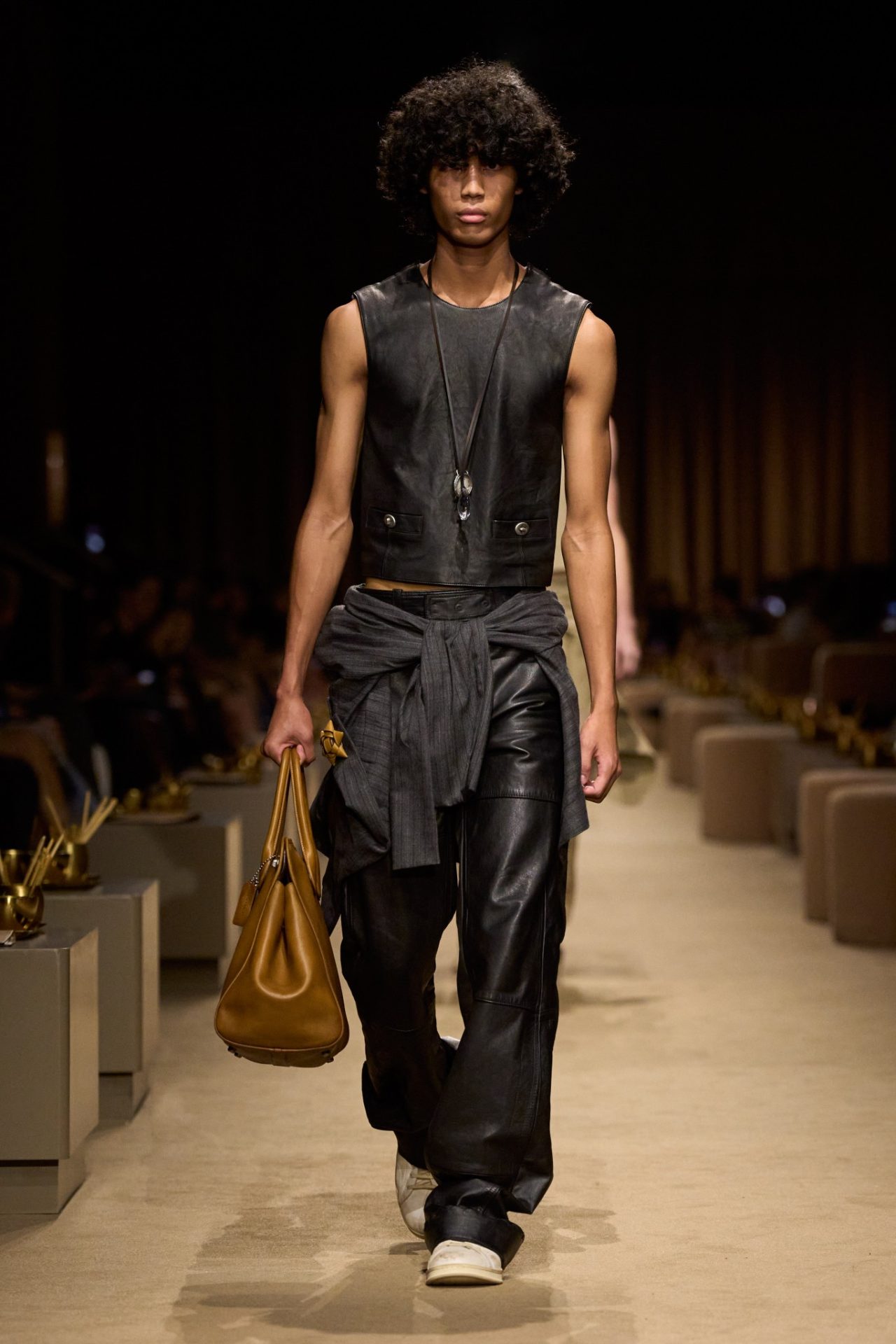
Leather goods also include the new Turnlock Tote, inspired by a Coach design from 1970 and built around the turnlock hardware introduced by the house’s first lead designer, Bonnie Cashin. Crafted in boarded leather and suede, it appears with hand-rubbed metallic foil, confetti, glitter and nail-polish treatments. The Inside-Out Brooklyn reveals the internal construction of one of Coach’s most recognized recent silhouettes, while the Tabby returns in decorative party finishes.
Footwear brings the new Hudson sneaker, cut with the slim proportions of a 1970s tennis shoe, and a slouchy Western boot in calf leather. Metallic rub-off finishes, confetti and glitter-and-nail-polish treatments give the shoes the feeling of customized, one-of-one pieces.
Jewelry is reduced to a small group of expressive objects: crystal pendants inspired by chandelier prisms and Art Deco watch cases, suspended from leather cords and worn as necklace charms, plus a bow brooch that refers to the top of a wrapped present. The leather accessories list reads like a purse spilled across a table – crowns and pointed party hats with tassels and pom-poms, wrapped gifts, birthday cards, gift tags, and the small everyday things that live inside a Coach bag. Sunglasses, a newspaper, a pen, a postcard, keys, a whistle.
The room set the tone before a single look appeared. Guests entered an expansive, dimly lit interior arranged with small tables, where they could read the collection notes in leather-wrapped folios designed to evoke bar menus and sip sparkling wine or a Coach 85, a special anniversary cocktail made with Tanqueray gin.
The soundtrack began with John Grant’s “Marz” before moving through fragments of MFSB’s early disco recording “Love Is the Message.” The choice was loaded. That song is bound up with David Mancuso’s influential نيويورك parties, which began at his home at 647 Broadway on Valentine’s Day in 1970 and grew into an inclusive space rooted in sound, community and the shared experience of dancing. Mancuso’s vibe and style were those of a musical host, not a DJ. The invitation to that first gathering read, “Love Saves the Day.”
For the finale, curtains behind the runway rose to reveal student string musicians from UpBeat NYC, a nonprofit providing free music education to young people in the Bronx, performing “Love Is the Message” with saxophonists over a backing track. Eight voguing dancers, directed by Arturo Lyons, joined the models as they returned. Confetti fell around the models, musicians, dancers and guests. Then the performers led the audience into the newly revealed Coach Club 85, where the anniversary celebration continued.
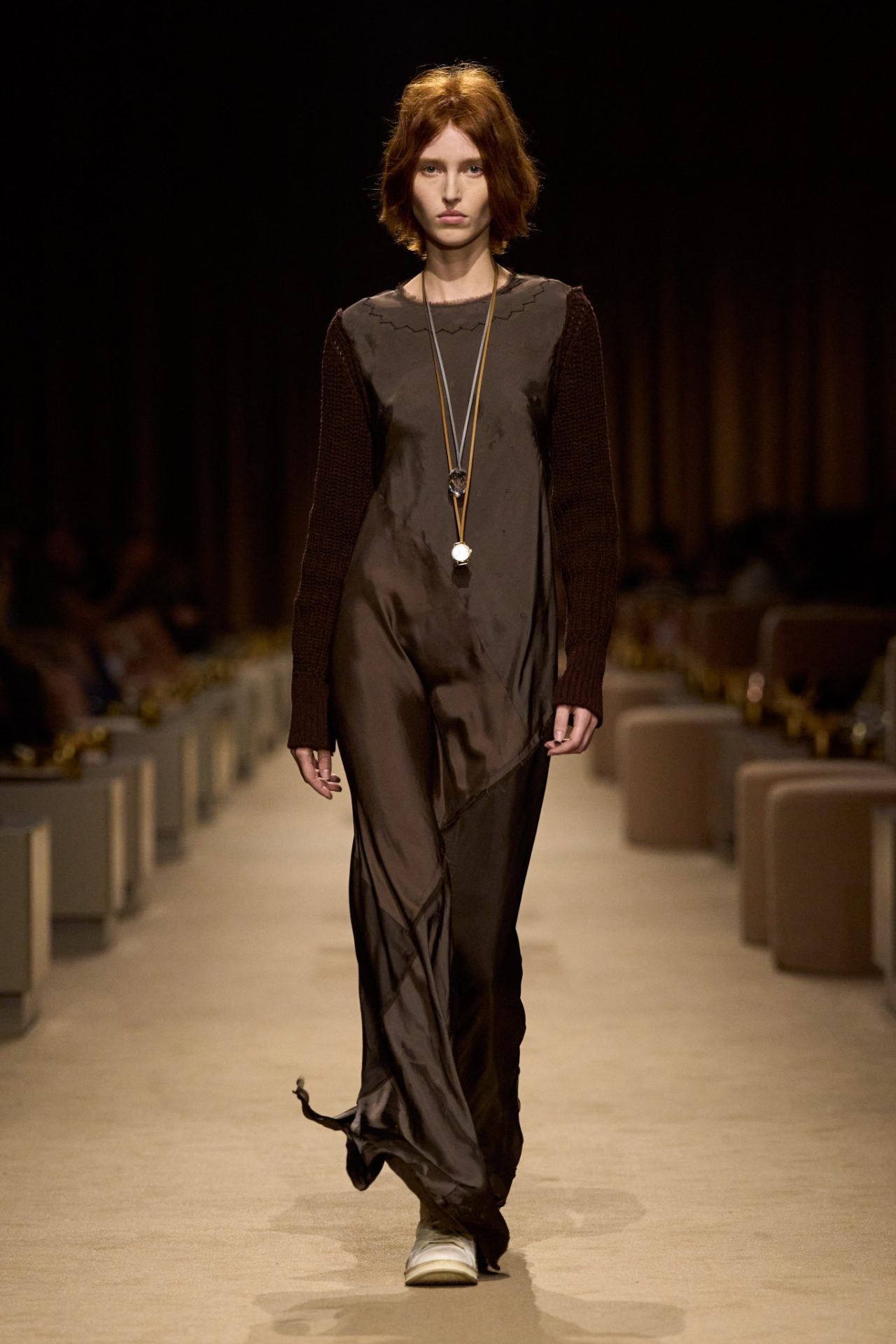
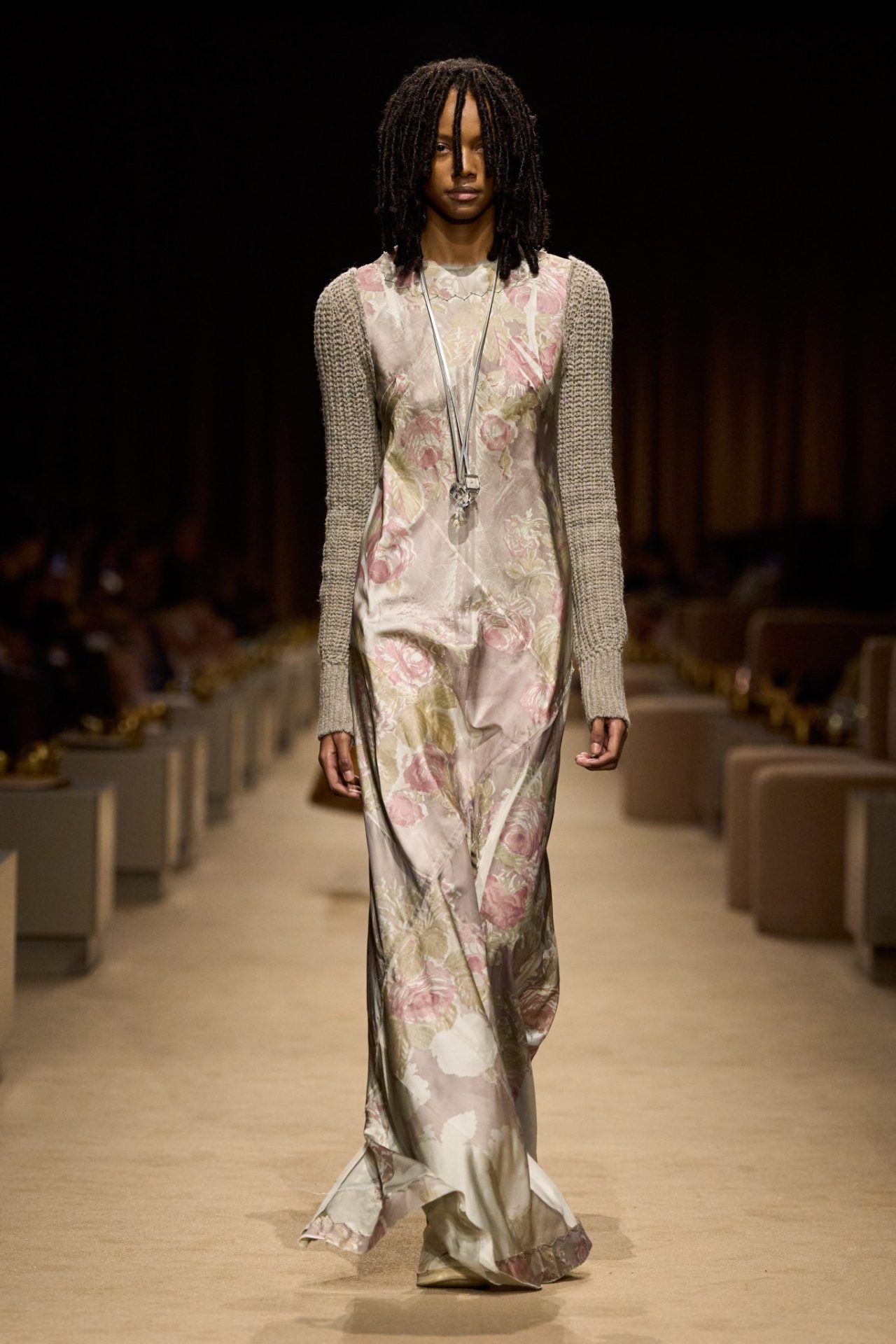
The show was styled by Olivier Rizzo, with set design by Stefan Beckman, music by Senjan Jansen and casting by Ashley Brokaw. Guido handled hair, Dame Pat McGrath did المكياج and Naomi Yasuda did nails. Nick Gray of Renegade Design handled lighting design, and Luca Zanoni photographed the المدرج.
An 85th anniversary could have been a victory lap through the archive. Coach, instead, took the archive apart, showed the seams, and then handed out the party hats.
See the complete collection below:
Images courtesy of Luca Zanoni