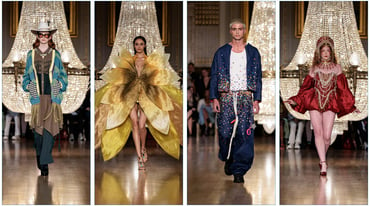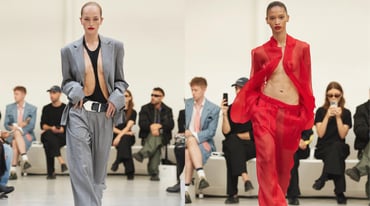

Seventy-two looks of bias-cut denim, surfaced topstitching and unlined tailoring make the most wearable Balenciaga of Piccioli’s year – and the hardest to recognize from across a room
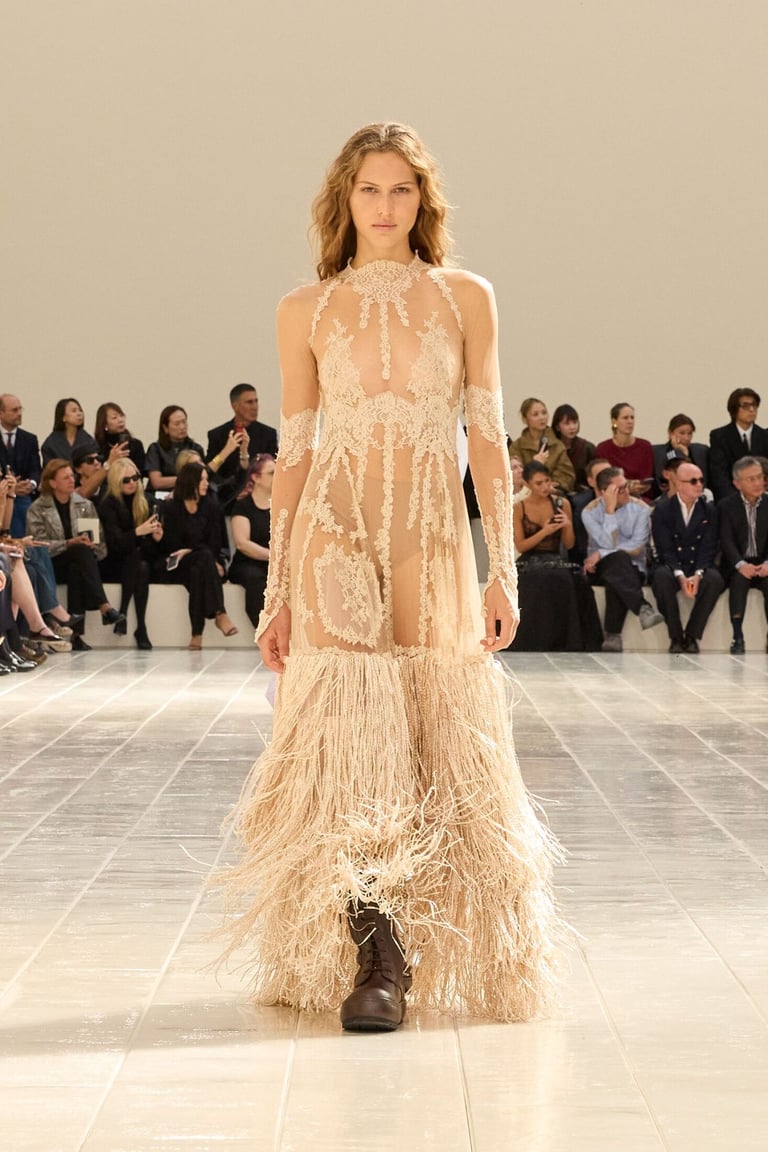
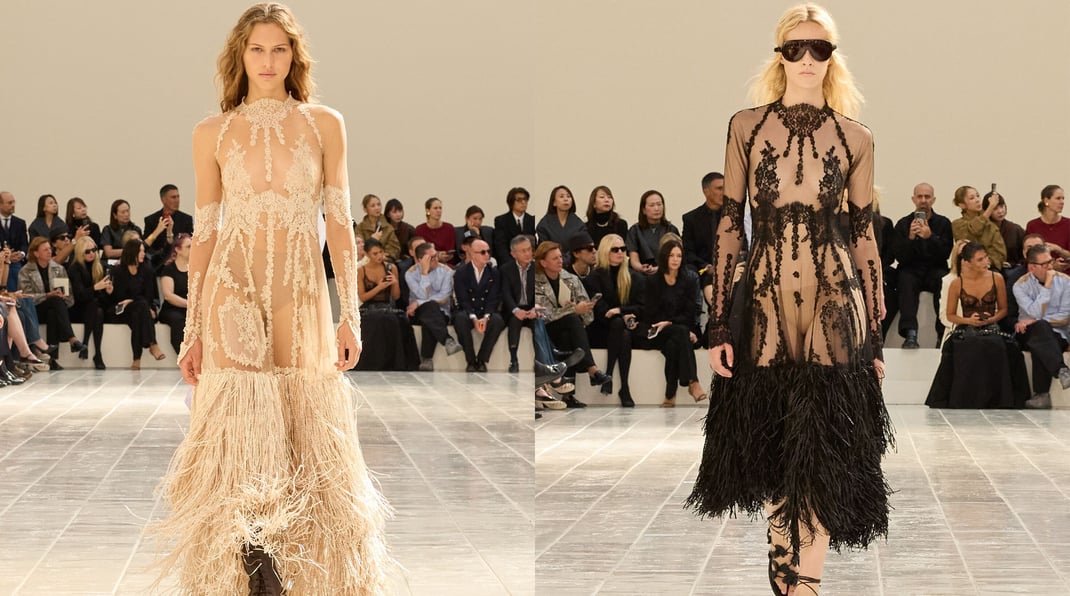
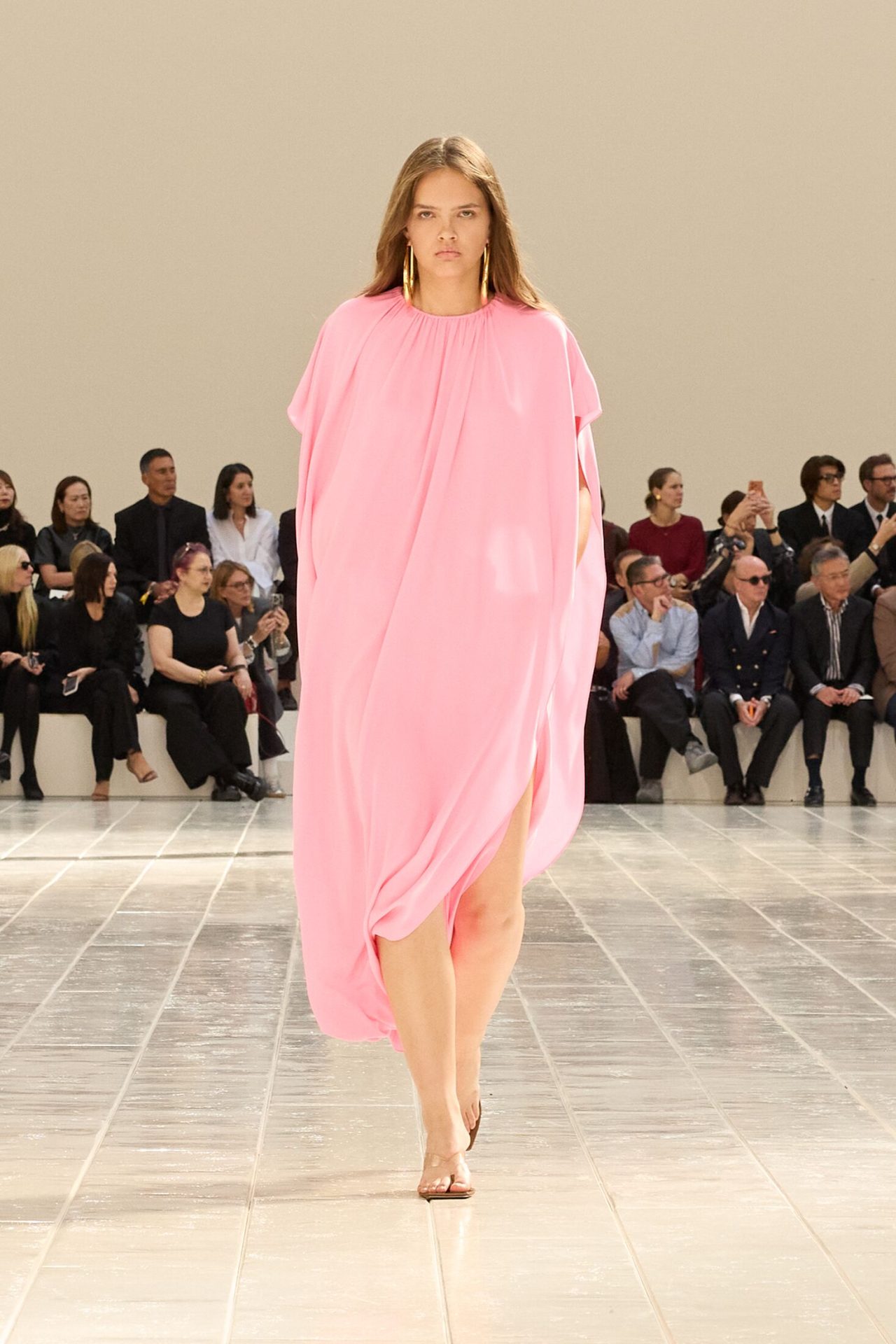
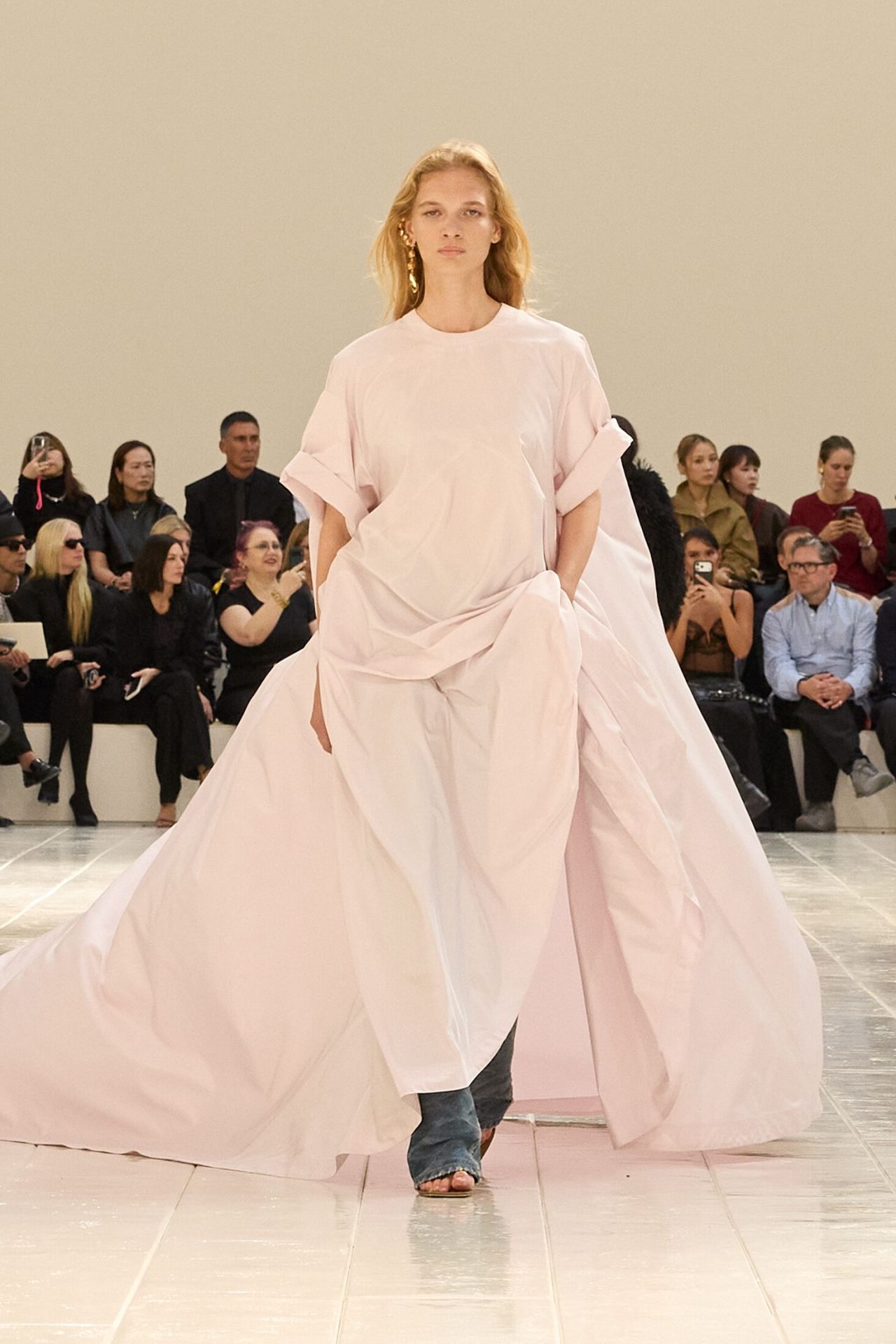
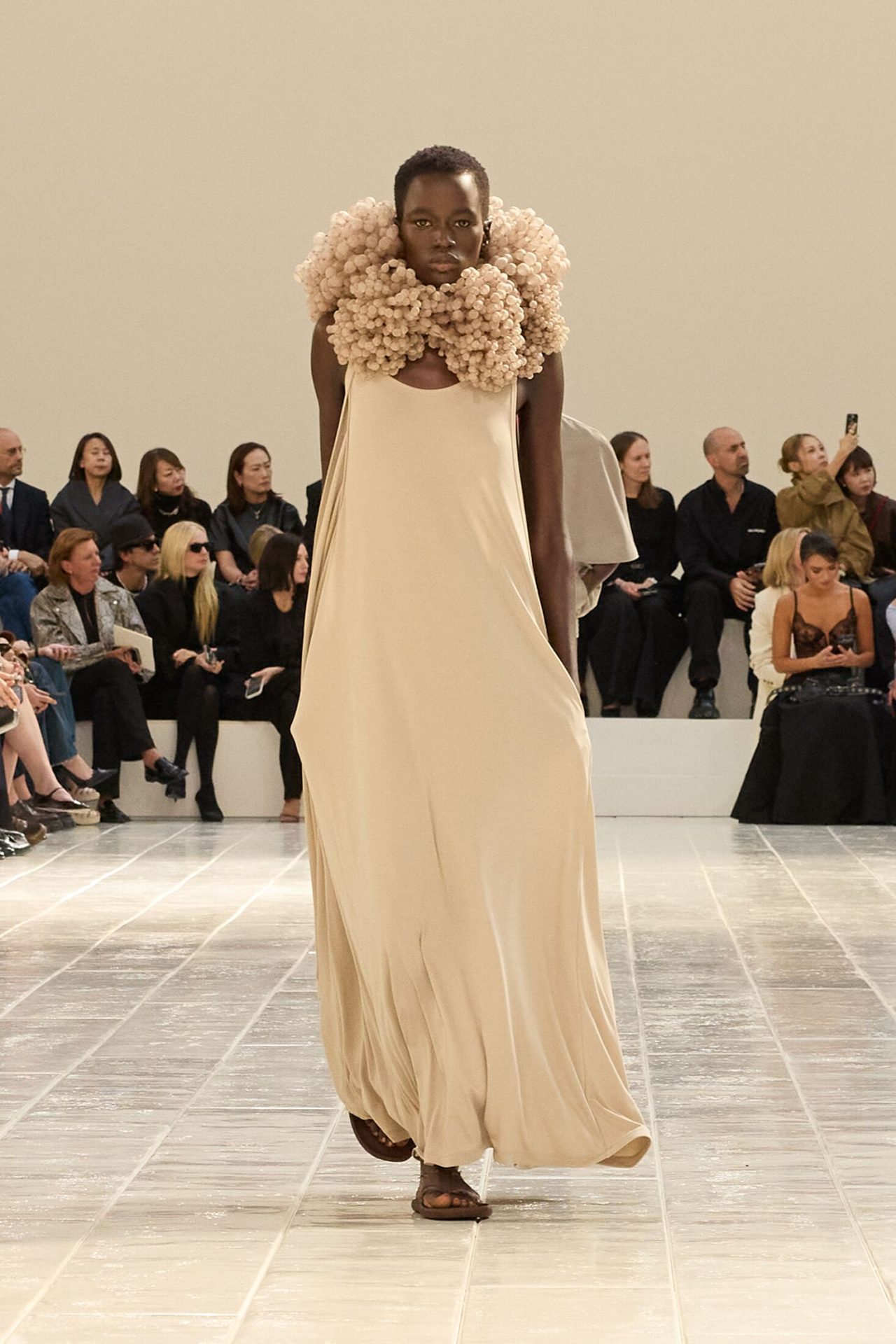
PARIS — Pierpaolo Piccioli’s third ready-to-wear collection for Balenciaga arrived Thursday afternoon at the Tennis Club de Paris, 72 looks built from the construction methods of the house’s 55th couture collection and opening on nine consecutive exits in white, cream and beige. The sequencing was the argument: before color, before volume, the clothes had to hold on cut alone.
What followed was the most commercially legible collection Piccioli has made in his year at the house, and the least identifiable at distance. “بالنسياغا is all about shape, lightness, volume,” he said at a post-show re-see, describing lightness as the house property that had gone unused. The collection, titled “Les Coraux de la Liberté,” ran under a red-and-white gorgonian sculpture by the French artist Aude Franjou, wound thread by thread and rising to the venue’s skylight.
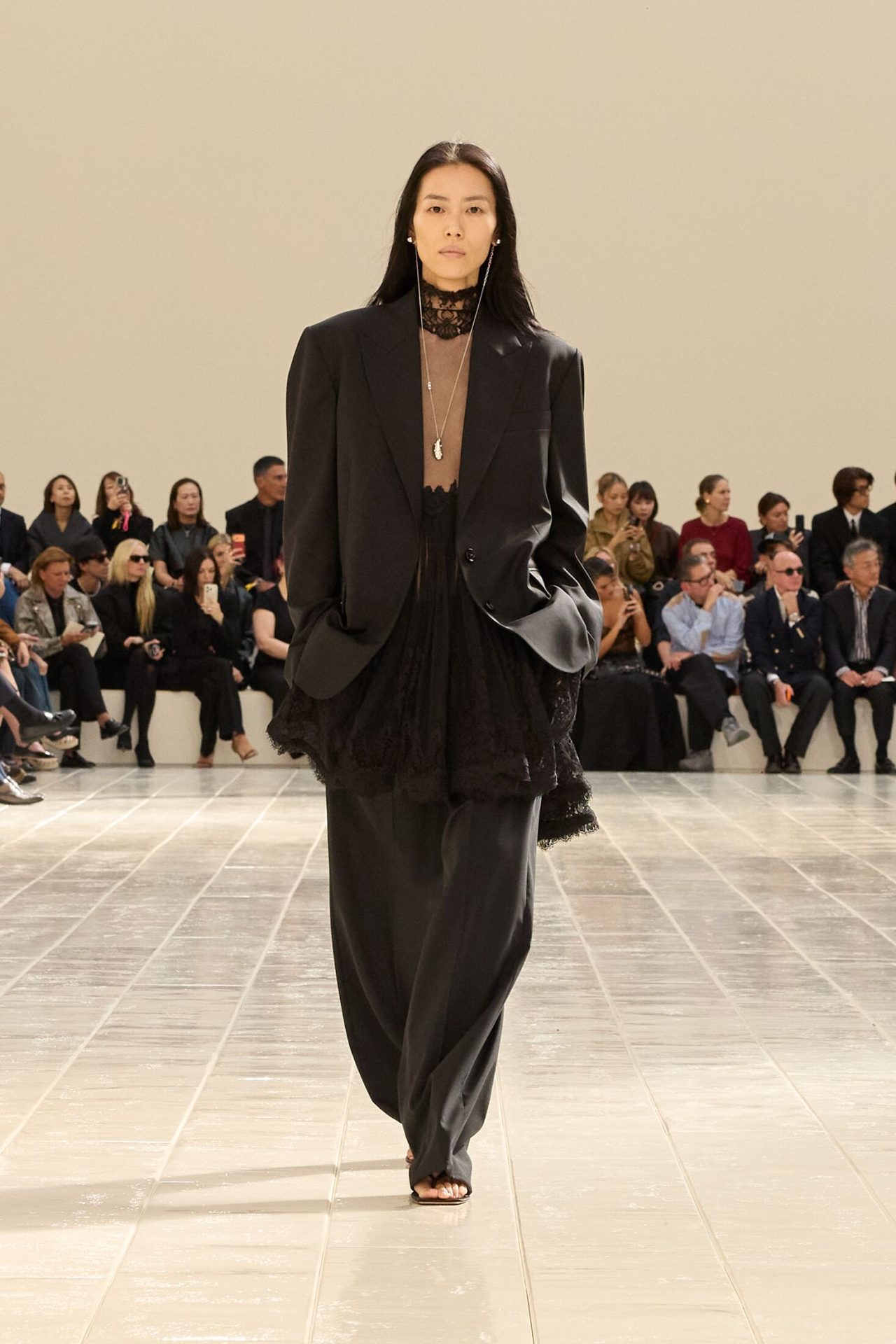
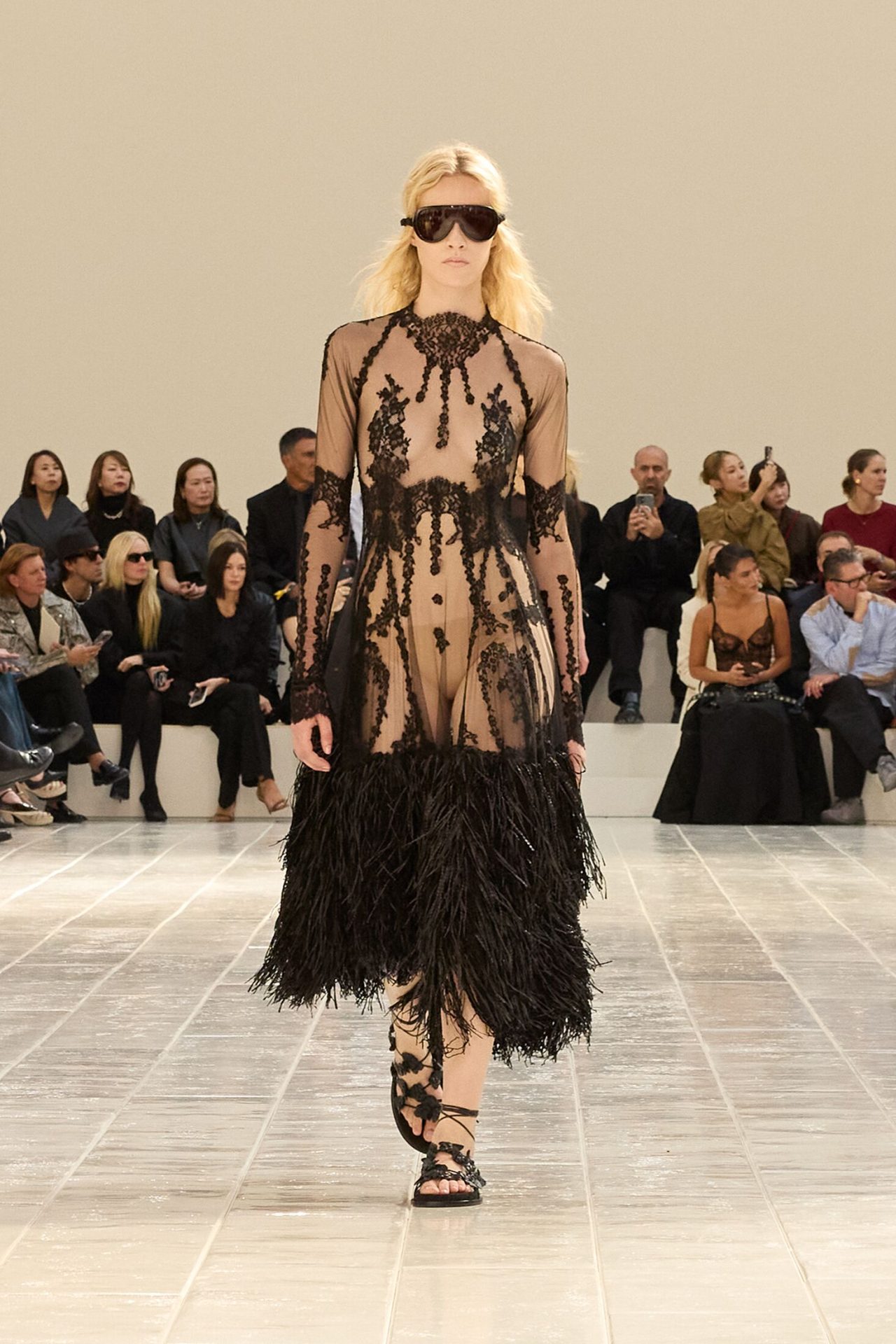
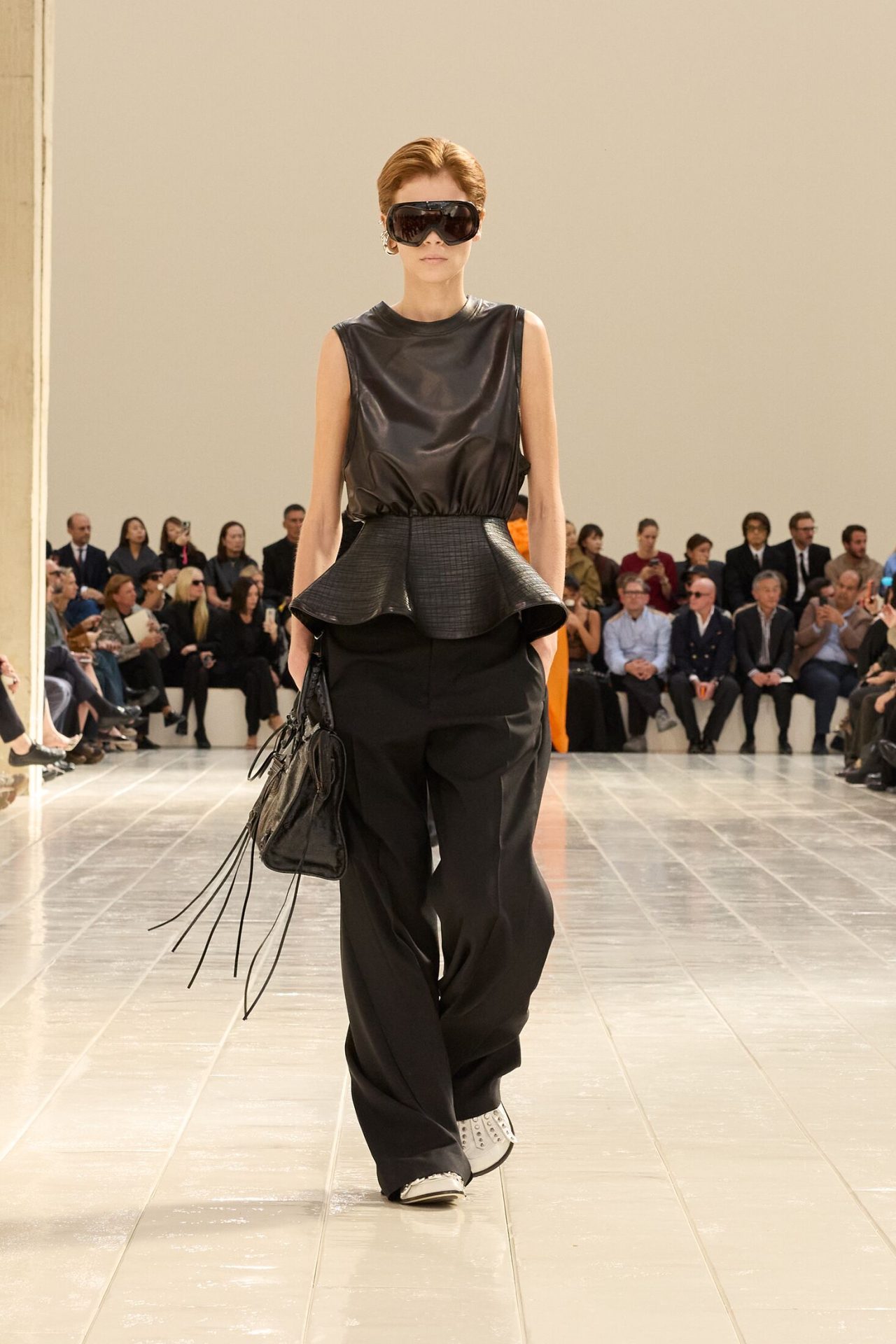
Bias Cutting Enters a Vocabulary Cristóbal Avoided
The central technical move was the bias cut, applied where the founder never took it. Jeans were cut on the bias and run without out-seams. Women’s and men’s wool suits came unlined. Cristóbal Balenciaga worked architecturally, engineering fabric against the body rather than letting it fall with gravity, and the technique sat outside his method – an omission Piccioli has said he finds puzzling. The effect is a thesis about inheritance rather than homage: the archive supplies the silhouette, the technique comes from outside it.
Topstitching Does the Work a Logo Used To
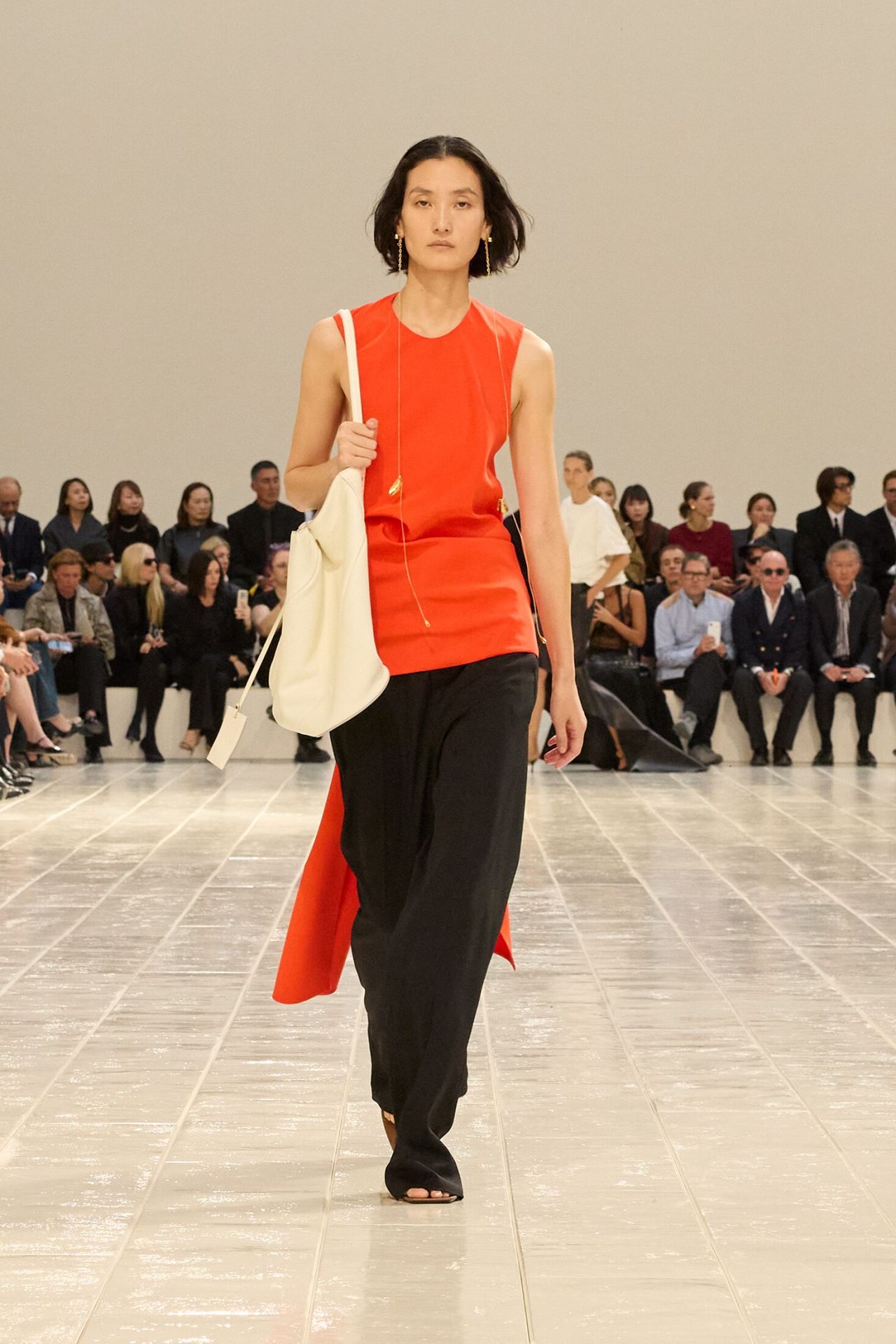
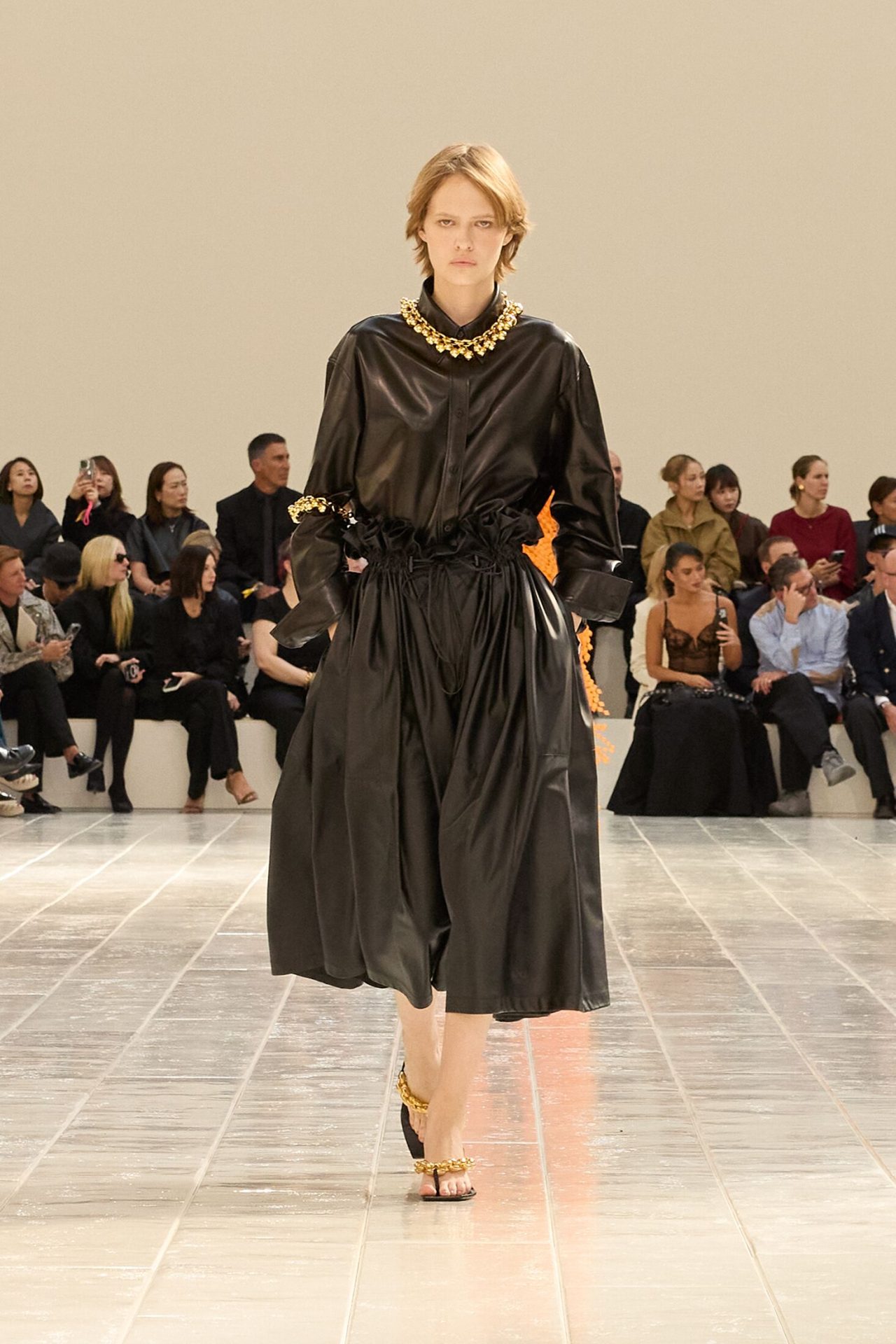
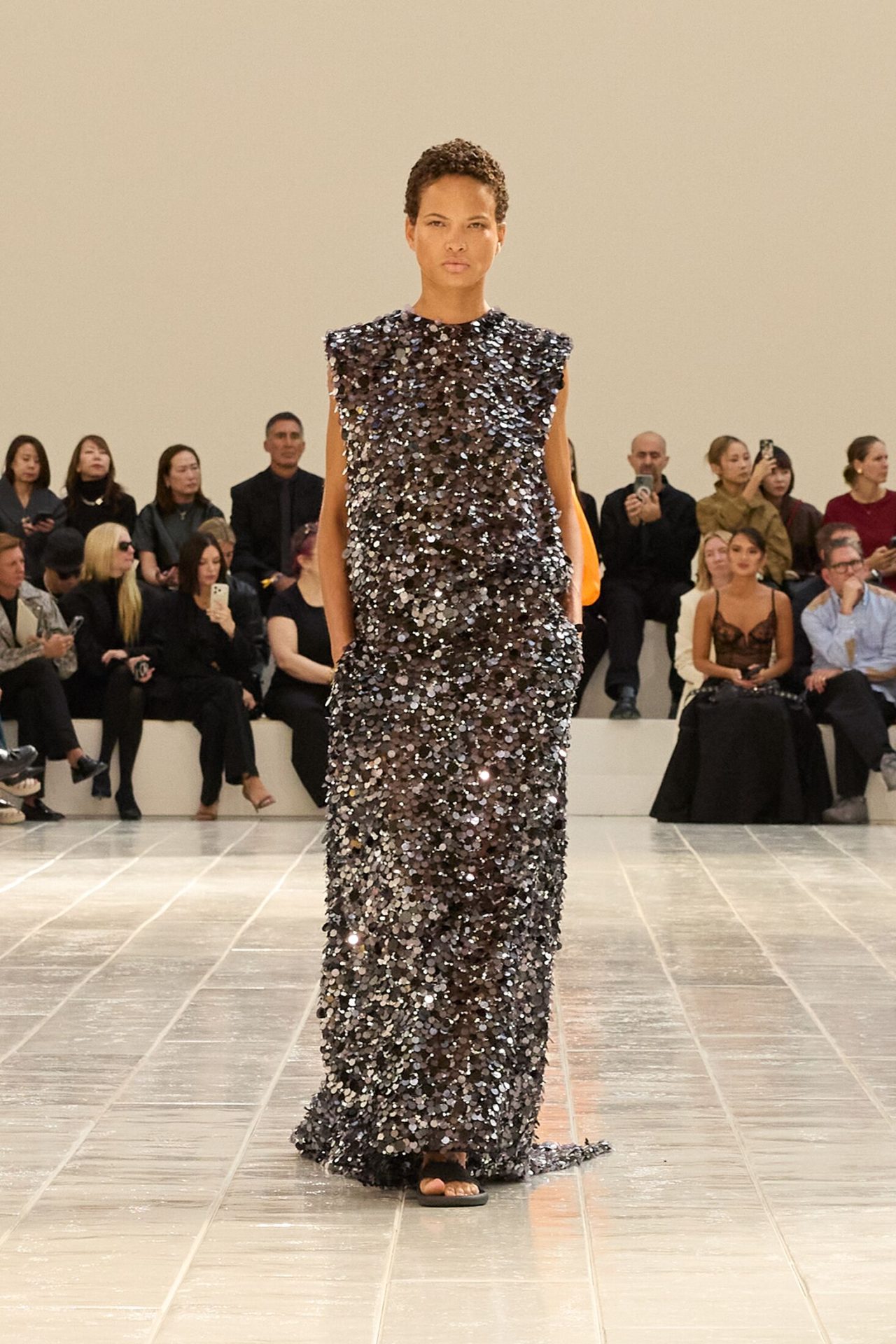
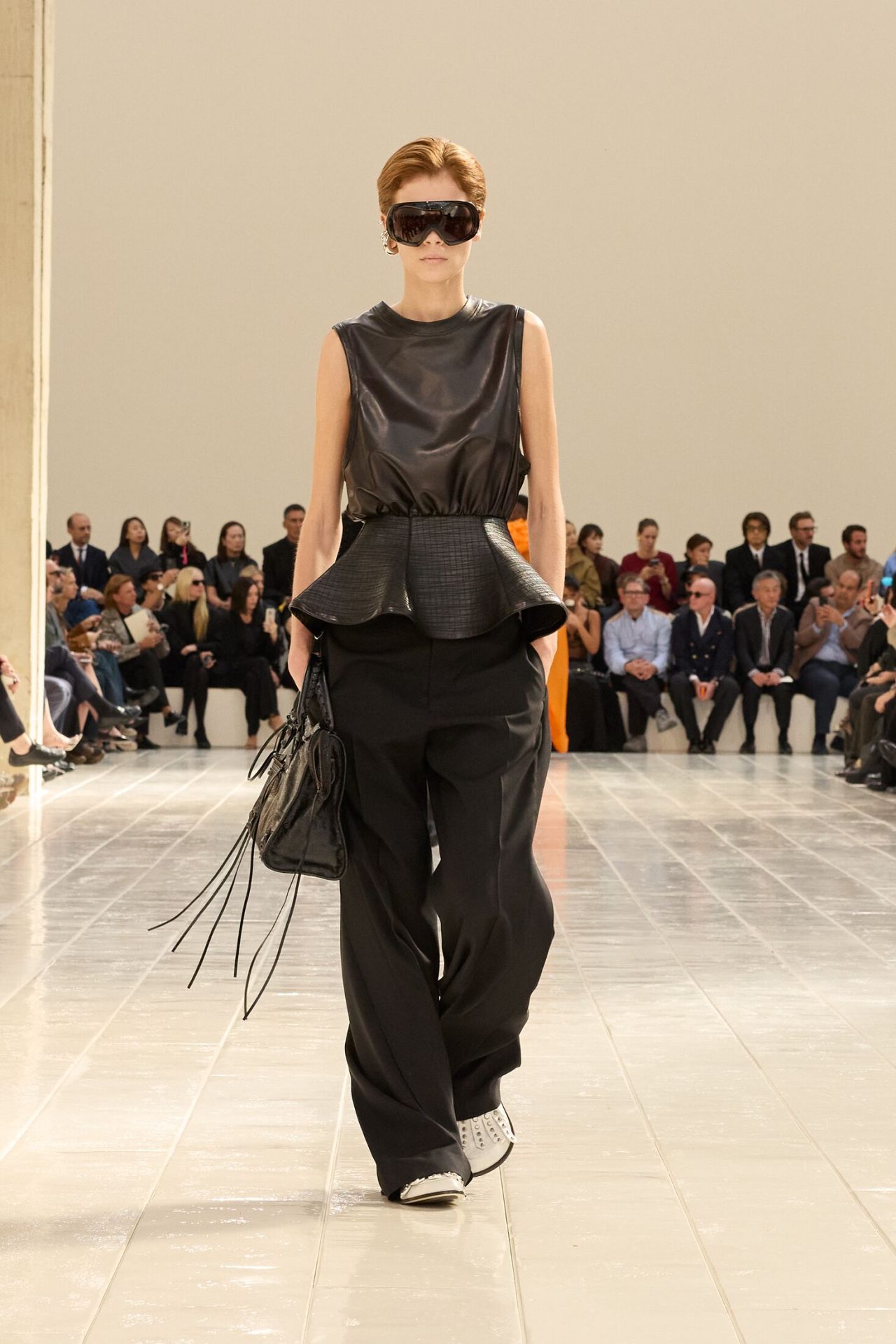
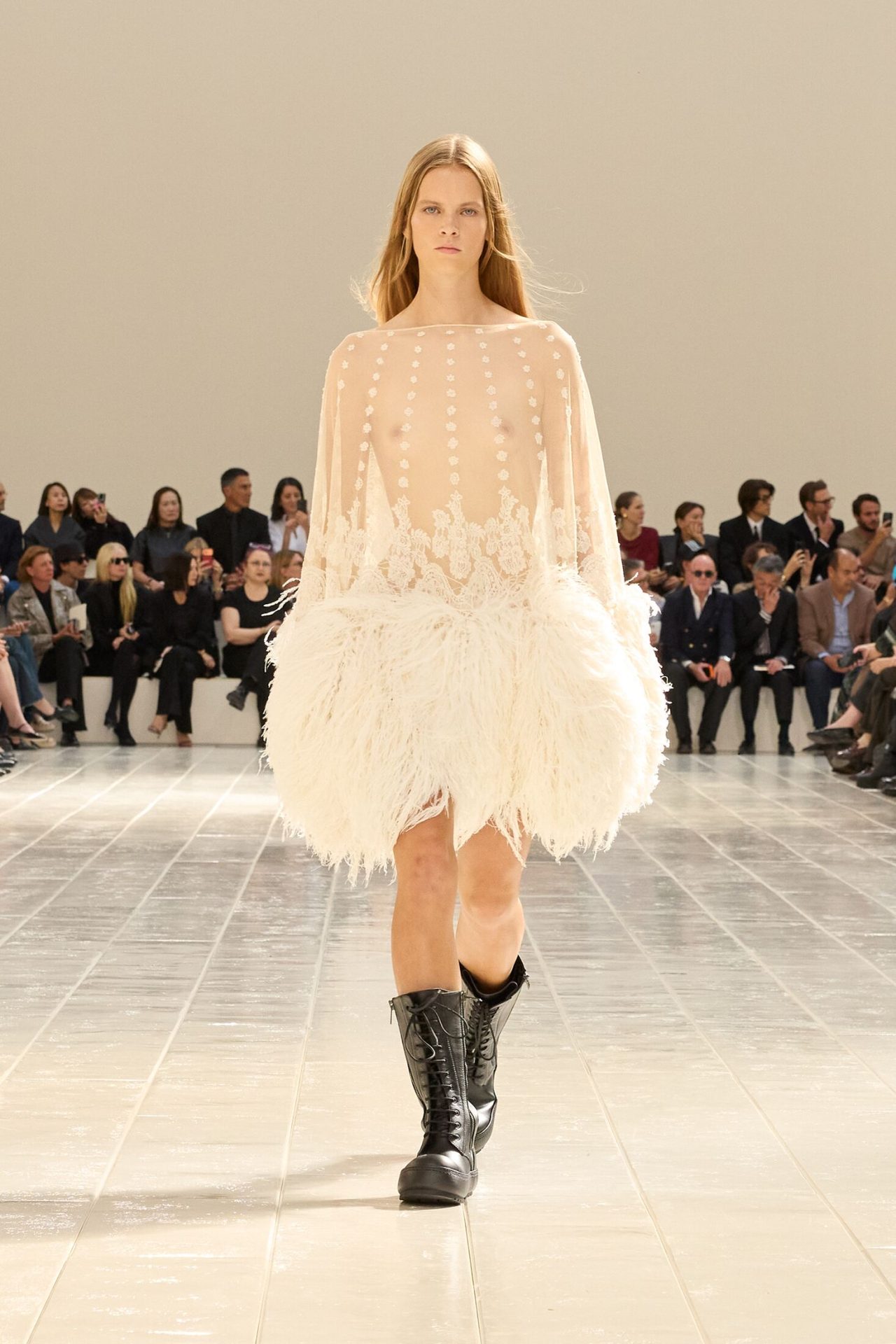
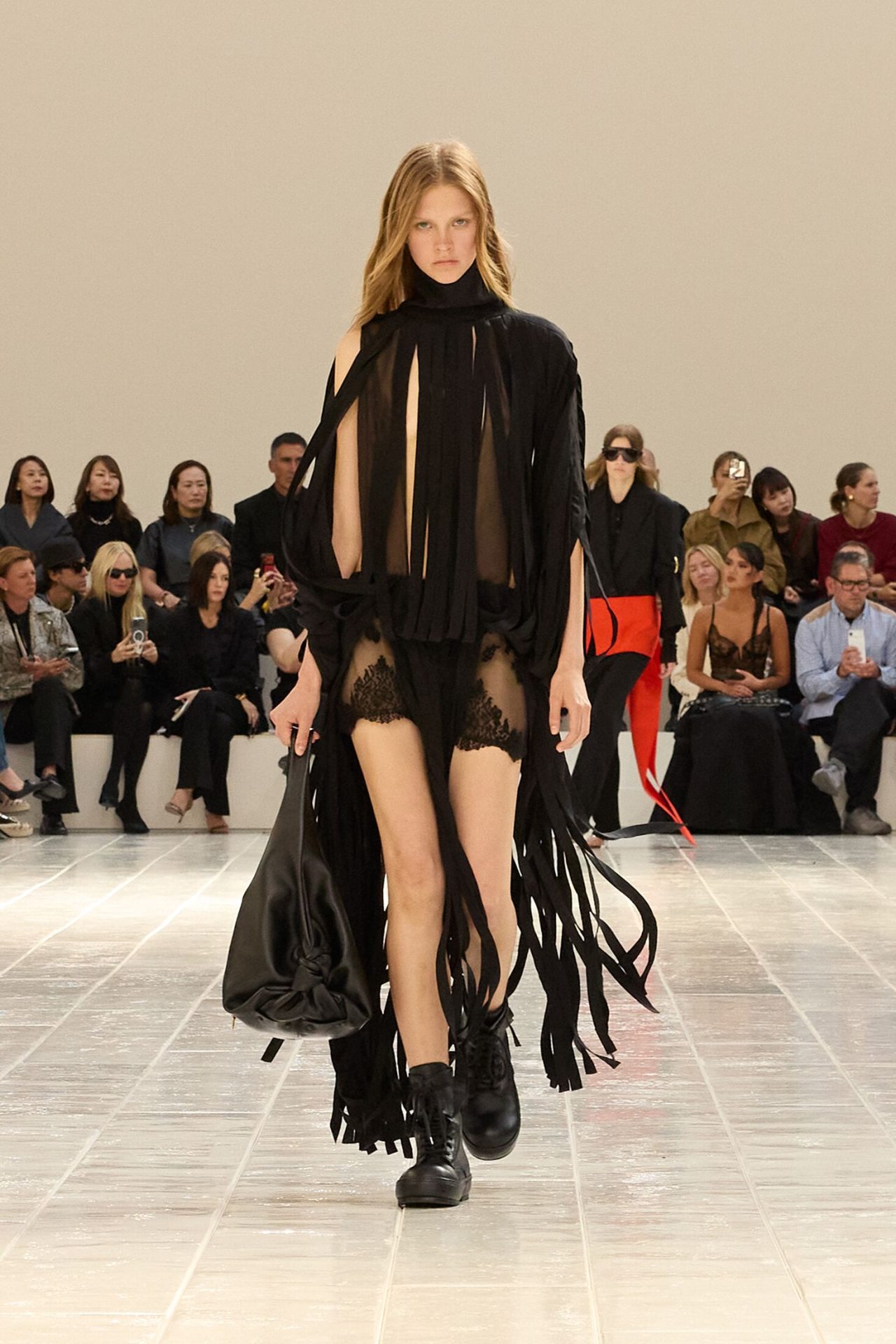
The clearest device was topstitching moved from inside the garment to its surface, used to build volume in cotton and leather and to draw the narrow-waisted Basque shapes that run through the house’s archive. It landed on T-shirts and on leather moto jackets finished with peplum hems. Shirt dresses closed diagonally across the body. Drop-shoulder jackets carried cocooning split sleeves over high-low feathered skirts, and Calais lace was set into garments as a structural panel rather than a trim. The house codes are there. They are legible at arm’s length, not across a room.
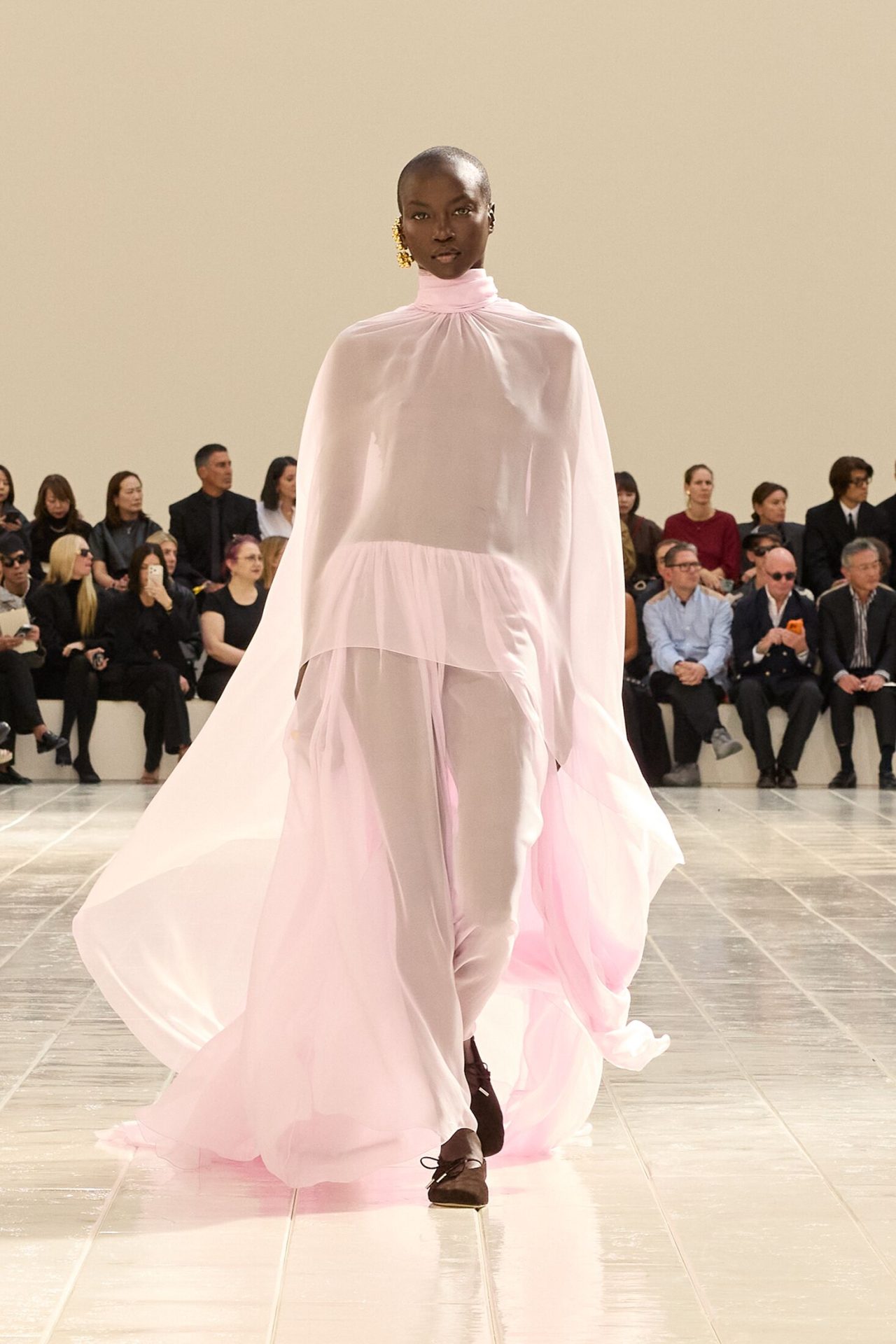
Nine White Exits Set a Bar the Show Doesn’t Hold
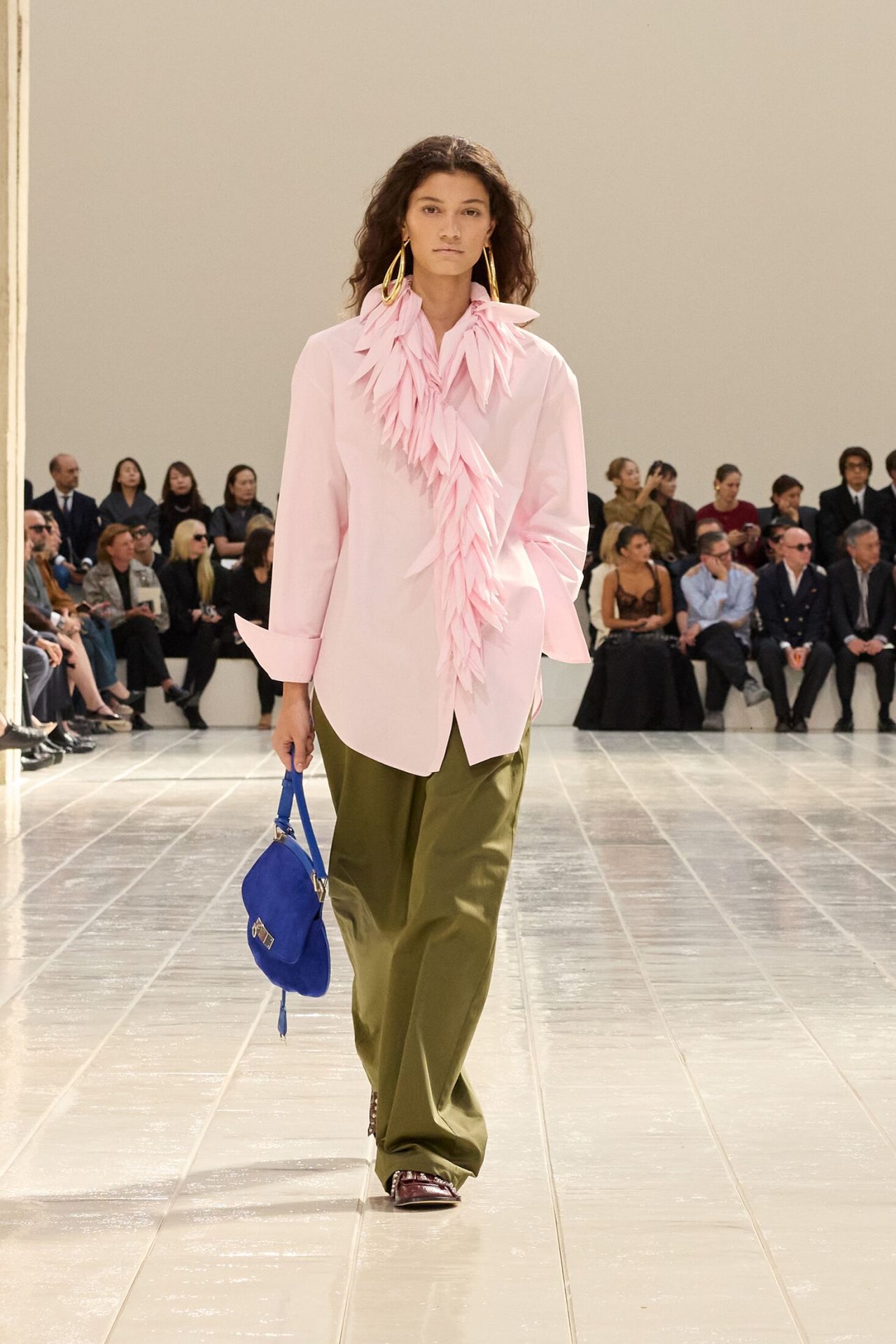
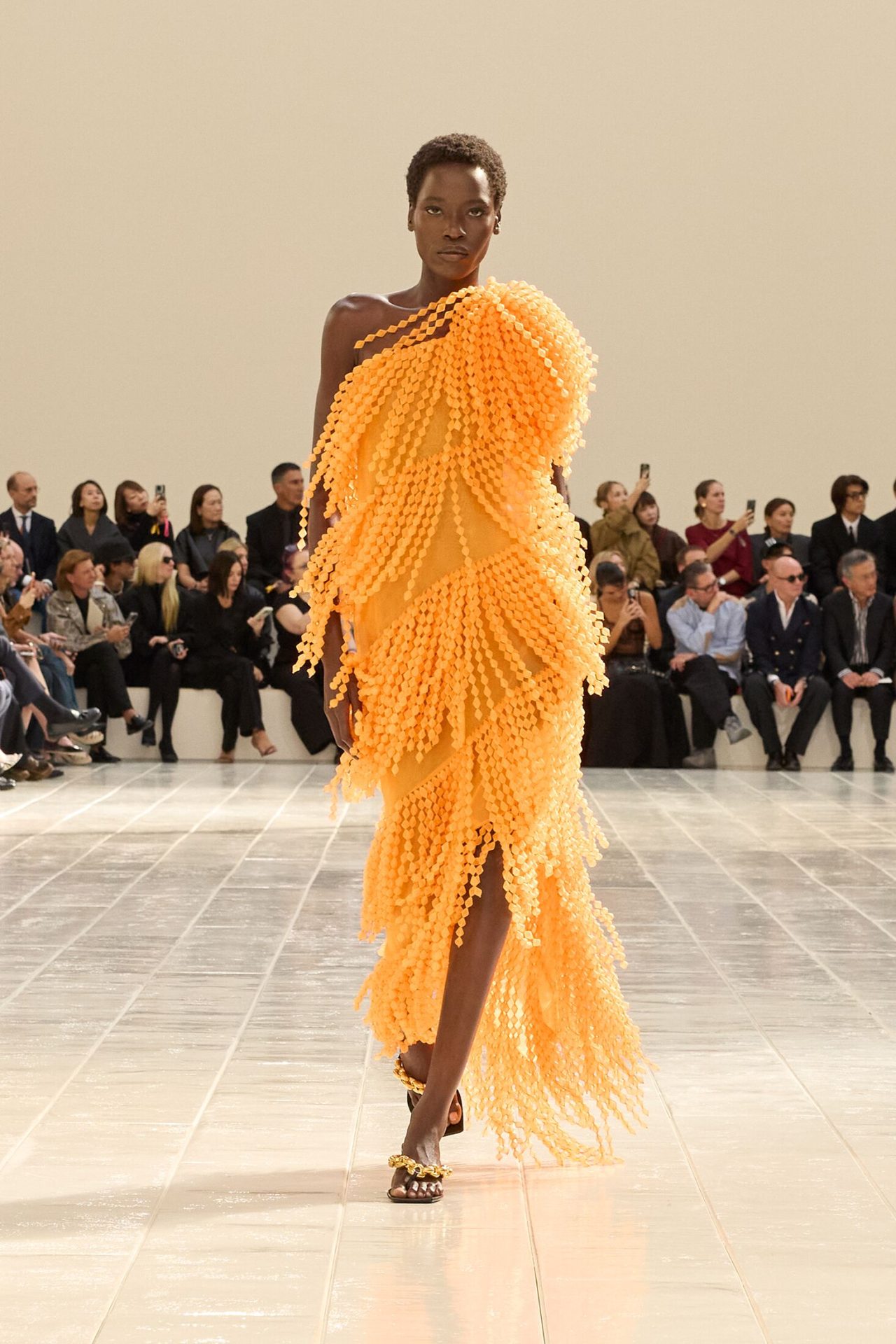
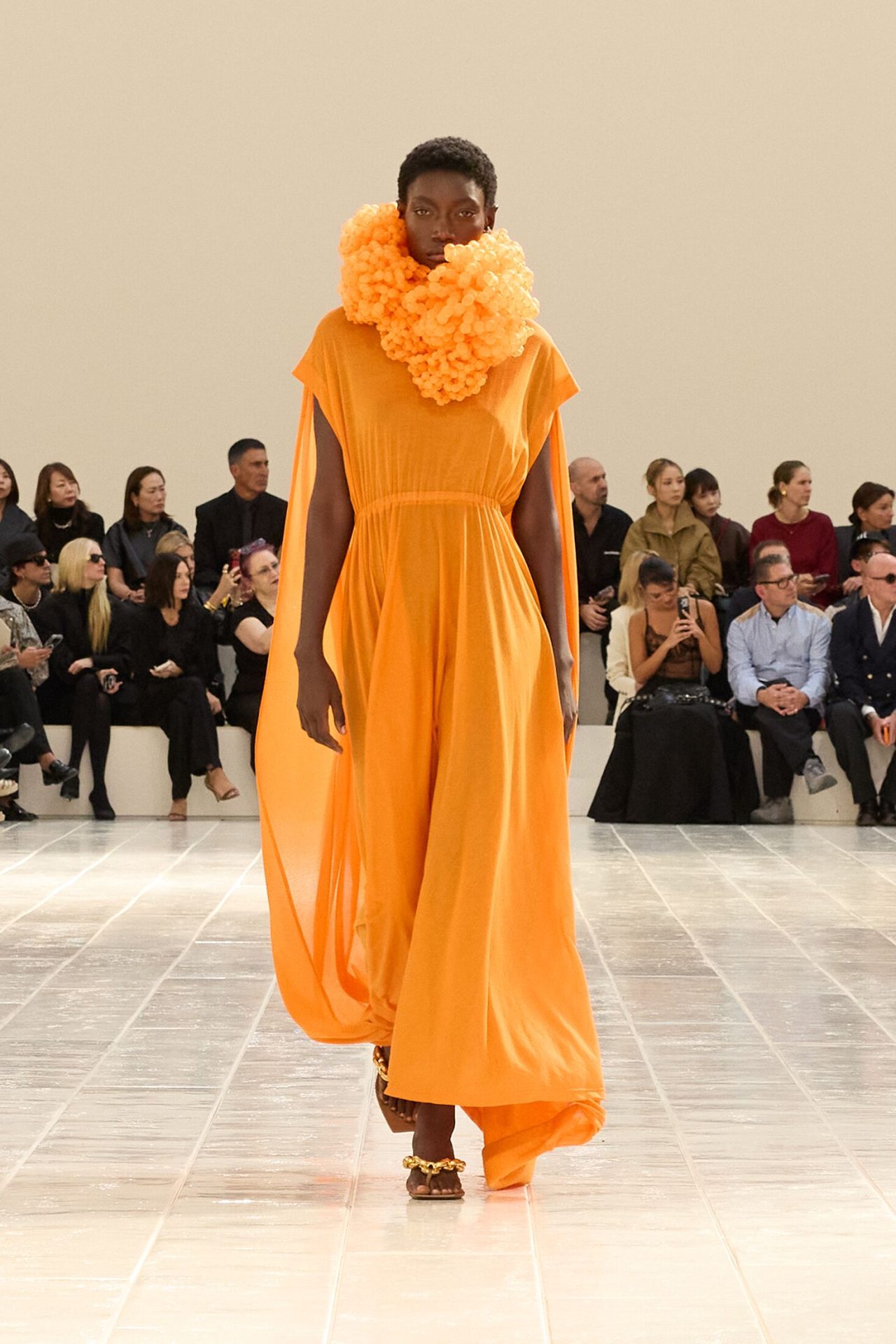
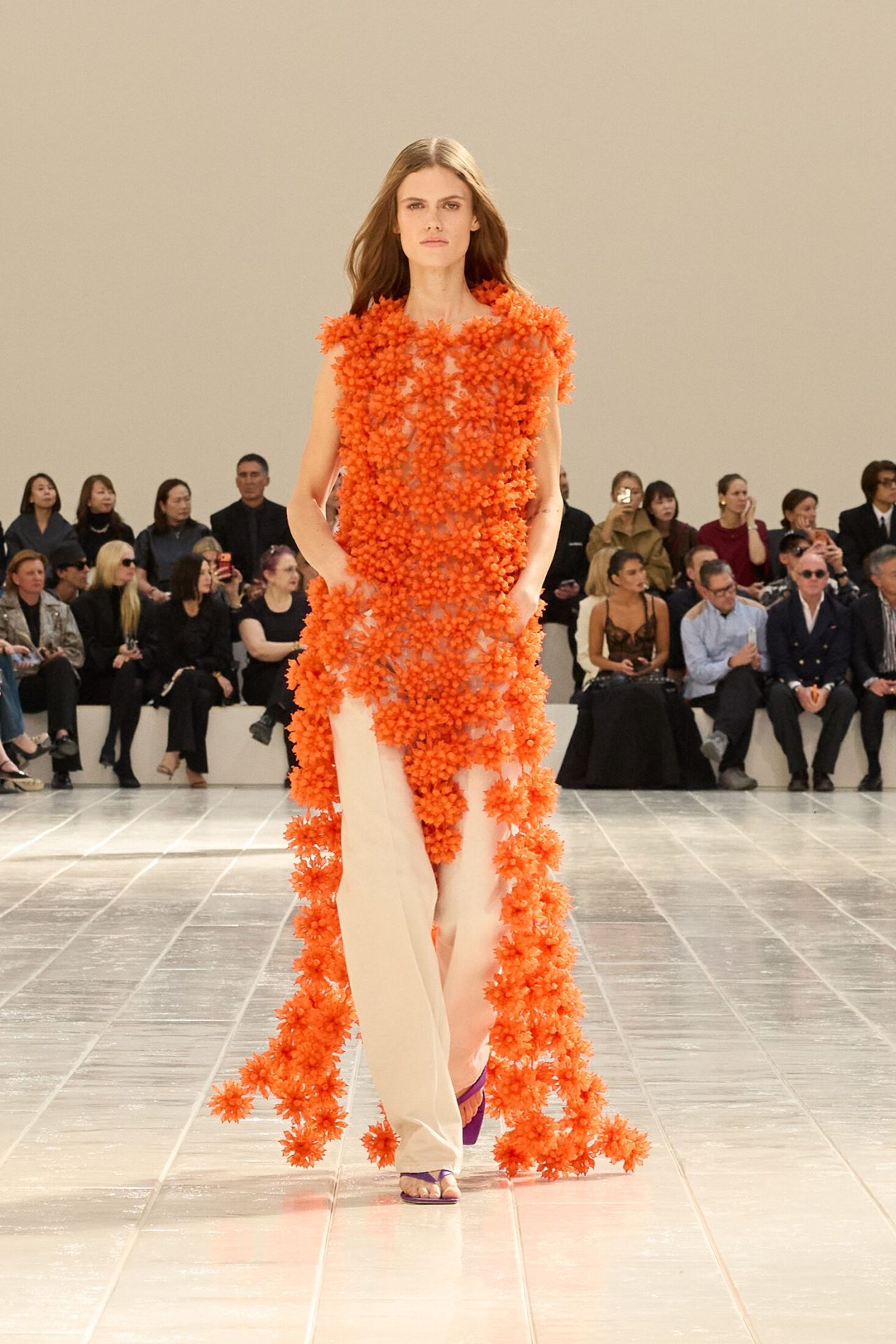
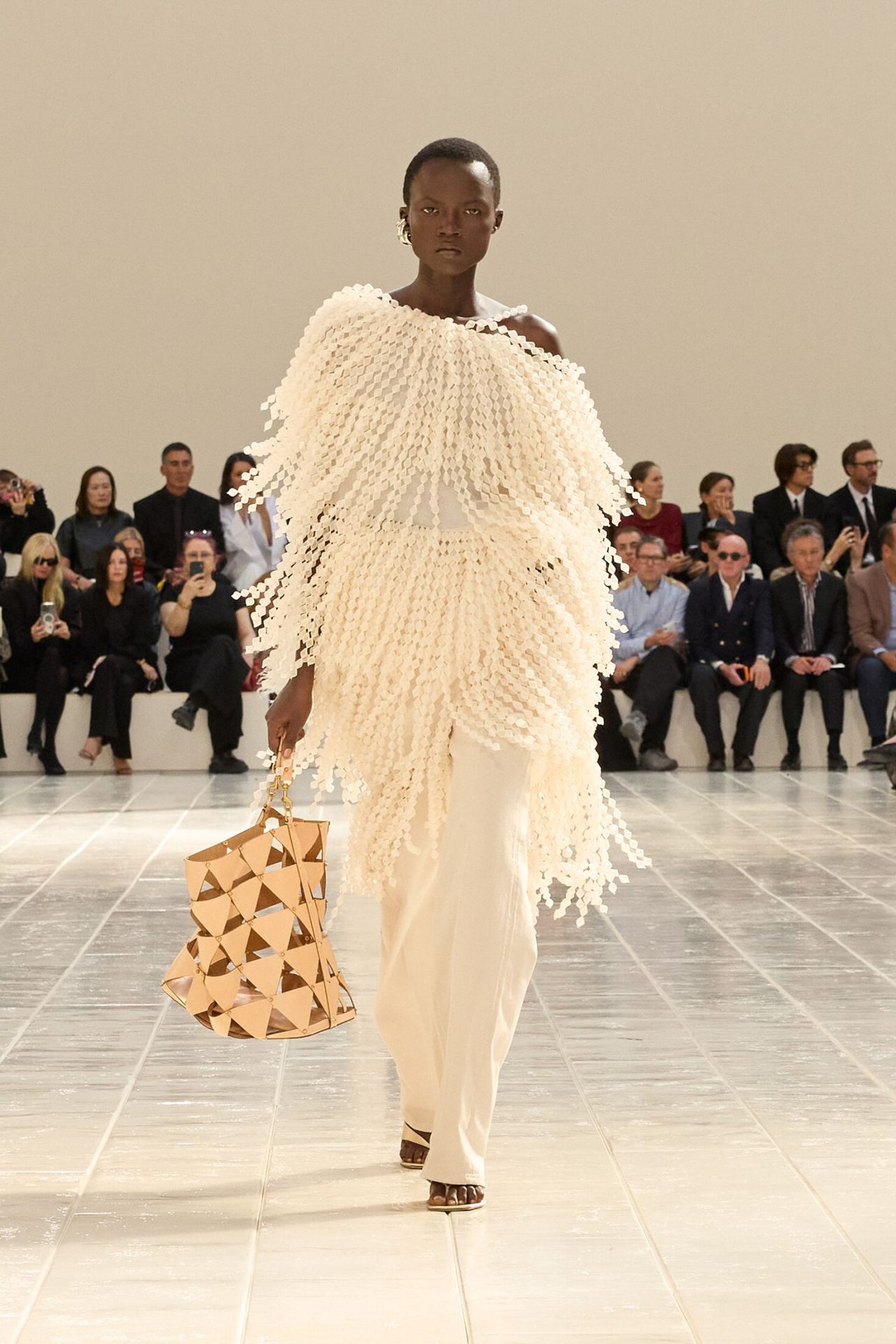
The opening run – nine looks, roughly 12 percent of the show – gave the eye nothing but seams: a cape, a sheer sheath with floral cutouts, a blouse finished in puffed-organza tendrils, swollen with compressed air. Color then arrived in pops of blue and red before widening into orange, fuchsia, turquoise and Klein blue, the palette Piccioli has used since Valentino.
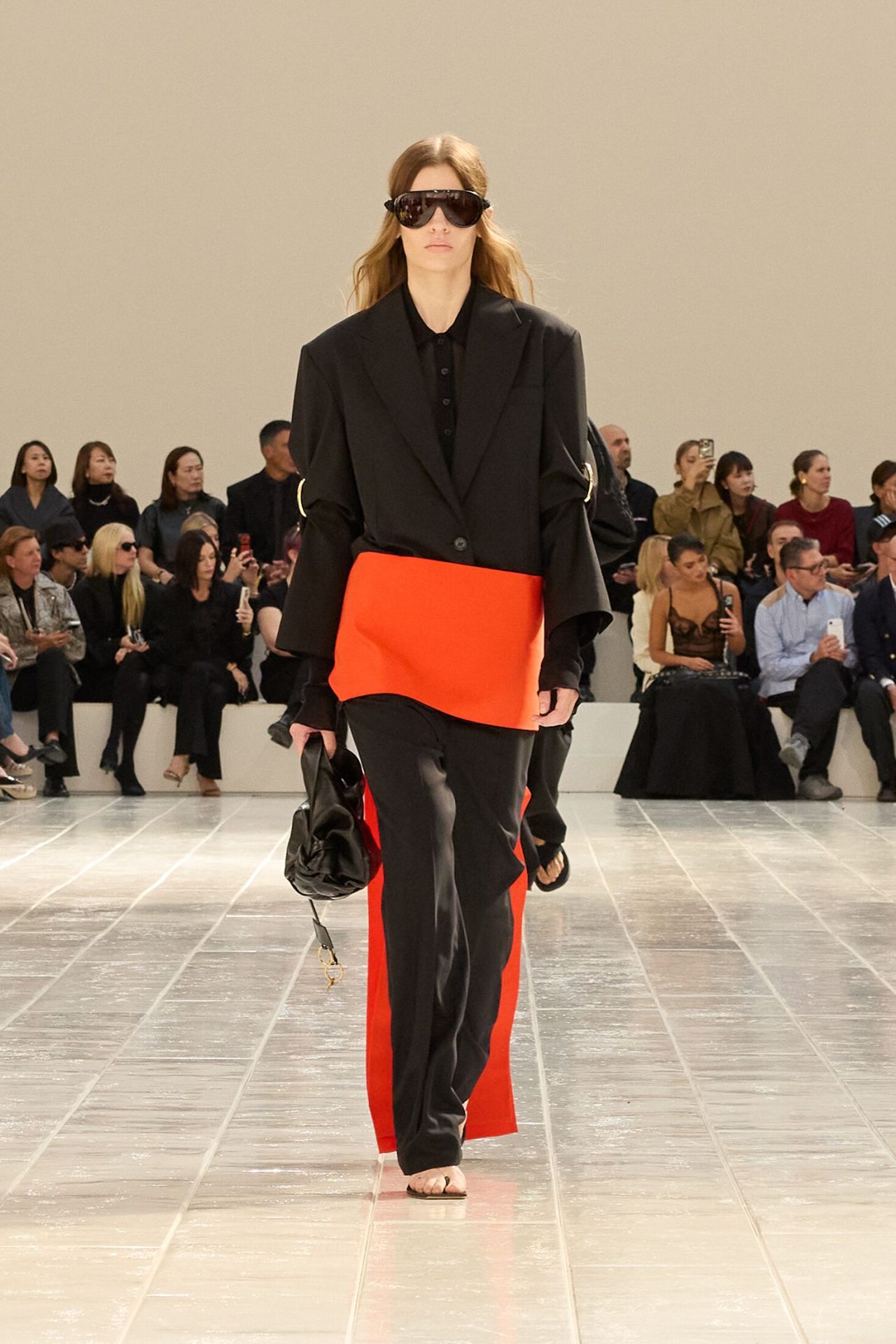
That discipline does not survive the length. At 72 looks the bias cut and the surfaced topstitch are run through denim, shirting, tailoring, outerwear and eveningwear in turn, and by the back half the device reads as a procedure rather than a proposition. The sportier passage – high-neck jackets and balloon trousers in technical fabrics – sits closer to the athleisure engine that drove Balenciaga’s volume under Demna than to anything in the couture brief. The show never settles which of the two it is selling.
The Accessories Borrow From the Demna Playbook
Accessories carried the commercial load: hand-shaped and hand-draped leather bags, Getaria jewelry modeled on shells, Bow Mask eyewear with hand-worked temples, a waxed-canvas flip-flop, a mule with the give of a slipper and a new sneaker, the Lounge, built with almost no internal structure. That is the flattest, softest, least branded footwear offer the house has shown in a decade, in the category where it built scale on loud, hardware-heavy product. And the most repeatable new idea – a rectangular soft-leather satchel threaded through the trouser belt loops – descends directly from a Demna-era proposal from fall 2018. The predecessor’s vocabulary is still the one doing the selling.
Kering Has Never Published a Balenciaga Number
The leather goods emphasis is the part of the show that answers to the group. Kering’s first-half 2026 results, approved July 28, fold Balenciaga into the الموضة والأزياء & Leather Goods segment, which booked €5.8 billion in revenue, down 5 percent as reported and down 1 percent on a comparable basis; the release said the house “continued to work through its creative transition,” with leather goods a source of strength. No standalone Balenciaga revenue line and no menswear breakdown have ever been published, which is precisely the gap in the reporting that has shadowed this show. Since Sept. 22, industry reports have held that Piccioli will exit after the spring collection, citing soft menswear and couture that did not convert; neither Kering nor Balenciaga has confirmed any departure, Piccioli remains the house’s creative director, and Kering chief executive officer Luca de Meo declined to comment when asked. François-Henri Pinault came backstage.
Piccioli left a note on every seat reading, in part, “No one shines alone.” Read against the week it landed in, the line is atelier politics as much as it is a coral metaphor.
The collection proves Piccioli can make the Balenciaga archive produce clothes people will actually buy and wear. What it has not yet produced is a silhouette that announces the house before the label does. For a brand whose last commercial era ran on instant recognition, a year spent perfecting the inside of a seam is a bet on a customer willing to come close enough to see it.
See the complete collection below:
Images courtesy of Balenciaga
In other fashion week news, Dior Spring 2027 Ready-to-Wear Collection at Paris Fashion Week